
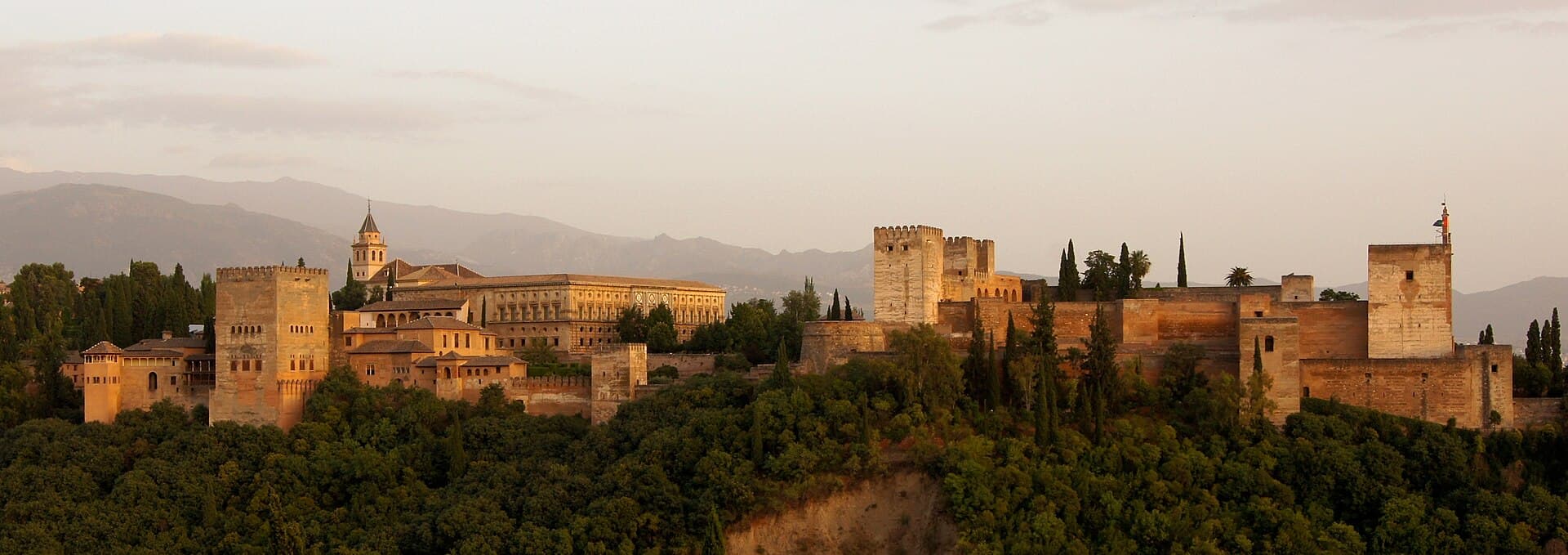
The Alhambra in Granada at evening, walls and towers on the slope with mountains behind.
Photo Jebulon · Public domain
Photo on Wikimedia Commons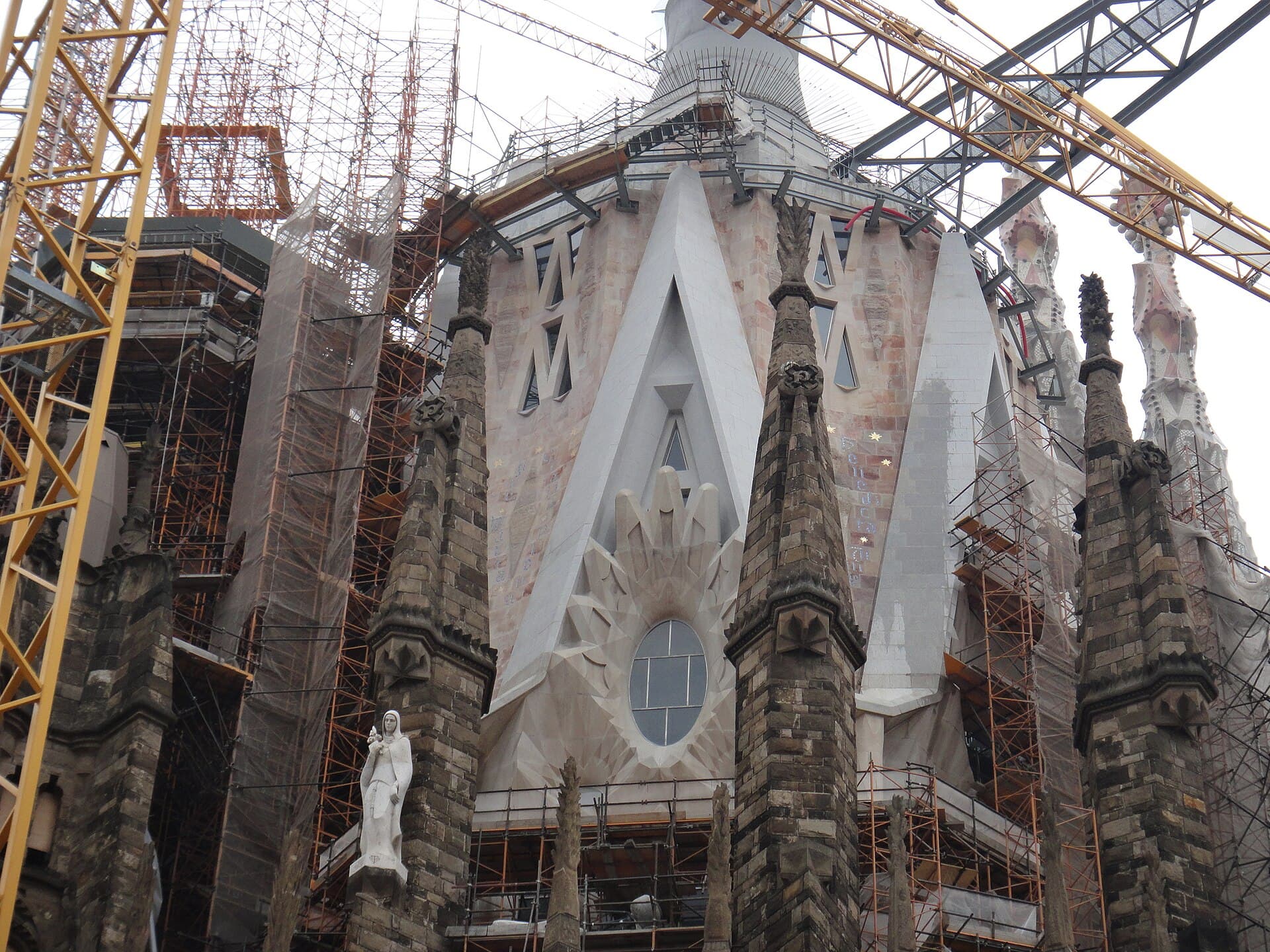
The towers of the Sagrada Família with cranes above them, the building still underway.
Photo Gerardo nuñez · CC BY 3.0
Photo on Wikimedia Commons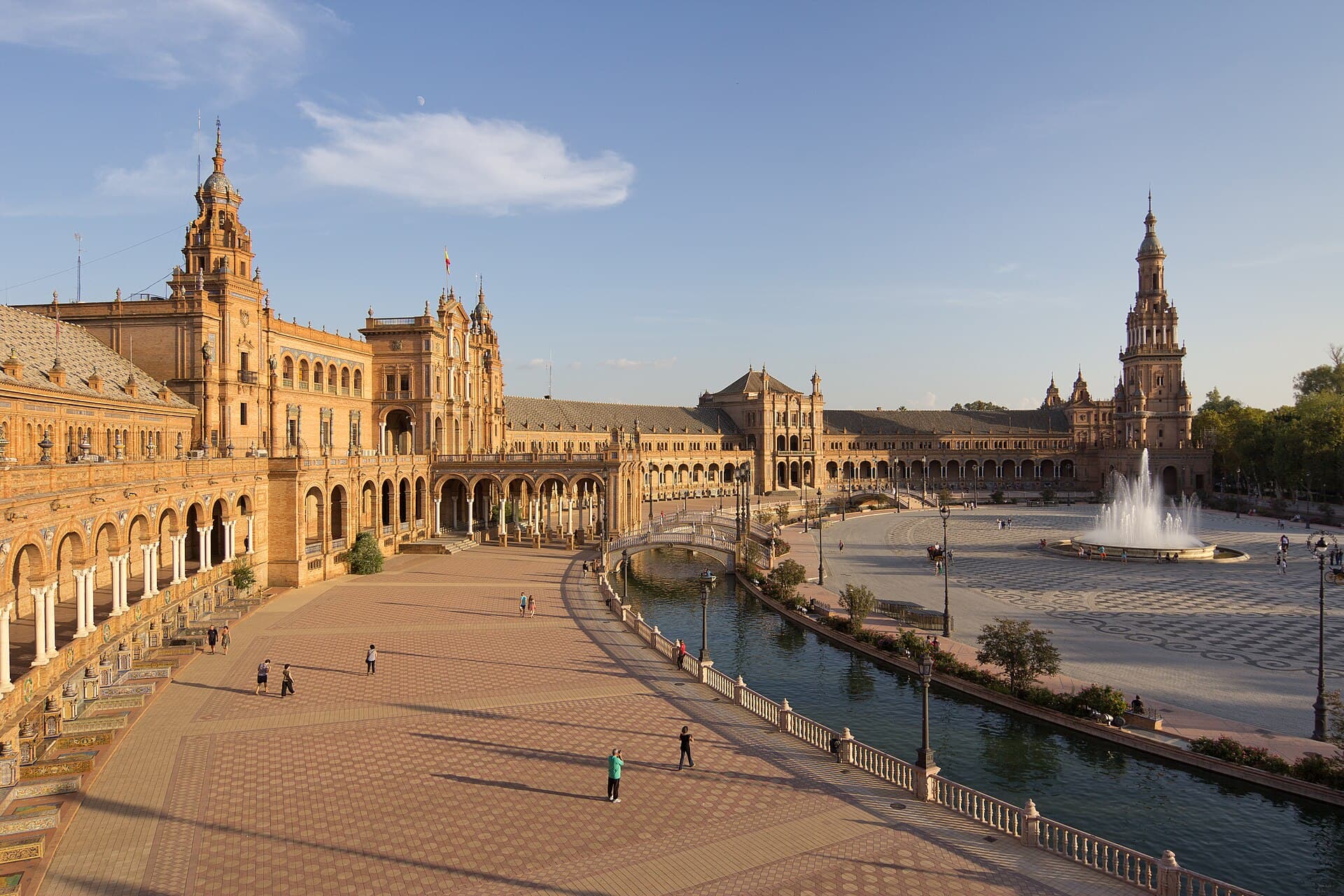
Plaza de España in Seville, a curved building with a canal in front and tiled benches.
Photo Carlos Delgado · CC BY-SA 4.0
Photo on Wikimedia Commons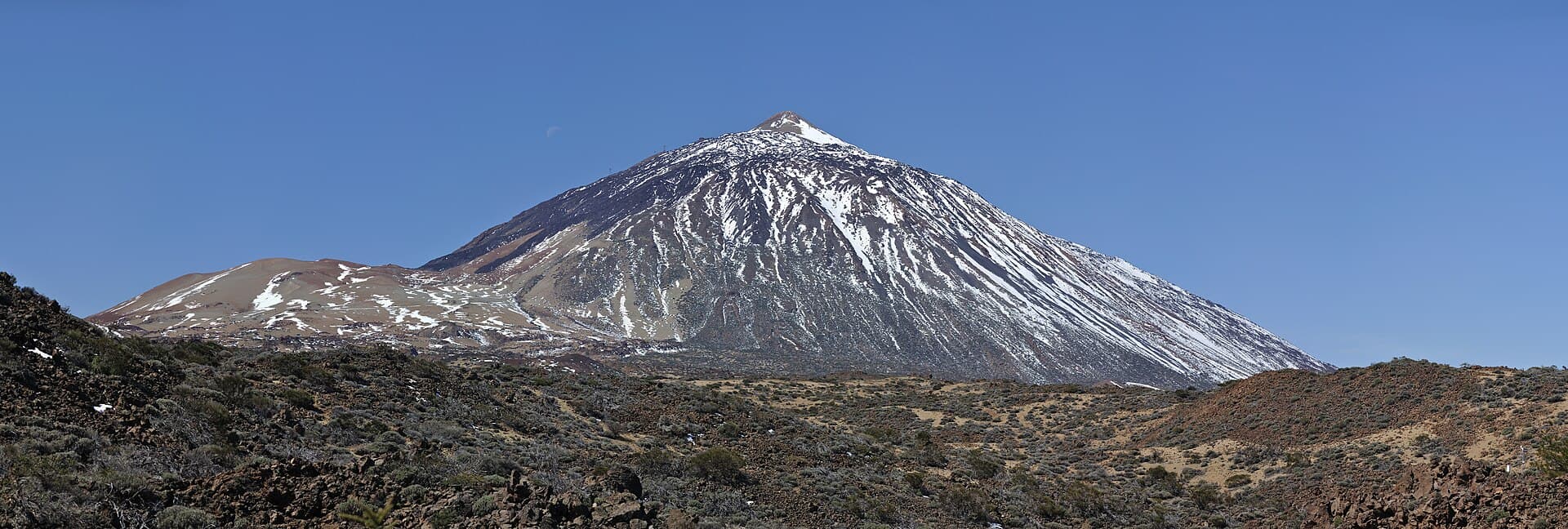
The summit of Teide on Tenerife, a volcanic cone above a field of lava.
Photo Quartl · CC BY-SA 3.0
Photo on Wikimedia Commons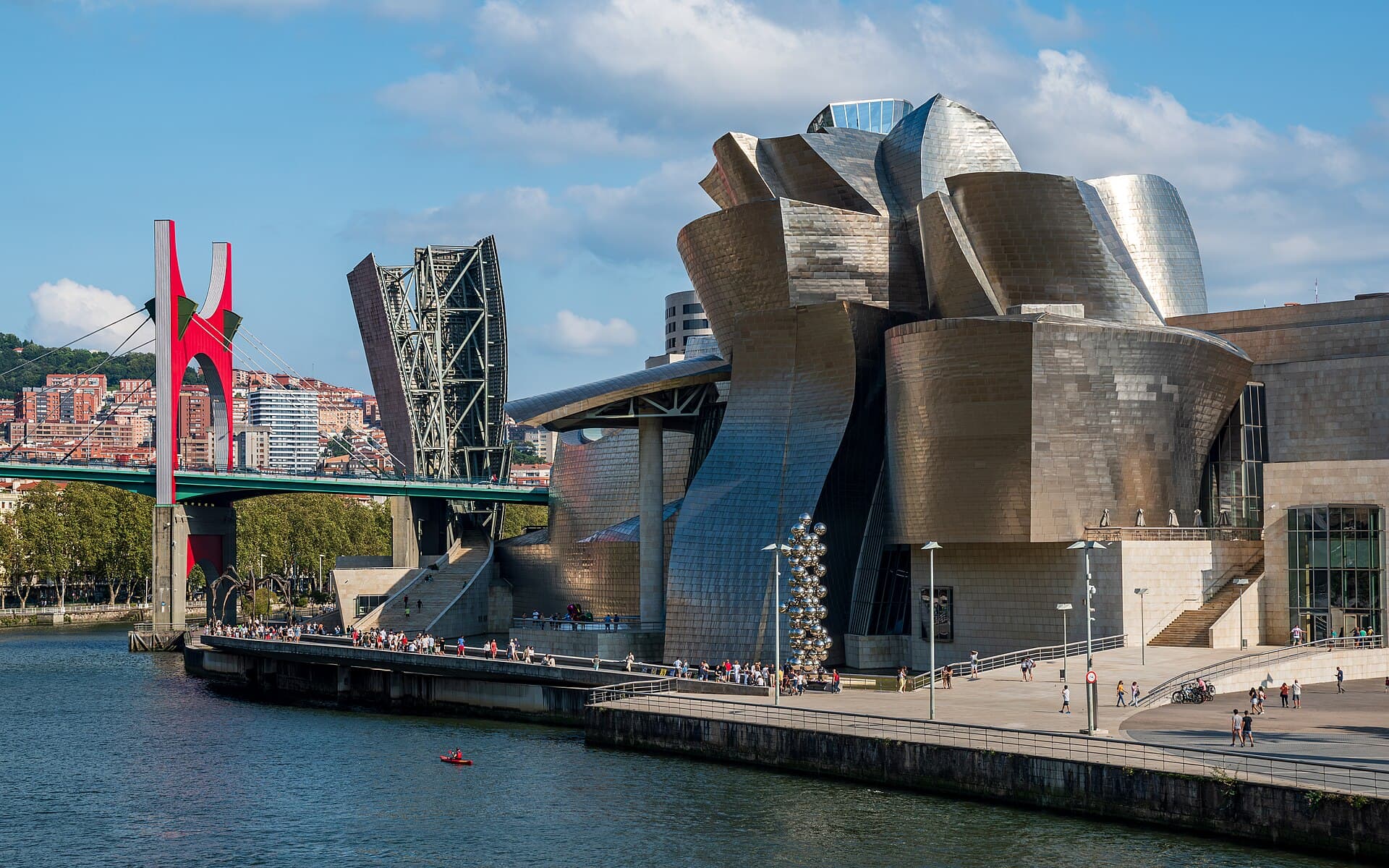
The Guggenheim Museum in Bilbao, curved metal surfaces beside the water.
Photo José Ligero Loarte · CC BY-SA 4.0
Photo on Wikimedia Commons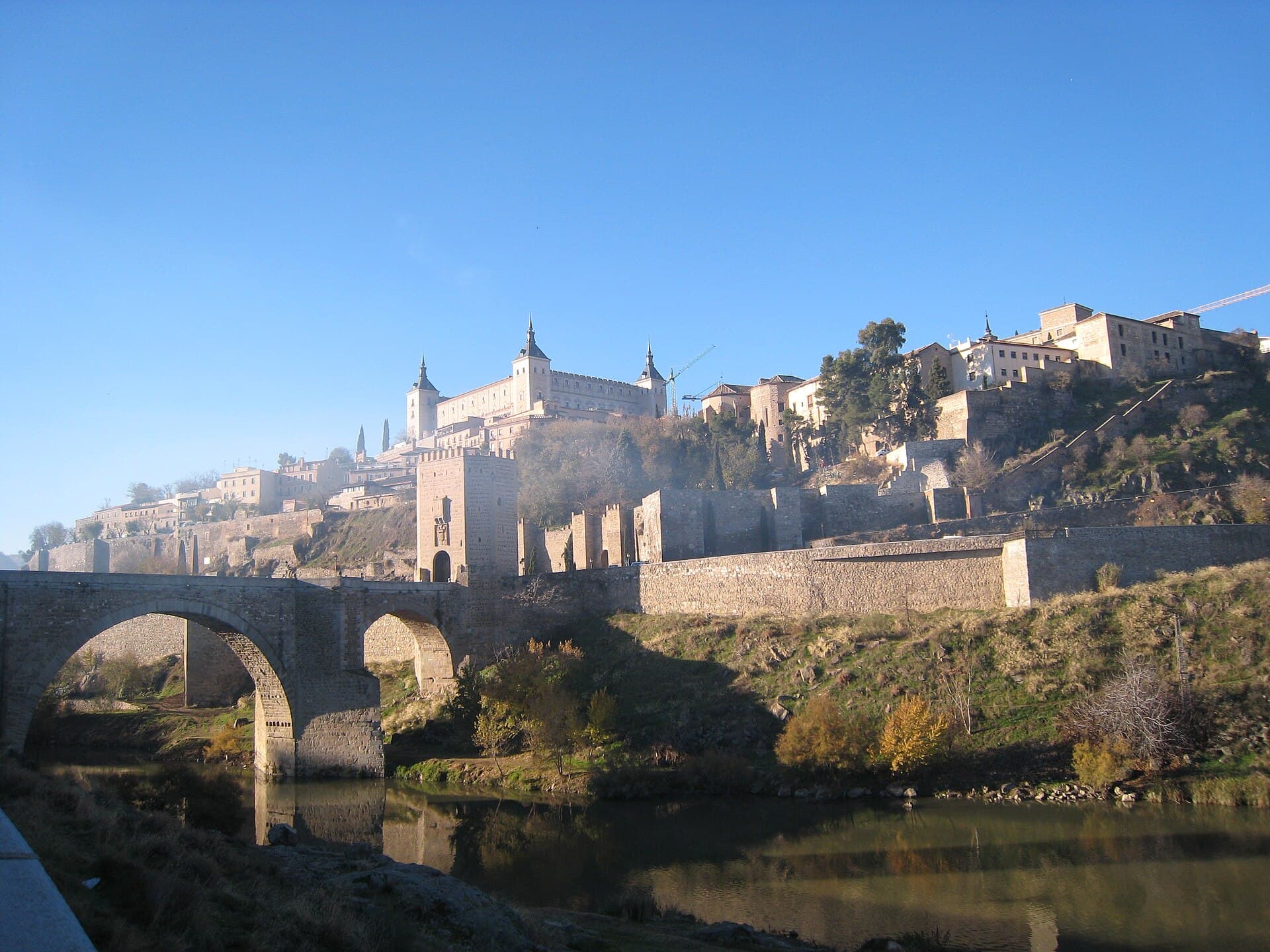
Toledo gathered on a hill inside a river bend, walls above the rock.
Photo Windwhistler · CC BY 3.0
Photo on Wikimedia Commons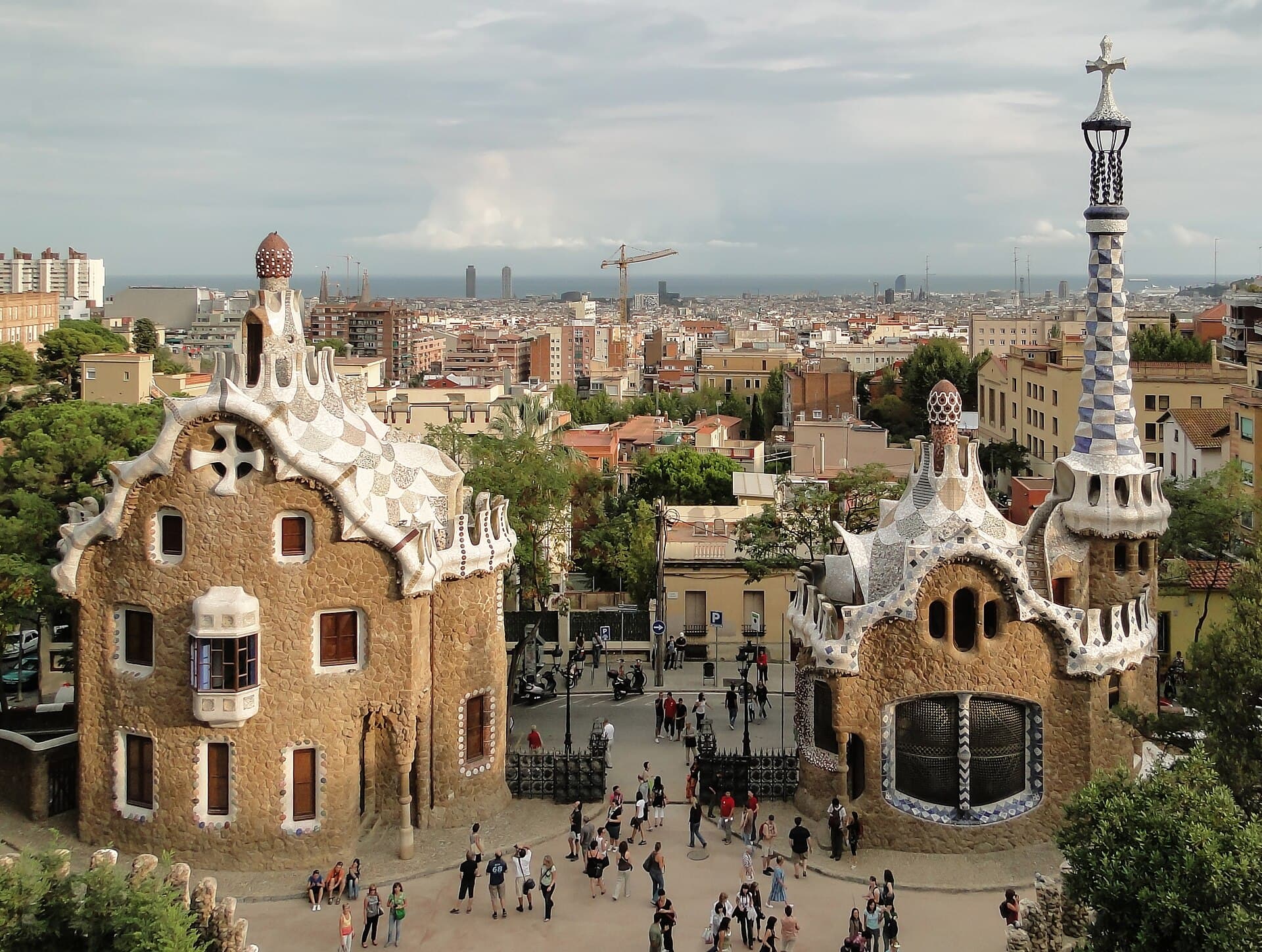
The gate lodges of Park Güell, roofs of broken ceramic, with the city and the sea behind.
Photo Bernard Gagnon · CC BY-SA 3.0
Photo on Wikimedia Commons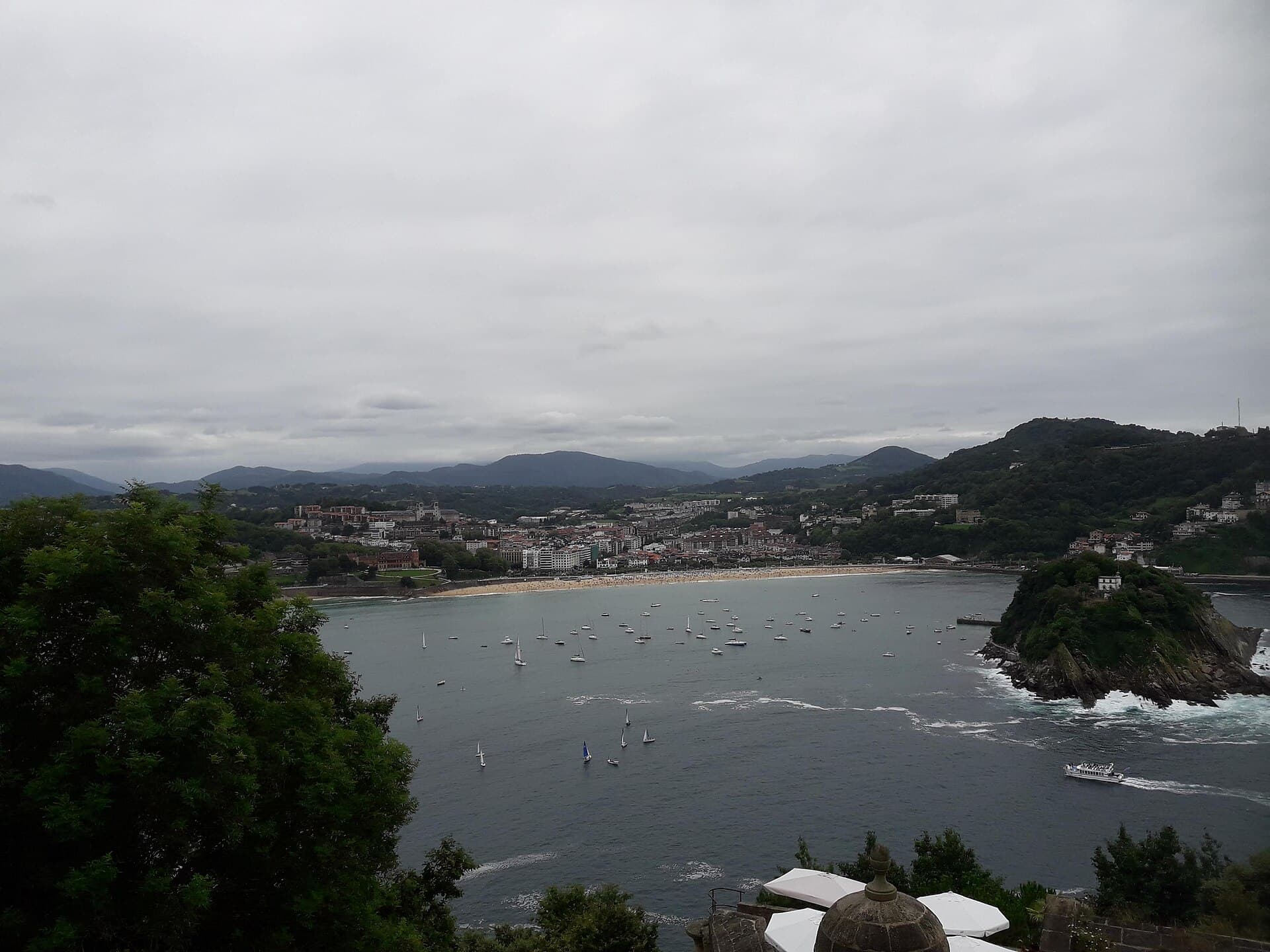
La Concha from a height, a curved beach, boats on the water and a hill on the right.
Photo pere prlpz · CC BY-SA 3.0
Photo on Wikimedia CommonsBetween the Atlantic and the Mediterranean, with the Canary Islands in the ocean
Spain
Palaces on the plateau, a northern bay, and a volcano in the Atlantic.
Madrid is the capital. The mainland lies between the Atlantic and the Mediterranean, and the Canaries sit out in the ocean, Tenerife the largest of them. The country covers 506,030 square kilometres. A provisional count for July 2026 put the population at 49,801,559. Teide on Tenerife is the highest point, at 3,715 metres. On the mainland, Mulhacén in the Sierra Nevada reaches 3,479 metres. Fifty sites are on the World Heritage List, the first five inscribed in 1984, among them the Alhambra and Park Güell.
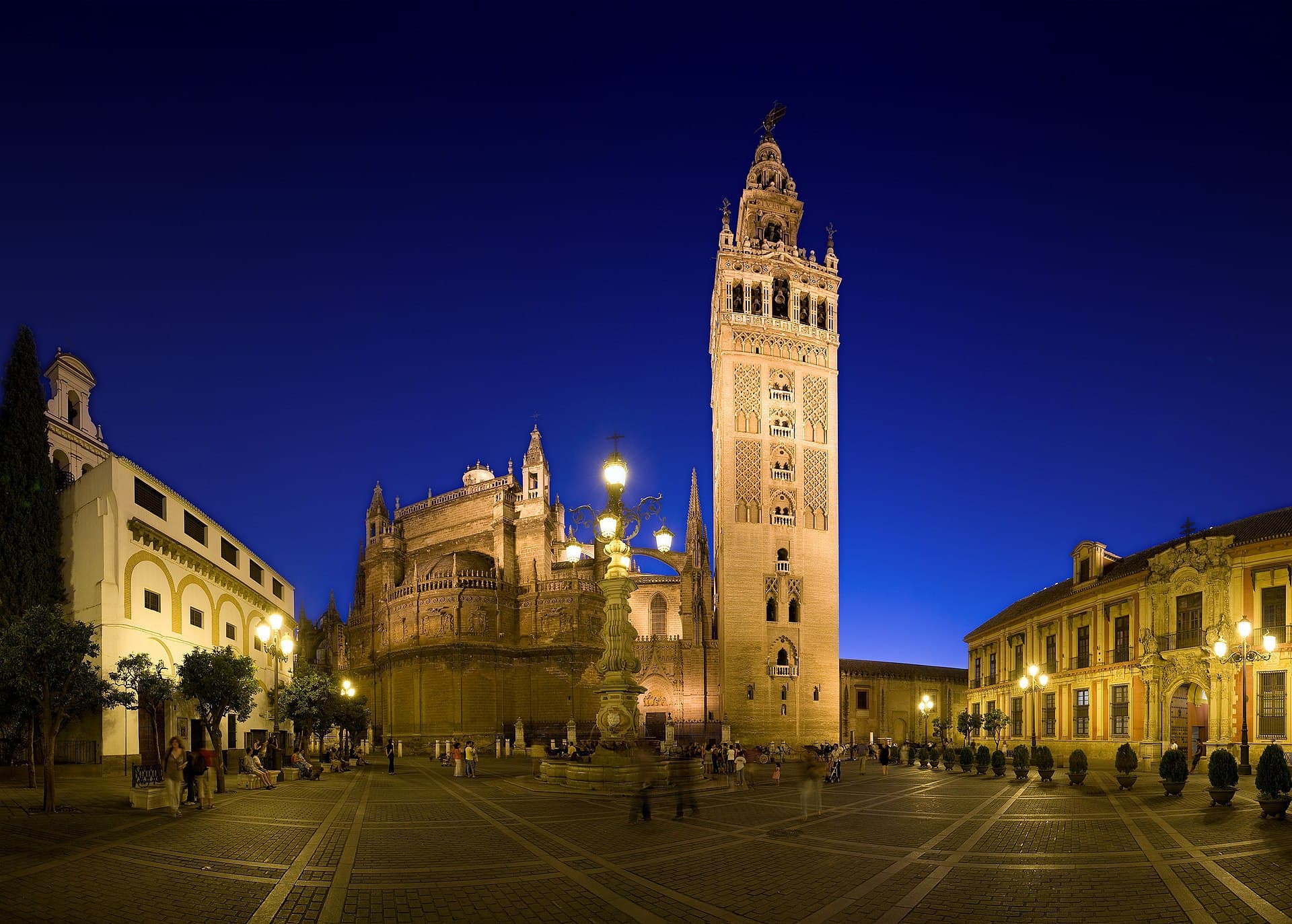
The south in these pages is inland. Seville stands on the Guadalquivir, 657 kilometres long, the only large navigable river, with ships running from the city to the Gulf of Cádiz. The Giralda was completed on 10 March 1198, and the palace has a Mudéjar wing decorated in the 1360s. Farther east, at 738 metres under the Sierra Nevada, Granada holds the Alhambra, the Generalife above it, and the Albaicín, added to that listing in 1994.
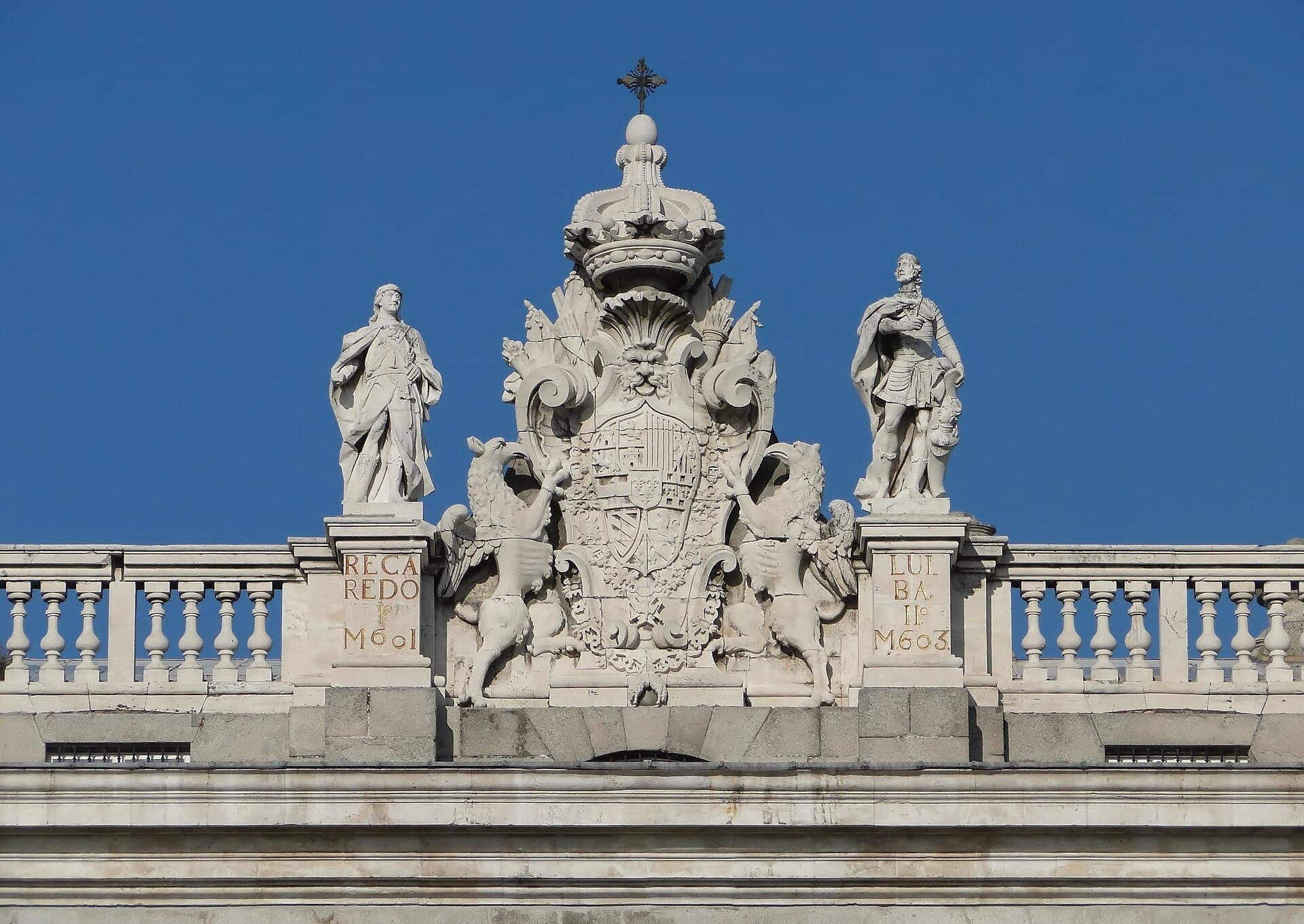
Madrid itself is not a coastal city. It sits on the Manzanares at 660 metres, with a royal palace built between 1738 and 1755 after the fire of 1734, Plaza Mayor from 1580 to 1619, and the Retiro at 1.4 square kilometres. High-speed trains reach Toledo, on a bend of the Tagus, the peninsula’s longest river at 1,007 kilometres. Toledo’s old city was listed in 1986.
Barcelona is the one Mediterranean stop. It is the second city, with 1,713,247 residents in 2025, between the Llobregat and the Besòs, Collserola to the west. The Sagrada Família was begun on 19 March 1882 and is still being built. Park Güell opened in 1914. Gaudí redesigned Casa Batlló in 1904. La Boqueria opens off La Rambla.
The Atlantic coast here is a single stretch: Bilbao on the Nervión estuary, and San Sebastián on the Bay of Biscay, 20 kilometres from France. The Guggenheim Museum Bilbao opened on 18 October 1997. The islands are Tenerife alone, 2,034.38 square kilometres, with Teide National Park listed in 2007 across 189.9 square kilometres.
The AVE covers the long gaps: about 3,973 kilometres of high-speed track, with trains up to 300 kilometres an hour. Madrid reached Córdoba and Seville in 1992, and Toledo in 2005 at 250 kilometres an hour. The currency is the euro. The mainland and the Balearics share a clock, and the Canaries run an hour behind. April, May, September and October suit the inland cities. July and August scorch Seville and the centre. Entry depends on nationality, so open the consular services page of the Ministry of Foreign Affairs before you book.
Key cities and regions
Madrid
The capital on the Manzanares, at 660 metres: the royal palace, Plaza Mayor and the Retiro.
Barcelona
The second city, on the Mediterranean: the Sagrada Família, Park Güell, Casa Batlló and La Boqueria.
Seville
On the Guadalquivir: the Giralda, the Alcázar, and Plaza de España in María Luisa Park.
Granada
Under the Sierra Nevada: the Alhambra, the Generalife, the Albaicín and Mulhacén.
Toledo
An old city on a bend of the Tagus, with a square fortress and a high-speed link from Madrid since 2005.
Bilbao and San Sebastián
The northern Atlantic: the Guggenheim on the Nervión estuary, and La Concha on the Bay of Biscay.
Tenerife
The largest Canary island: Teide at 3,715 metres, the cliffs of Los Gigantes, and La Laguna.
Want to know Spain better?
A journey in photos, maps, and figures—one step at a time.
What does a flight to Spain cost—and when is it cheaper?
Check from your city →FAQ about Spain
When is the best time to visit Spain?
For inland and southern cities, April and May, then September and October, are easier than the peak of the heat. Madrid has frost, rain and occasional snow from December to February, and 40.7 degrees was recorded in the Retiro on 14 August 2021. Seville’s summer is long, hot and dry, and its winter is milder. Barcelona’s rain is heaviest in autumn and spring, with a short dry spell in summer. Bilbao is wet from October to April, and November is its dampest month. Tenerife’s coasts stay mild in winter and warm in summer, so the islands do not follow the plateau’s calendar.
How many days are enough?
A week can take in Madrid and Toledo, then one southern city, either Seville or Granada. Ten days leave room for Barcelona and for the northern line to Bilbao and La Concha. Tenerife deserves a trip of its own, or three days at the end, because the flight is separate from the mainland trains. High-speed service between Madrid and Seville has run since 1992, and the Madrid–Toledo line since 2005, which shortens the transfer without replacing the time you spend walking inside each city.
Is a visit expensive?
The general price level in 2025 is about 65 percent of the United States level. The figure comes from the purchasing-power conversion factor divided by the official exchange rate, and it measures the whole economy, not a hotel bill or a market meal. The euro is the currency, and the day’s rate appears in the currency field. Tickets for palaces and museums change, and the current price stays on each place’s own site.
What is the currency, and are cards accepted?
The currency is the euro. Its three-letter code appears in the currency field with the day’s rate. In Madrid, Barcelona, Seville and Bilbao, cards are taken in hotels and in many restaurants and museums. In small markets and some bars, cash is still useful for small amounts, so a few notes beside the card are enough. The converter on this site moves between the euro and your own currency, without a rate fixed in this text.
How do I travel between cities?
High-speed rail is the spine between Madrid and Seville, in service since 1992, with trains reaching 300 kilometres an hour on a network of about 3,973 kilometres. Toledo has been linked to Madrid since 2005 at 250 kilometres an hour, so it does not need an airport. The five airports here are Madrid, Barcelona, Tenerife South, Seville and Bilbao. Tenerife is reached by air. Inside the old cities, walking beats driving: in Toledo, Granada and Seville the streets tighten on the hill or beside the river.
Do I need a visa?
It depends on nationality. The consular services page of the Ministry of Foreign Affairs gathers the application links, and the office is chosen according to the country where you live. Open that page before you buy a ticket, because what applies to one traveller does not apply to another, and the practical detail stays with the consulate.
Where should I start: inland, north or the island?
If time is short, begin with Madrid and Toledo, then choose either Barcelona on the Mediterranean or Seville and Granada in the southern interior, not both plus a third coast. Bilbao and San Sebastián are one Atlantic shore, wetter and unlike Andalusia. Tenerife is a volcano and an ocean, and it belongs in the plan only if there is a separate flight day. Do not pack the Mediterranean, the north and the Canaries into a single week: the distances eat the days.
Photos (34)
Sources & photo credits(53 sources · 34 photos · last verified 2026-10-11)
- 1.Spain · Wikipedia · Accessed 2026-10-11
- 2.Geography of Spain · Wikipedia · Accessed 2026-10-11
- 3.Madrid · Wikipedia · Accessed 2026-10-11
- 4.Barcelona · Wikipedia · Accessed 2026-10-11
- 5.Seville · Wikipedia · Accessed 2026-10-11
- 6.Granada · Wikipedia · Accessed 2026-10-11
- 7.Toledo, Spain · Wikipedia · Accessed 2026-10-11
- 8.Alcázar of Toledo · Wikipedia · Accessed 2026-10-11
- 9.Bilbao · Wikipedia · Accessed 2026-10-11
- 10.San Sebastián · Wikipedia · Accessed 2026-10-11
- 11.Tenerife · Wikipedia · Accessed 2026-10-11
- 12.Teide · Wikipedia · Accessed 2026-10-11
- 13.Teide National Park · Wikipedia · Accessed 2026-10-11
- 14.Sagrada Família · Wikipedia · Accessed 2026-10-11
- 15.Park Güell · Wikipedia · Accessed 2026-10-11
- 16.Casa Batlló · Wikipedia · Accessed 2026-10-11
- 17.Alcázar of Seville · Wikipedia · Accessed 2026-10-11
- 18.Giralda · Wikipedia · Accessed 2026-10-11
- 19.Guggenheim Museum Bilbao · Wikipedia · Accessed 2026-10-11
- 20.Alhambra · Wikipedia · Accessed 2026-10-11
- 21.Generalife · Wikipedia · Accessed 2026-10-11
- 22.Albaicín · Wikipedia · Accessed 2026-10-11
- 23.Sierra Nevada (Spain) · Wikipedia · Accessed 2026-10-11
- 24.Mulhacén · Wikipedia · Accessed 2026-10-11
- 25.San Cristóbal de La Laguna · Wikipedia · Accessed 2026-10-11
- 26.Aqueduct of Segovia · Wikipedia · Accessed 2026-10-11
- 27.Plaza de España, Seville · Wikipedia · Accessed 2026-10-11
- 28.Royal Palace of Madrid · Wikipedia · Accessed 2026-10-11
- 29.Parque del Buen Retiro · Wikipedia · Accessed 2026-10-11
- 30.Plaza Mayor, Madrid · Wikipedia · Accessed 2026-10-11
- 31.AVE · Wikipedia · Accessed 2026-10-11
- 32.High-speed rail in Spain · Wikipedia · Accessed 2026-10-11
- 33.Flamenco · Wikipedia · Accessed 2026-10-11
- 34.Paella · Wikipedia · Accessed 2026-10-11
- 35.Spanish omelette · Wikipedia · Accessed 2026-10-11
- 36.Jamón ibérico · Wikipedia · Accessed 2026-10-11
- 37.La Boqueria · Wikipedia · Accessed 2026-10-11
- 38.Guadalquivir · Wikipedia · Accessed 2026-10-11
- 39.Tagus · Wikipedia · Accessed 2026-10-11
- 40.Nervión · Wikipedia · Accessed 2026-10-11
- 41.List of World Heritage Sites in Spain · Wikipedia · Accessed 2026-10-11
- 42.Time in Spain · Wikipedia · Accessed 2026-10-11
- 43.Euro · Wikipedia · Accessed 2026-10-11
- 44.Mudéjar art · Wikipedia · Accessed 2026-10-11
- 45.Azulejo · Wikipedia · Accessed 2026-10-11
- 46.Madrid–Barajas Airport · Wikipedia · Accessed 2026-10-11
- 47.Josep Tarradellas Barcelona–El Prat Airport · Wikipedia · Accessed 2026-10-11
- 48.Seville Airport · Wikipedia · Accessed 2026-10-11
- 49.Bilbao Airport · Wikipedia · Accessed 2026-10-11
- 50.Tenerife South Airport · Wikipedia · Accessed 2026-10-11
- 51.PPP conversion factor, GDP (LCU per international $) · World Bank · Accessed 2026-10-11
- 52.Official exchange rate (LCU per US$, period average) · World Bank · Accessed 2026-10-11
- 53.Consular services · Ministry of Foreign Affairs of Spain · Accessed 2026-10-11
- The Alhambra in Granada at evening, walls and towers on the slope with mountains behind. · Jebulon · Public domain
- A wide view of the Alhambra from the Albaicín side, the palace in the middle and the mountain on the horizon. · Slaunger · CC BY-SA 3.0
- Plaza Mayor in Madrid, an arcaded square closed in on every side. · Carlos Delgado · CC BY-SA 3.0
- The Guggenheim Museum in Bilbao, curved metal surfaces beside the water. · José Ligero Loarte · CC BY-SA 4.0
- The summit of Teide on Tenerife, a volcanic cone above a field of lava. · Quartl · CC BY-SA 3.0
- Plaza de España in Seville, a curved building with a canal in front and tiled benches. · Carlos Delgado · CC BY-SA 4.0
- The gate lodges of Park Güell, roofs of broken ceramic, with the city and the sea behind. · Bernard Gagnon · CC BY-SA 3.0
- Toledo gathered on a hill inside a river bend, walls above the rock. · Windwhistler · CC BY 3.0
- The Giralda at night in a Seville square, brick patterning and a belfry at the top. · Diliff · CC BY-SA 3.0
- The facade of the Royal Palace in Madrid, tall columns above a stone base. · Bernard Gagnon · CC BY-SA 3.0
- The lake in Madrid’s Retiro, the monument at one end among the trees. · Diego Delso · CC BY-SA 4.0
- The Court of the Water Channel at the Generalife, a long rill between two hedges. · Benjamin Smith · CC BY-SA 4.0
- White houses of the Albaicín on the hill, seen from the Alhambra side. · Ввласенко · CC BY-SA 3.0
- The Segovia aqueduct, a long run of stone arches carrying the water channel. · David Corral Gadea · CC BY-SA 3.0 es
- A pan of paella, short-grain rice with saffron and vegetables. · Jan Harenburg · CC BY-SA 4.0
- The upper floors of Casa Batlló, a scaled roof, bone-like balconies and mosaic. · Bernard Gagnon · CC BY-SA 3.0
- A garden of the Alcázar in Seville, a pool framed by arches and palms. · Martinvl · CC BY-SA 4.0
- The north face of Mulhacén, the highest summit on mainland Spain, rock and snow. · Carlos Serra · CC BY-SA 3.0
- A line of rocks in Teide National Park, with the volcanic hill behind. · Ingo Mehling · CC BY-SA 4.0
- The Bilbao estuary, a broad reach of water and buildings under a cloudy sky. · Ksarasola · CC BY-SA 4.0
- A stone bridge crossing the Tagus toward Toledo, the city on the far bank. · Nikthestoned · CC BY-SA 3.0
- Olive groves on Andalusian hills, rows of trees running to the horizon. · Wildmountainscene · CC BY-SA 3.0
- Toledo’s square fortress with its four towers, at the top of the city. · Carlos Delgado · CC BY-SA 3.0 es
- The cliffs of Los Gigantes on Tenerife, high walls dropping to the Atlantic. · Diego Delso · CC BY-SA 3.0
- A white train with a red stripe crossing a bridge among trees on the high-speed line. · Peter elektro · CC BY-SA 3.0
- A glazed-tile bench in Plaza de España, with a panel for the province of Castellón. · This file is a work by Takashi kurita.Please, credit this: Álvaro C.E. I would appreciate being notified (acantos30hotmail.com) if you use my work outside Wikimedia More of my work can be found in my personal gallery · CC BY-SA 3.0
- A paved street in La Laguna, houses with balconies and tall windows. · ArticCynda · CC BY-SA 4.0
- A lizard covered in broken coloured ceramic at the stair of Park Güell. · Isiwal · CC BY-SA 3.0
- The towers of the Sagrada Família with cranes above them, the building still underway. · Gerardo nuñez · CC BY 3.0
- La Concha from a height, a curved beach, boats on the water and a hill on the right. · pere prlpz · CC BY-SA 3.0
- A sliced potato tortilla on a skewer, set on pieces of bread. · Kent Wang · CC BY-SA 2.0
- Legs of jamón hanging in a shop window, white fat and red meat. · K.Weise · CC BY-SA 4.0
- Braids of dried peppers hanging in La Boqueria market in Barcelona. · José Alejandro Salamanca Pérez · Public domain
- The nose of a white high-speed train on the tracks in a station. · Bonaventura Leris from Barcelona · CC BY 2.0