
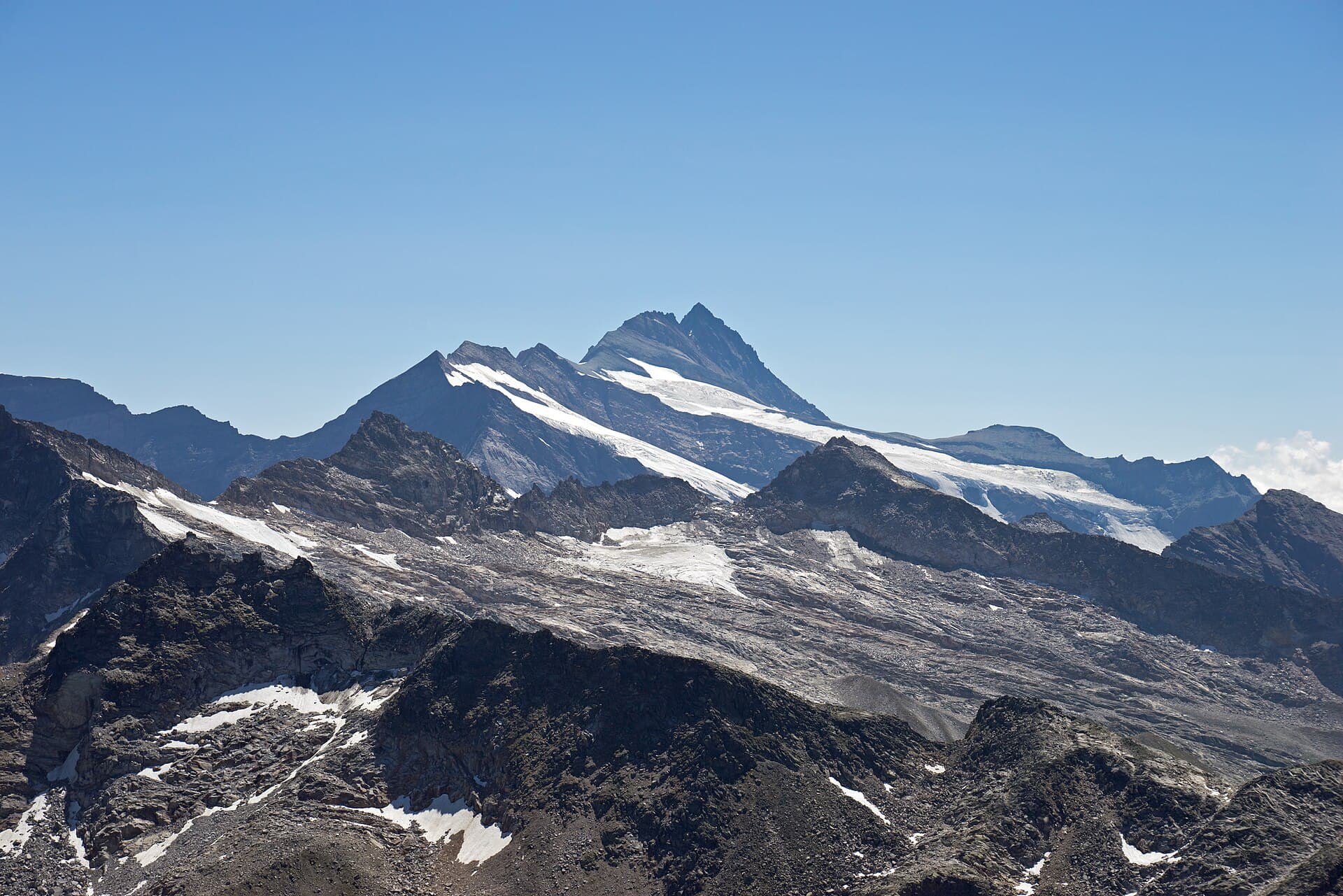
The pyramidal summit of Grossglockner, Austria’s highest mountain.
Photo Jörg Braukmann · CC BY-SA 4.0
Photo on Wikimedia Commons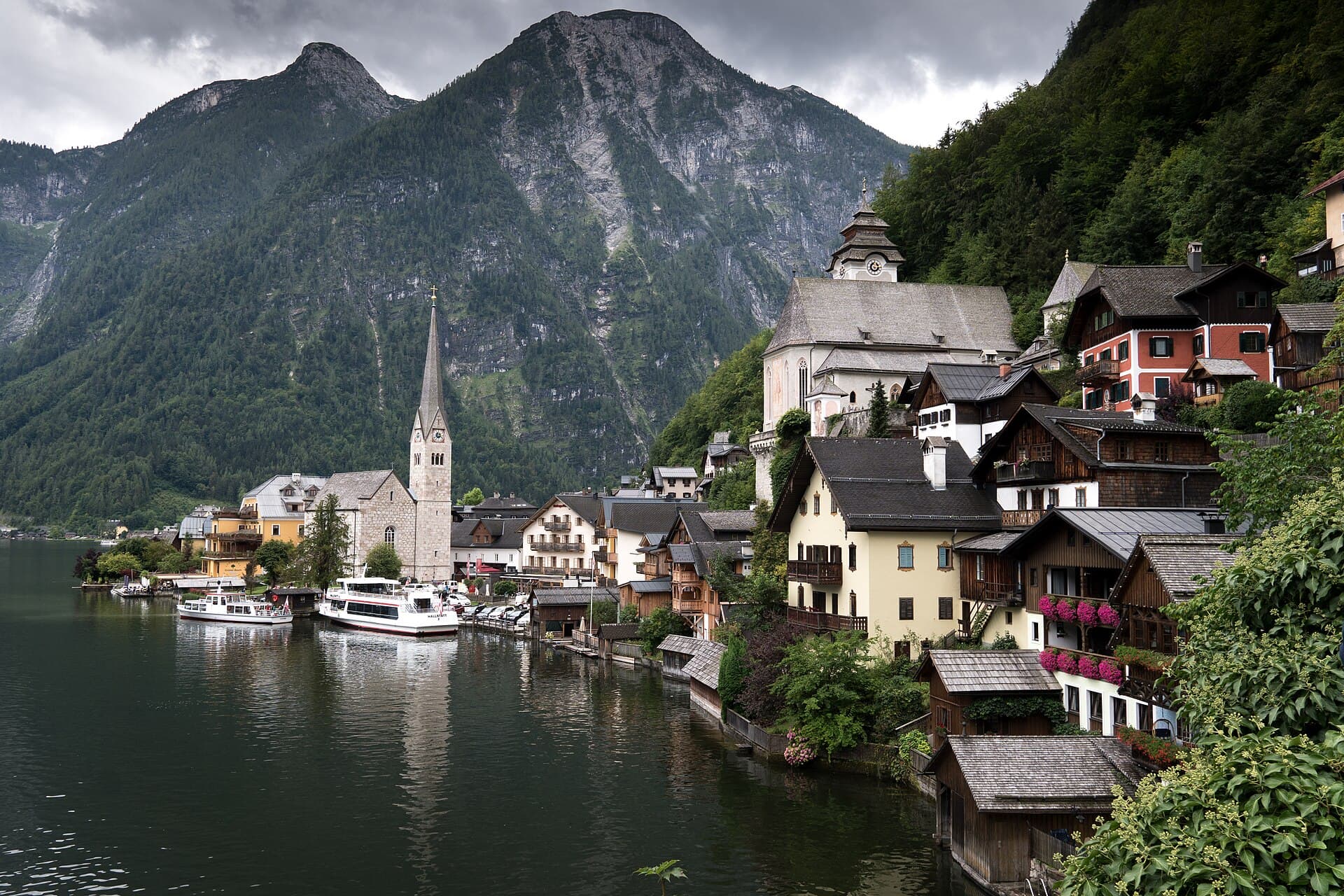
The town of Hallstatt on its lakeshore, the mountain dropping to the water.
Photo Ekrem Canli · CC BY-SA 4.0
Photo on Wikimedia Commons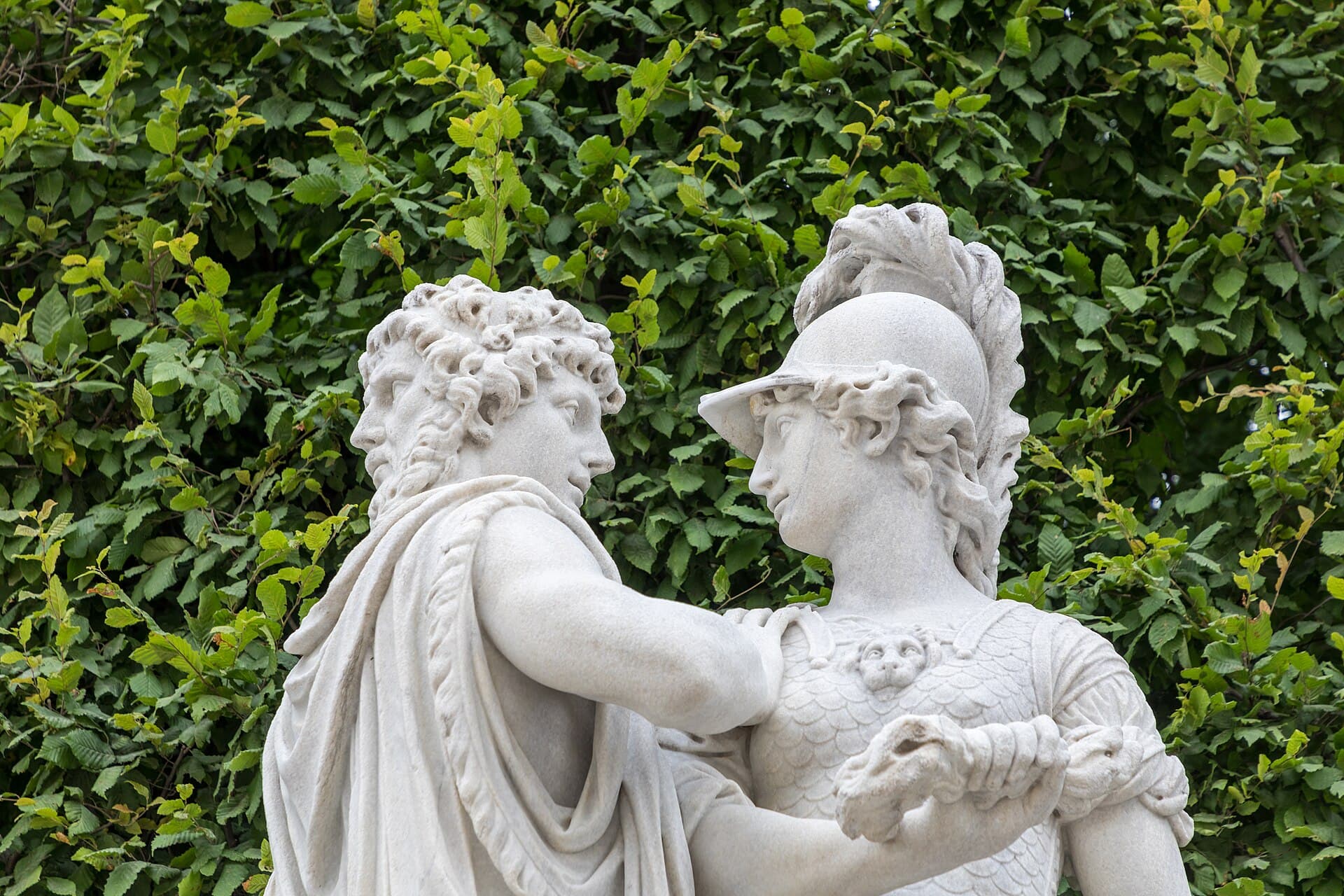
Schönbrunn Palace gardens in Vienna, clipped avenues leading to the palace at the end of the axis.
Photo Dietmar Rabich · CC BY-SA 4.0
Photo on Wikimedia Commons
Dürnstein on the Danube, between river, hillside and vineyards, with its blue tower.
Photo Bybbisch94, Christian Gebhardt · CC BY-SA 4.0
Photo on Wikimedia Commons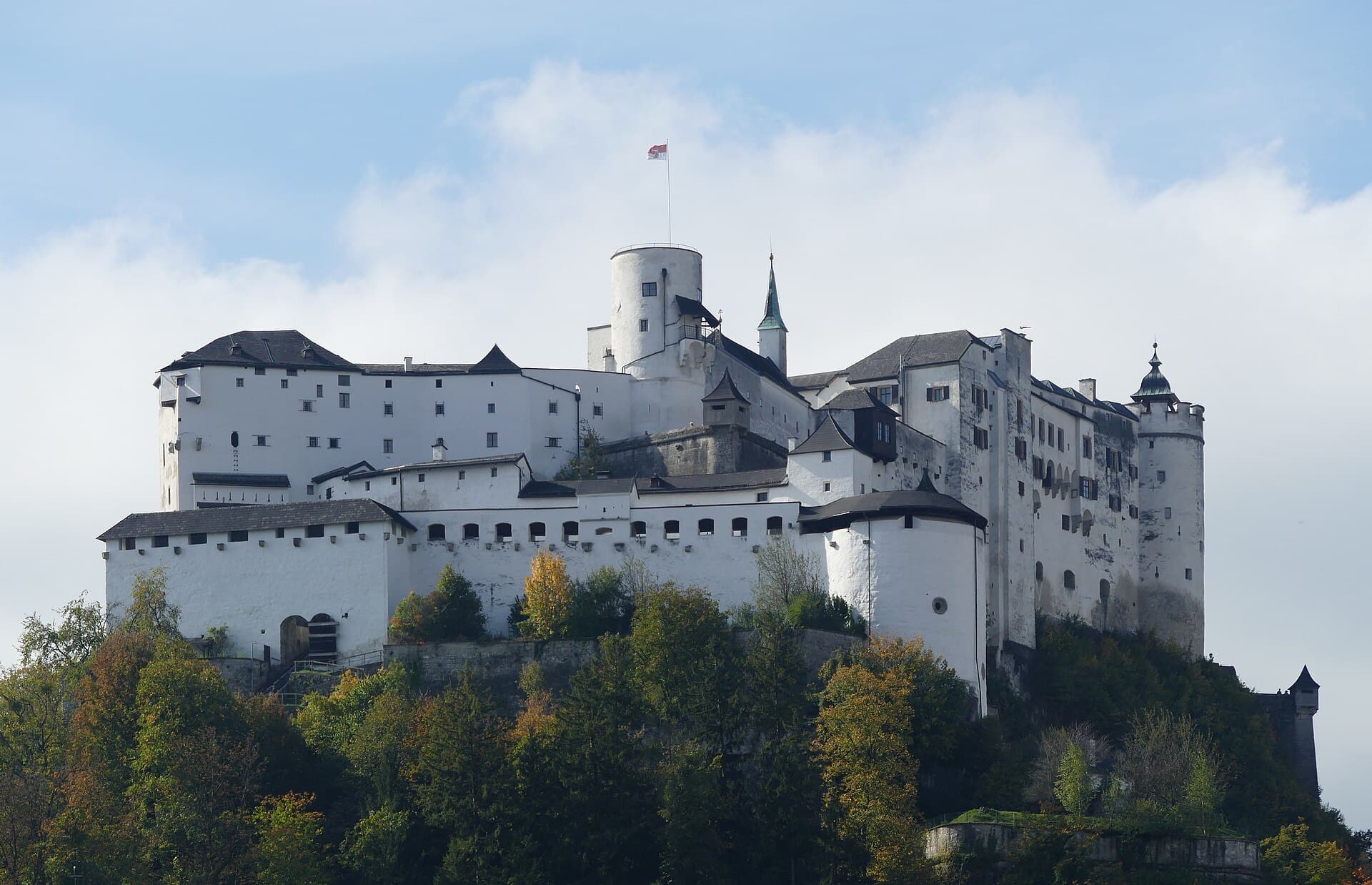
Hohensalzburg Fortress above the city, seen from the northeast.
Photo Andreas Stiasny · CC BY-SA 4.0
Photo on Wikimedia Commons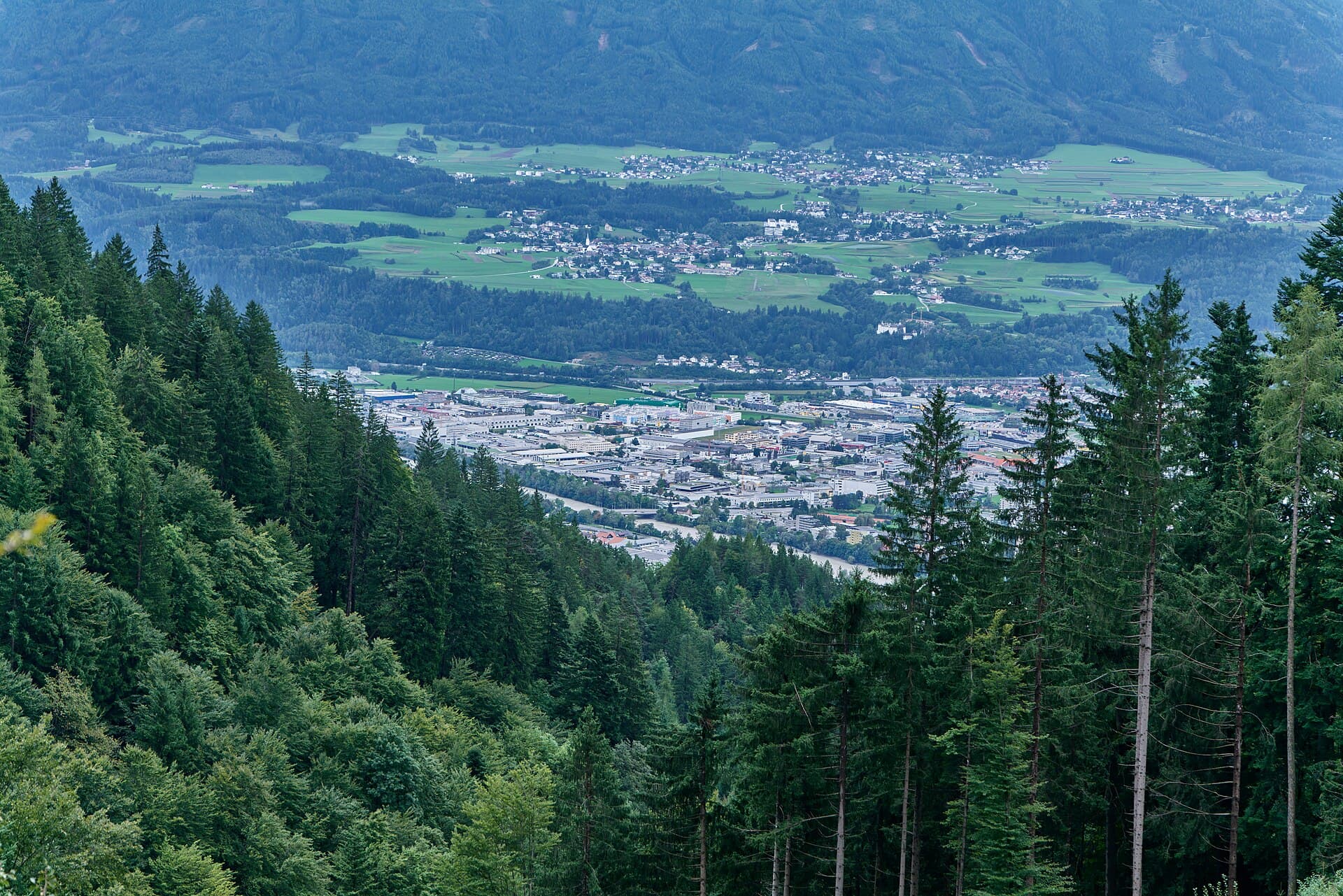
Innsbruck in the Inn Valley, the Nordkette range rising over the city.
Photo Leonhard Lenz · CC0
Photo on Wikimedia Commons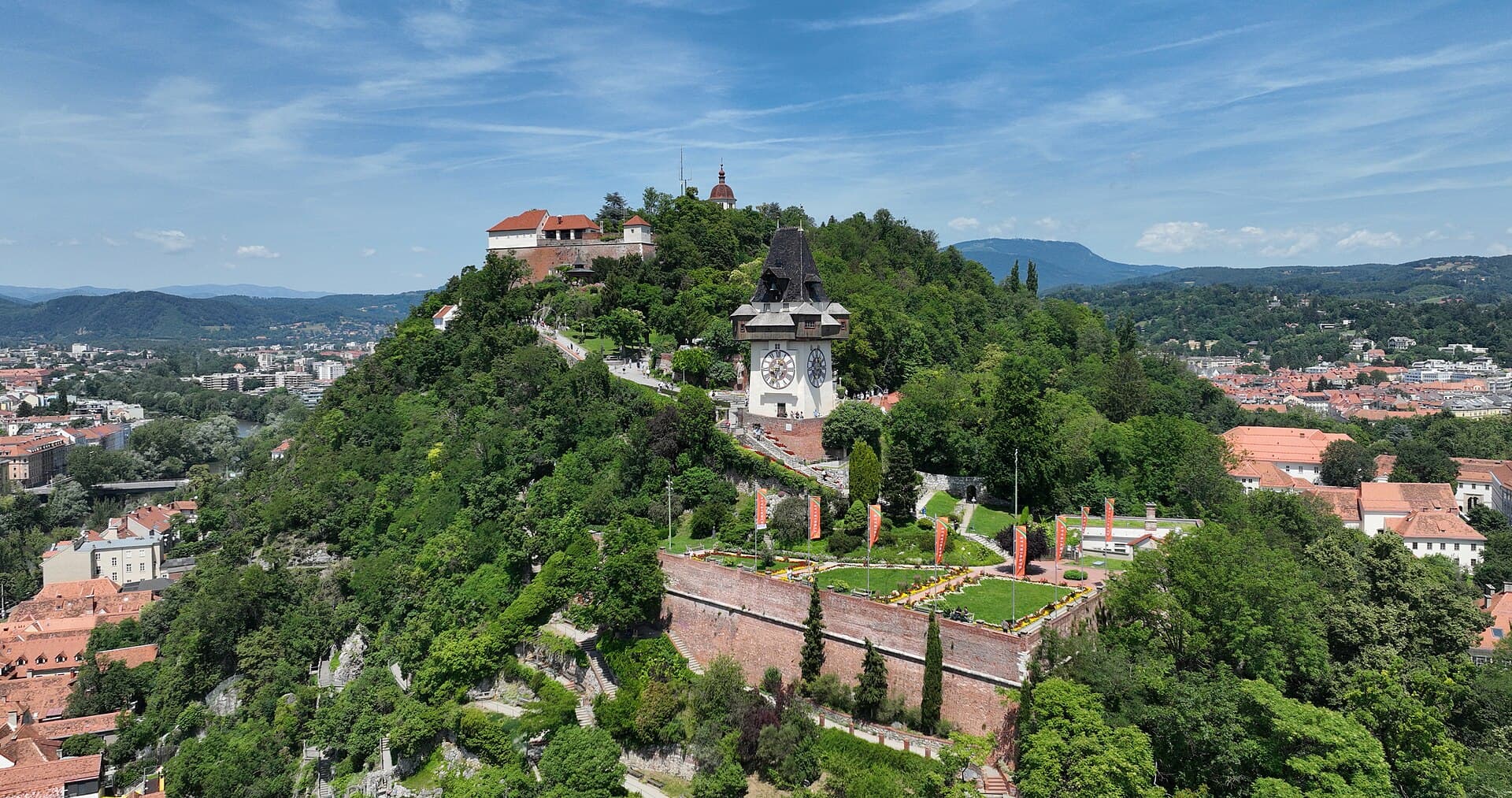
The clock tower on Schlossberg above the rooftops of Graz.
Photo C.Stadler/Bwag · CC BY-SA 4.0
Photo on Wikimedia Commons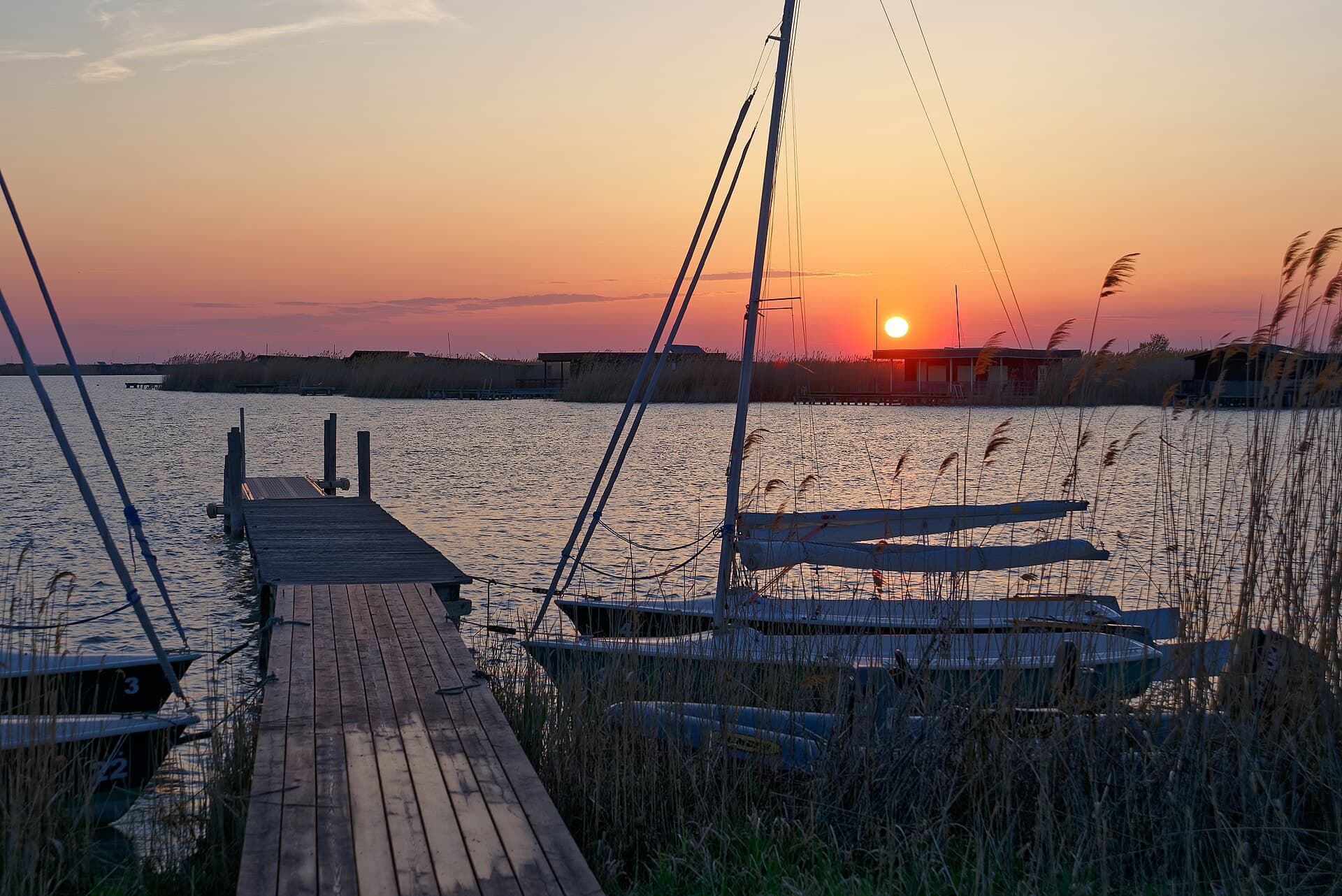
Lake Neusiedl at sunrise — shallow water and reeds on the eastern plain.
Photo Jakub Hałun · CC BY-SA 4.0
Photo on Wikimedia CommonsCentral Europe
Austria
A compact country rising from the Danube to Alpine ice.
Austria has no coastline. It sits in the middle of Europe, among the Eastern Alps, as a federation of nine states with Vienna as its capital and largest city. Germany borders it to the northwest, Czechia to the north, Slovakia to the northeast, Hungary to the east, Slovenia and Italy to the south, and Switzerland and Liechtenstein to the west. The country covers about 83,879 square kilometres. On 1 January 2026 the final Statistics Austria count put the population at 9,215,956.
On a map the country looks modest; on the ground it climbs fast. Grossglockner, the highest summit, stands 3,798 metres above the Adriatic. From Lake Constance in the west — where Austria meets Switzerland and Germany — the land stretches to Lake Neusiedl in the east, a steppe lake on the edge of the Hungarian Plain. The country runs nearly 600 kilometres end to end. Its western third is a narrow corridor between Germany and Italy, only 32 to 60 kilometres wide. That contrast is why a journey here can feel short in distance and long in elevation.
Most visits begin in Vienna on the Danube, among palaces, gardens and the historic centre. Upstream the river narrows through the Wachau between Melk and Krems — thirty-six kilometres of vineyards and riverside towns. Then the Alps rise: Salzburg at the mountain foot, Hallstatt on a lake beneath the Dachstein, Innsbruck on a valley floor under the Nordkette. In the Hohe Tauern the ice still holds. Farther south sits Graz, a city built around a hill rather than a peak. The trip is not island-hopping; it is a climb from river plain to snow, then a descent into another city.
There is no single “best” season. The official tourism site presents Austria as a year-round destination: summer for walking, cycling and lakes; winter for Alpine snow; spring and autumn for cities and food in milder weather. Snow, it says, often arrives from late November, especially in the Tyrol and Salzburger Land mountains. Austria holds twelve entries on the World Heritage List, some shared with neighbouring countries.
German is the official language, the euro the currency, and Central European Time the clock. For international arrivals Vienna’s airport is the clearest first stop, followed by Salzburg, Innsbruck and Graz — Vienna the largest of them. Trains link the cities; a car helps in remoter valleys; motorways require a vignette. The explore journey goes deeper, place by place.
Key cities and regions
Vienna
The capital on the Danube, known for its palaces, gardens and historic centre.
Wachau
Danube valley between Melk and Krems — vineyards and towns along 36 kilometres.
Salzburg
A city on the Salzach, its fortress rising above the roofs at the foot of the Alps.
Hallstatt
A narrow town between lake and Dachstein mountain, in the salt region.
Innsbruck
A city on the Inn valley floor, with the Nordkette range rising straight above it.
Grossglockner
Austria’s highest mountain, the Pasterze glacier, and the high alpine road.
Graz
The second city, in the south, its old centre gathered around Schlossberg hill.
Want to know Austria better?
A journey in photos, maps, and figures—one step at a time.
What does a flight to Austria cost—and when is it cheaper?
Check from your city →FAQ about Austria
When is the best time to visit Austria?
Any time of year works; the season changes what you do, not whether you can go. Summer suits walking, cycling and swimming in the lakes. Winter suits Alpine snow — the official tourism site says snow often arrives from late November, especially in the Tyrol and Salzburger Land mountains. Spring and autumn are milder for cities and food. If you combine Vienna with the mountains, winter serves the slopes and summer serves the lakes and high roads.
How many days do you need for Austria?
The country stretches nearly 600 kilometres, so distance alone is not why travel feels slow — elevation is. A week can cover Vienna, the Wachau Valley and one mountain region such as Salzburg and Hallstatt, or Innsbruck. Two weeks leave room to climb toward Grossglockner and then drop south to Graz. That is a suggested order shaped by the land, not a fixed itinerary, and trains shorten the hops between cities.
Is tourism in Austria expensive?
The overall price level in 2025 was about 82% of the United States level, calculated from World Bank purchasing-power parity and exchange-rate figures. That measures the whole economy, not a traveller’s bill. Daily spending varies widely with the kind of trip. One official example: Schönbrunn gardens are free during opening hours, and the adult palace ticket was 42 euros with audio guide on the official site on 26 September 2026; prices change by season.
What currency is used, and are cards accepted?
The currency is the euro. Schönbrunn’s official ticket page notes bank-card payment when buying online. Cards are widely used, though some small shops prefer cash. Carry euros for small amounts, and check payment options at each place before you rely on them.
What should travellers eat in Austria?
The official tourism site names Wiener schnitzel and Sachertorte among the country’s best-known dishes. In the Wachau Valley wine is part of the agricultural landscape, and the valley is listed for its architecture and farming scenery together. Vienna’s coffee houses are an institution in their own right: the national inventory of intangible heritage describes the café as a place where time and space are consumed, while only the coffee appears on the bill. Give the café a wide slot, and do not squeeze it between two appointments.
How do I travel between cities?
You do not need a car. The official tourism site says the train and bus network is good, reaching cities and many holiday regions, and it mentions ÖBB and Westbahn trains. A car helps in remoter valleys or if you want a flexible route; motorways require a vignette, whose current price is on the official site because it changes every year. Fly in via Vienna first, then Salzburg, Innsbruck or Graz.
Do I need a visa?
It depends on your nationality, and the rules change and are checked case by case. The Austrian Foreign Ministry’s official page explains entry and stay and points you to visa-requirement checks. Start there, and with the consulate responsible for your country of residence, well before you buy a ticket.
Photos (18)
Sources & photo credits(44 sources · 27 photos · last verified 2026-09-26)
- 1.Austria · Wikipedia · Accessed 2026-09-26
- 2.Geography of Austria · Wikipedia · Accessed 2026-09-26
- 3.Population at beginning of year/quarter · Statistics Austria · Accessed 2026-09-26
- 4.Austria in 2025 with lowest population growth since 2009 · Statistics Austria · Accessed 2026-09-26
- 5.Austria — World Heritage properties · UNESCO World Heritage Centre · Accessed 2026-09-26
- 6.Semmering Railway · UNESCO World Heritage Centre · Accessed 2026-09-26
- 7.Holiday in Austria · Austria.info (Österreich Werbung) · Accessed 2026-09-26
- 8.Holidays in Austria: Highlights and experiences at a glance · Austria.info (Österreich Werbung) · Accessed 2026-09-26
- 9.Visa · Austrian Federal Ministry for European and International Affairs · Accessed 2026-09-26
- 10.PA.NUS.PPP — PPP conversion factor, Austria · World Bank · Accessed 2026-09-26
- 11.PA.NUS.FCRF — official exchange rate, Austria · World Bank · Accessed 2026-09-26
- 12.Vienna · Wikipedia · Accessed 2026-09-26
- 13.Vienna International Airport · Wikipedia · Accessed 2026-09-26
- 14.Schönbrunn Palace · Wikipedia · Accessed 2026-09-26
- 15.All Tickets & Tours · Schönbrunn Palace · Accessed 2026-09-26
- 16.The Gardens · Schönbrunn Palace · Accessed 2026-09-26
- 17.Belvedere, Vienna · Wikipedia · Accessed 2026-09-26
- 18.St. Stephen's Cathedral, Vienna · Wikipedia · Accessed 2026-09-26
- 19.Hofburg · Wikipedia · Accessed 2026-09-26
- 20.Viennese coffee house culture · Wikipedia · Accessed 2026-09-26
- 21.Wachau · Wikipedia · Accessed 2026-09-26
- 22.Melk Abbey · Wikipedia · Accessed 2026-09-26
- 23.Dürnstein · Wikipedia · Accessed 2026-09-26
- 24.Salzburg · Wikipedia · Accessed 2026-09-26
- 25.Salzburg Airport · Wikipedia · Accessed 2026-09-26
- 26.Hohensalzburg Fortress · Wikipedia · Accessed 2026-09-26
- 27.Mirabell Palace · Wikipedia · Accessed 2026-09-26
- 28.Historic Centre of the City of Salzburg · Wikipedia · Accessed 2026-09-26
- 29.Hallstatt · Wikipedia · Accessed 2026-09-26
- 30.Hoher Dachstein · Wikipedia · Accessed 2026-09-26
- 31.Salzkammergut · Wikipedia · Accessed 2026-09-26
- 32.Innsbruck · Wikipedia · Accessed 2026-09-26
- 33.Innsbruck Airport · Wikipedia · Accessed 2026-09-26
- 34.Nordkette · Wikipedia · Accessed 2026-09-26
- 35.Goldenes Dachl · Wikipedia · Accessed 2026-09-26
- 36.Grossglockner · Wikipedia · Accessed 2026-09-26
- 37.High Tauern · Wikipedia · Accessed 2026-09-26
- 38.Pasterze Glacier · Wikipedia · Accessed 2026-09-26
- 39.Grossglockner High Alpine Road · Wikipedia · Accessed 2026-09-26
- 40.Graz · Wikipedia · Accessed 2026-09-26
- 41.Graz Airport · Wikipedia · Accessed 2026-09-26
- 42.Schlossberg (Graz) · Wikipedia · Accessed 2026-09-26
- 43.Eggenberg Palace, Graz · Wikipedia · Accessed 2026-09-26
- 44.Semmering Railway · Wikipedia · Accessed 2026-09-26
- Schönbrunn Palace gardens in Vienna, clipped avenues leading to the palace at the end of the axis. · Dietmar Rabich · CC BY-SA 4.0
- The Upper Belvedere and its baroque garden under Vienna’s sky. · Diego Delso · CC BY-SA 4.0
- Interior of St. Stephen’s Cathedral in Vienna, with stone arches and stained glass. · Dietmar Rabich · CC BY-SA 4.0
- The Hofburg façade on Heldenplatz in central Vienna. · Ank Kumar · CC BY-SA 4.0
- Dürnstein on the Danube, between river, hillside and vineyards, with its blue tower. · Bybbisch94, Christian Gebhardt · CC BY-SA 4.0
- Terraced vineyards on the Danube bank in the Wachau Valley. · jay8085 · CC BY 2.0
- Melk Abbey on its rock above the Danube, with the river works in the foreground. · GT1976 · CC BY-SA 4.0
- The clock tower on Schlossberg above the rooftops of Graz. · C.Stadler/Bwag · CC BY-SA 4.0
- The Mur River and a bridge in Graz, with Schlossberg among the trees behind. · Isiwal · CC BY-SA 4.0
- The baroque façade of Eggenberg Palace and its tree-lined garden in Graz. · DritonDSM · CC BY-SA 3.0 at
- Hohensalzburg Fortress above the city, seen from the northeast. · Andreas Stiasny · CC BY-SA 4.0
- The Salzach River between houses of Salzburg’s old town. · Leonhard Lenz · CC0
- Mirabell Palace gardens in Salzburg, with statues and geometric basins. · Richard Symonds · CC BY-SA 4.0
- The town of Hallstatt on its lakeshore, the mountain dropping to the water. · Ekrem Canli · CC BY-SA 4.0
- Hoher Dachstein and its glacier above the Hallstatt region. · Stefan Kasberger · CC BY-SA 4.0
- The Hallstatt mountains looking toward Obertraun across the lake. · HiyoriX · CC BY-SA 3.0
- Innsbruck in the Inn Valley, the Nordkette range rising over the city. · Leonhard Lenz · CC0
- The Inn River in Innsbruck, a bridge linking both sides of the city. · Smiley.toerist · CC BY-SA 4.0
- Innsbruck’s old town from above, rooftops and the central square. · Daderot · Public domain
- The pyramidal summit of Grossglockner, Austria’s highest mountain. · Jörg Braukmann · CC BY-SA 4.0
- The Pasterze glacier below Grossglockner, from the viewing platform. · Dimitry Anikin · CC0
- Hairpin bends of the Grossglockner High Alpine Road between meadows and rock. · PantheraLeo1359531 · CC BY-SA 4.0
- A train crossing the arched Kalte Rinne viaduct on the Semmering mountain railway. · Ritschie61 · CC BY-SA 4.0
- A stone bridge on the Semmering Railway, between forest and valley slopes. · Häferl · CC BY-SA 3.0 at
- Lake Neusiedl at sunrise — shallow water and reeds on the eastern plain. · Jakub Hałun · CC BY-SA 4.0
- The Hintertux glacier from the air, ice between rocky peaks. · Carsten Steger · CC BY-SA 4.0
- A snowy slope among spruce trees, with a cable-car cabin lower in the frame. · Ian Gratton from Sutton-n-Craven, North Yorkshire, England · CC BY 2.0