
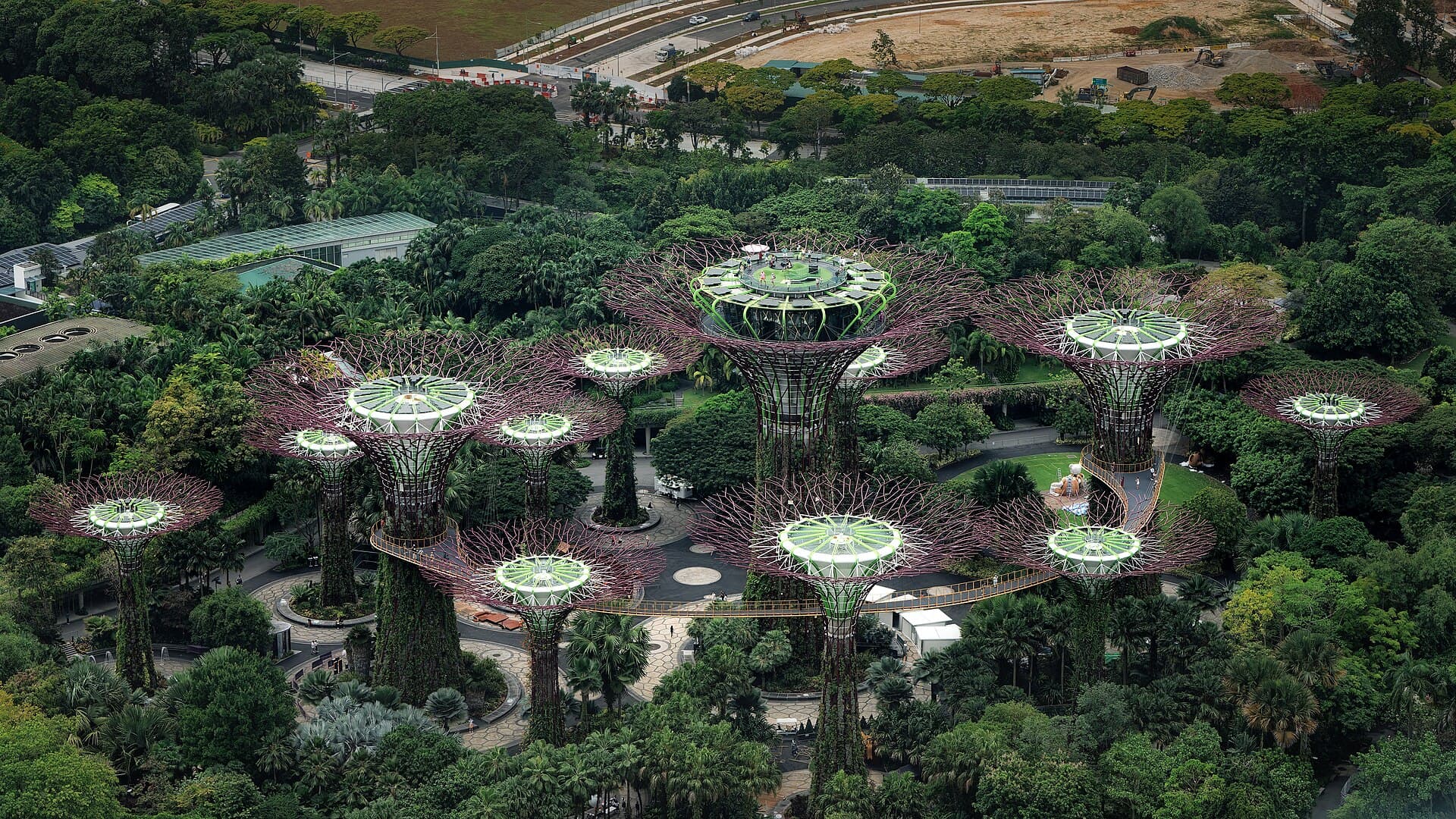
Supertree Grove at Gardens by the Bay, green columns lit at night.
Photo Mustang Joe · CC0
Photo on Wikimedia Commons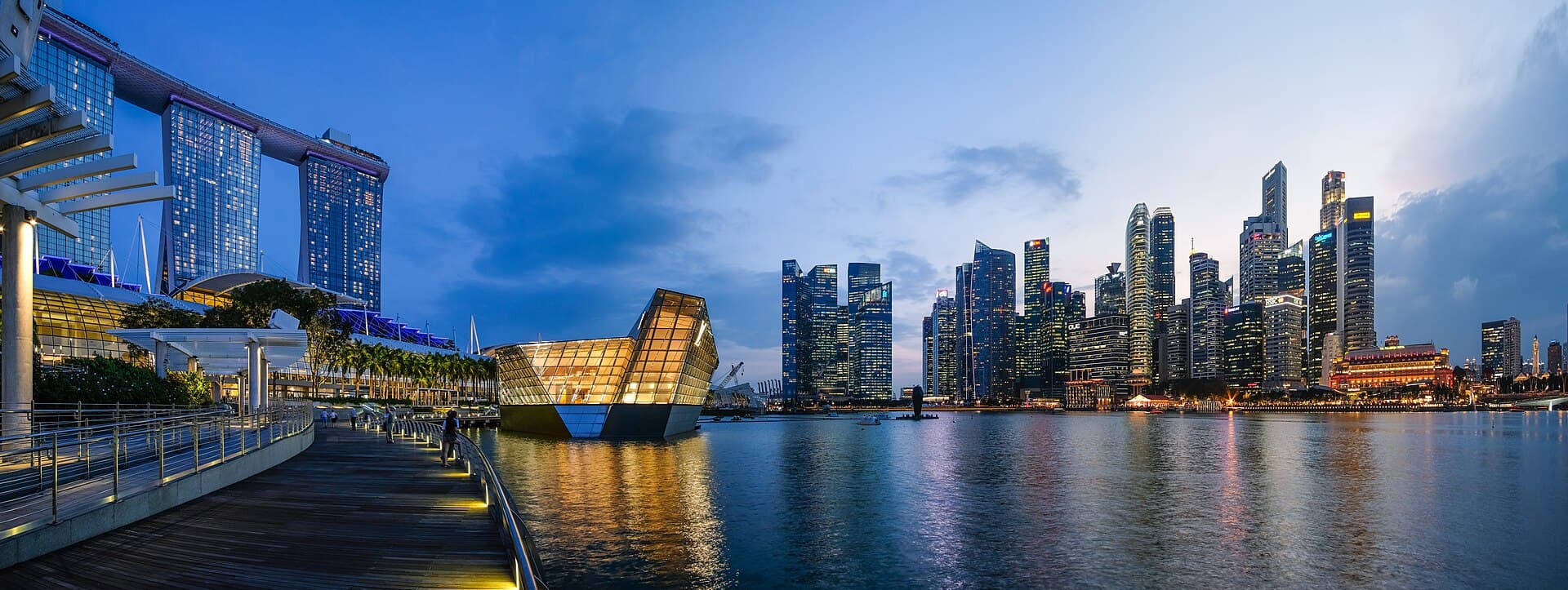
Marina Bay skyline at dusk, with the Marina Bay Sands towers above the water.
Photo Benh LIEU SONG (Flickr) · CC BY-SA 4.0
Photo on Wikimedia Commons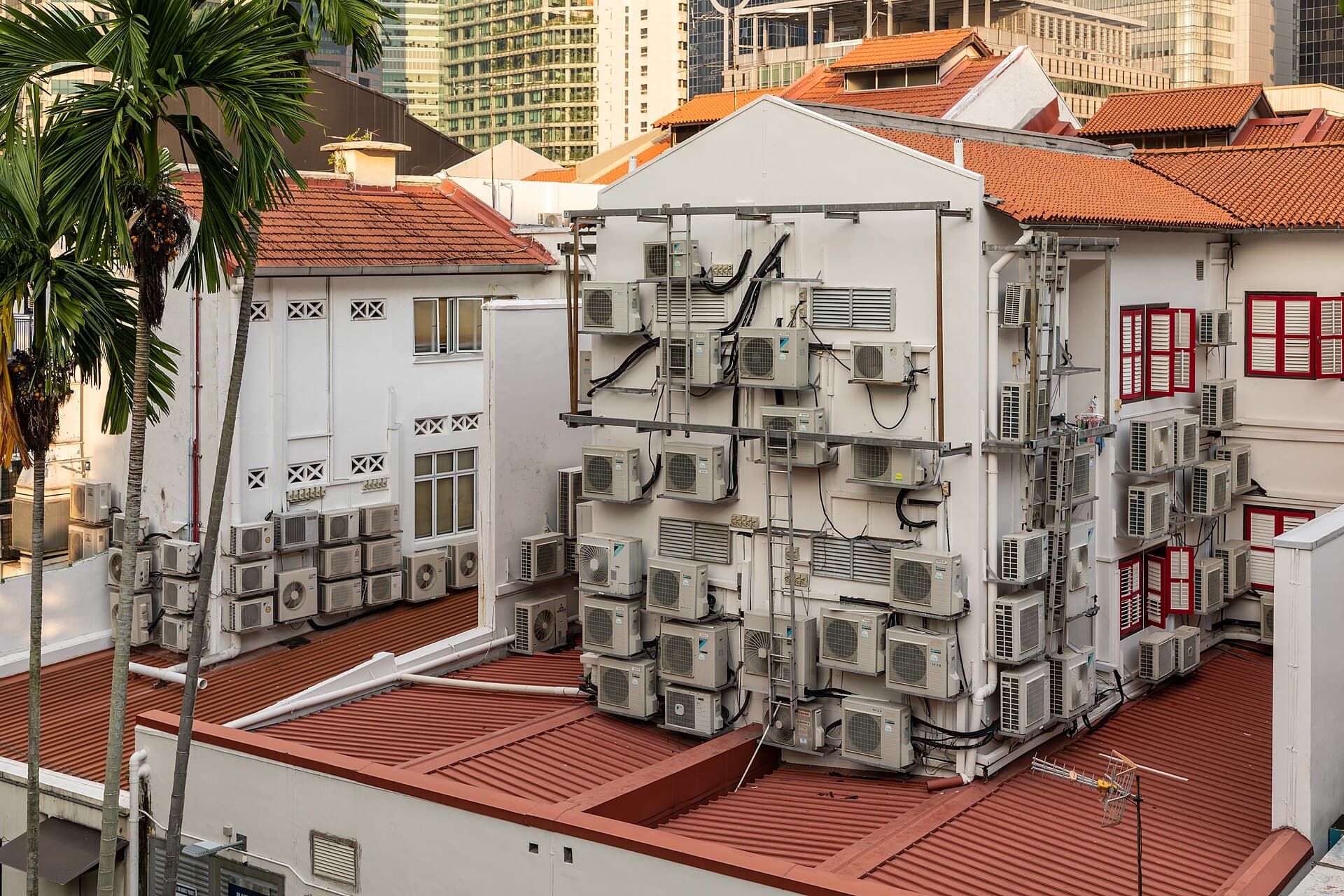
Façade of the Buddha Tooth Relic Temple in Chinatown, with heritage ornament.
Photo Dietmar Rabich · CC BY-SA 4.0
Photo on Wikimedia Commons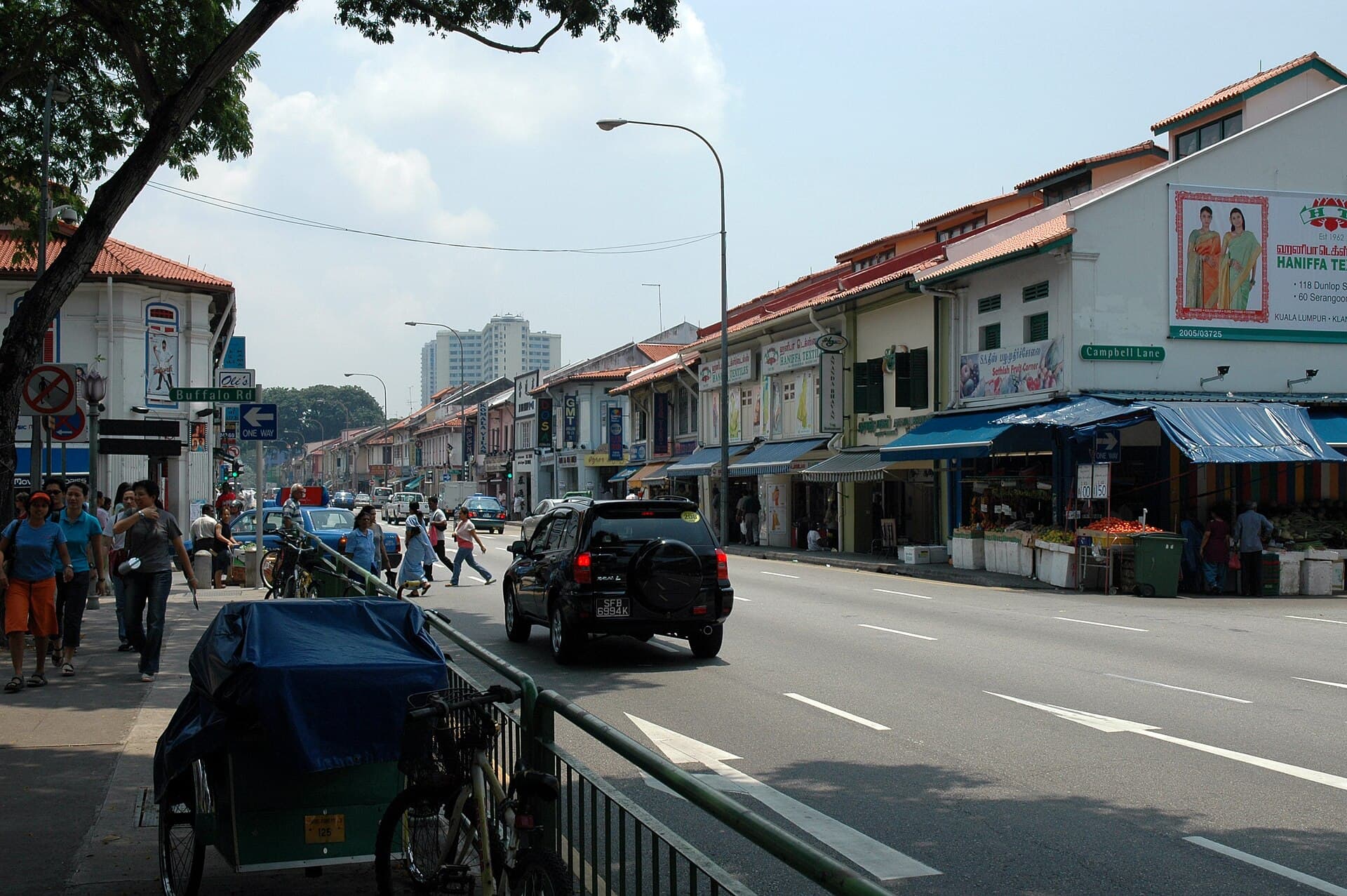
Serangoon Road in Little India, with busy streets and façades.
Photo Nachoman-au · CC BY-SA 3.0
Photo on Wikimedia Commons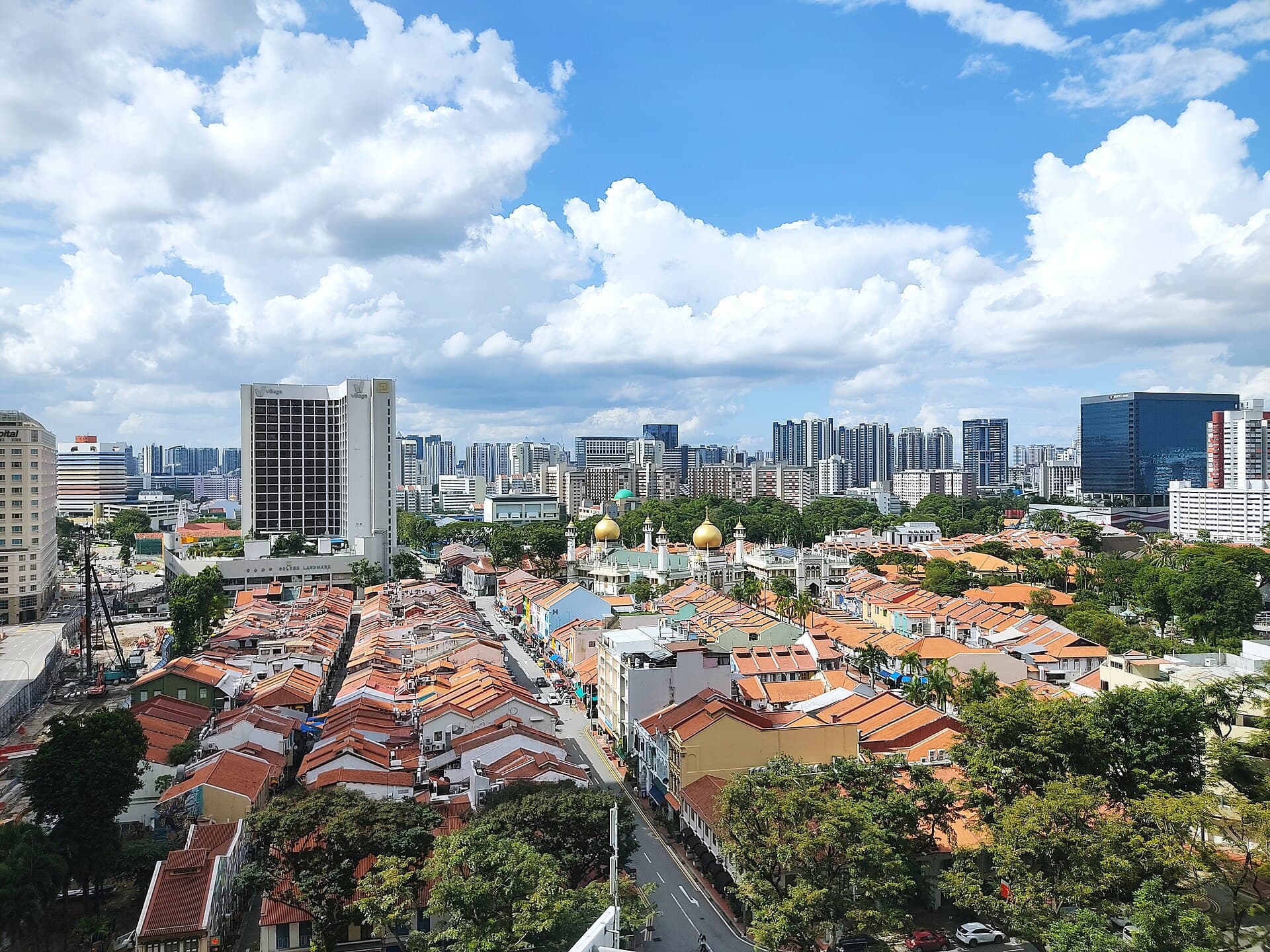
Aerial view of Kampong Glam, traditional roofs among the towers.
Photo ZKang123 · CC BY-SA 4.0
Photo on Wikimedia Commons
The Bandstand and lawns at Singapore Botanic Gardens at midday.
Photo Basile Morin · CC BY-SA 4.0
Photo on Wikimedia Commons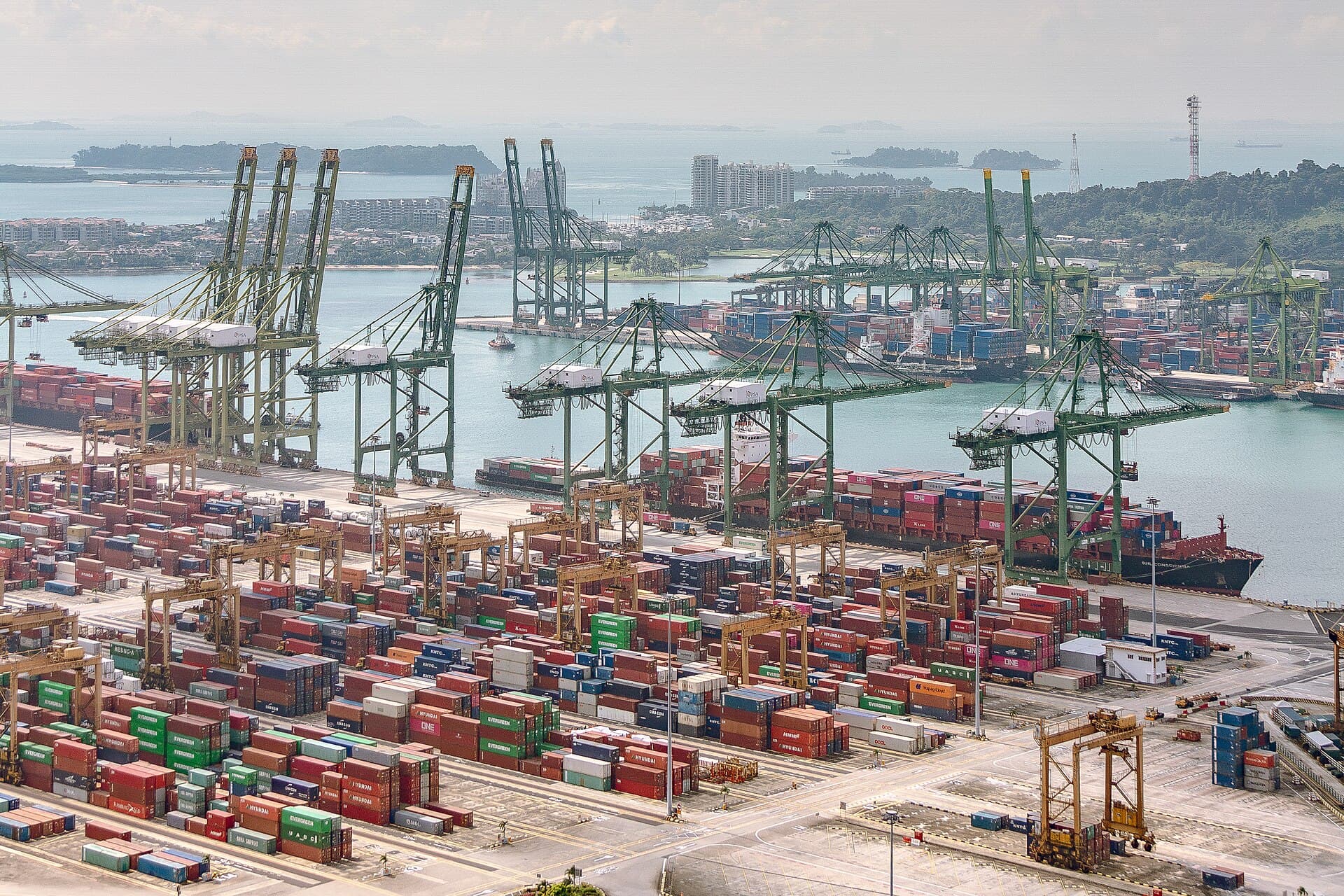
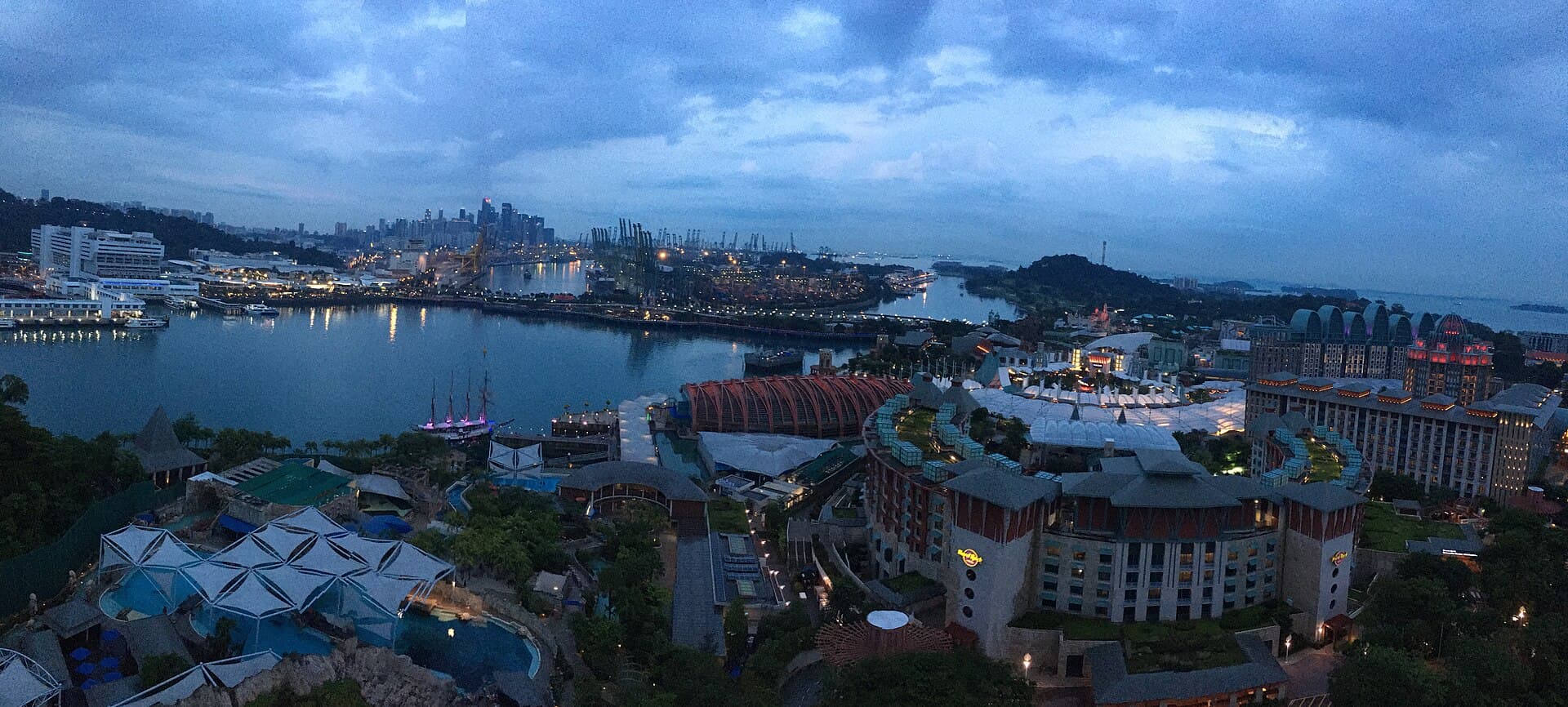
Panorama of Sentosa, beach and trees facing the sea.
Photo Banej · CC BY-SA 4.0
Photo on Wikimedia CommonsSoutheast Asia
Singapore
A city-state on the strait — harbour, gardens, and neighbourhoods shaped by many cultures.
Singapore is a city-state on one main island and dozens of smaller ones, at the southern tip of the Malay Peninsula beside the Singapore Strait that links the South China Sea with the Andaman Sea. The country is not large: about 744.3 square kilometres based on 2026 statistics, yet density is high, and the 2025 population estimate approaches 6.11 million people. The capital is the city itself — there is no separate capital city apart from the country. That compact scale explains why a trip is measured in neighbourhoods and stations rather than long distances between cities.
From the start, water and the harbour were the reason. Sitting on a sea lane between the Indian Ocean and the Pacific made the port a trading hub, and today it ranks among the world’s busiest. Today that story meets a skyline of towers at Marina Bay, open gardens on the bayfront, and a “Garden City” idea that shows up in planning and green space. There are more than 300 parks and four nature reserves, and Singapore Botanic Gardens has been on the World Heritage List since 2015.
The country is multilingual and multicultural in a short radius. Four official languages — English, Malay, Mandarin and Tamil — and English is widely used in public services. Historic districts sit close together: Chinatown, Little India and Kampong Glam, each with streets, markets and heritage architecture. Mosques, temples and churches appear here as urban architecture and heritage — the dome of Sultan Mosque, the temple façades of Little India.
Food is part of everyday identity. Hawker centres gather stalls at moderate prices around shared tables. Singapore’s hawker culture joined UNESCO’s intangible cultural heritage list in 2020. Dishes such as Hainanese chicken rice belong to the cityscape, not a separate “tourist menu” set apart from local life.
The climate is tropical year-round: humid heat and frequent rain, with two main monsoon seasons as described by the National Environment Agency. The official tourism site notes that February to April is often relatively drier, yet a visit works in any month if you accept short showers. Time is UTC+8 with no daylight saving. Most arrivals fly into Changi Airport, with Seletar for some regional flights. The currency is the Singapore dollar. The explore journey goes deeper, place by place.
Key cities and regions
Marina Bay
A waterfront before the towers: Marina Bay Sands, the ArtScience Museum, and the Merlion statue on the bay.
Gardens by the Bay
Gardens by the Bay: Supertrees, glass conservatories, and a skyway above the gardens.
Chinatown
Heritage streets and shophouses in Outram, including Pagoda Street and the Buddha Tooth Relic Temple.
Little India
Serangoon Road, markets and architectural façades in a lively Indian–South Asian neighbourhood.
Kampong Glam
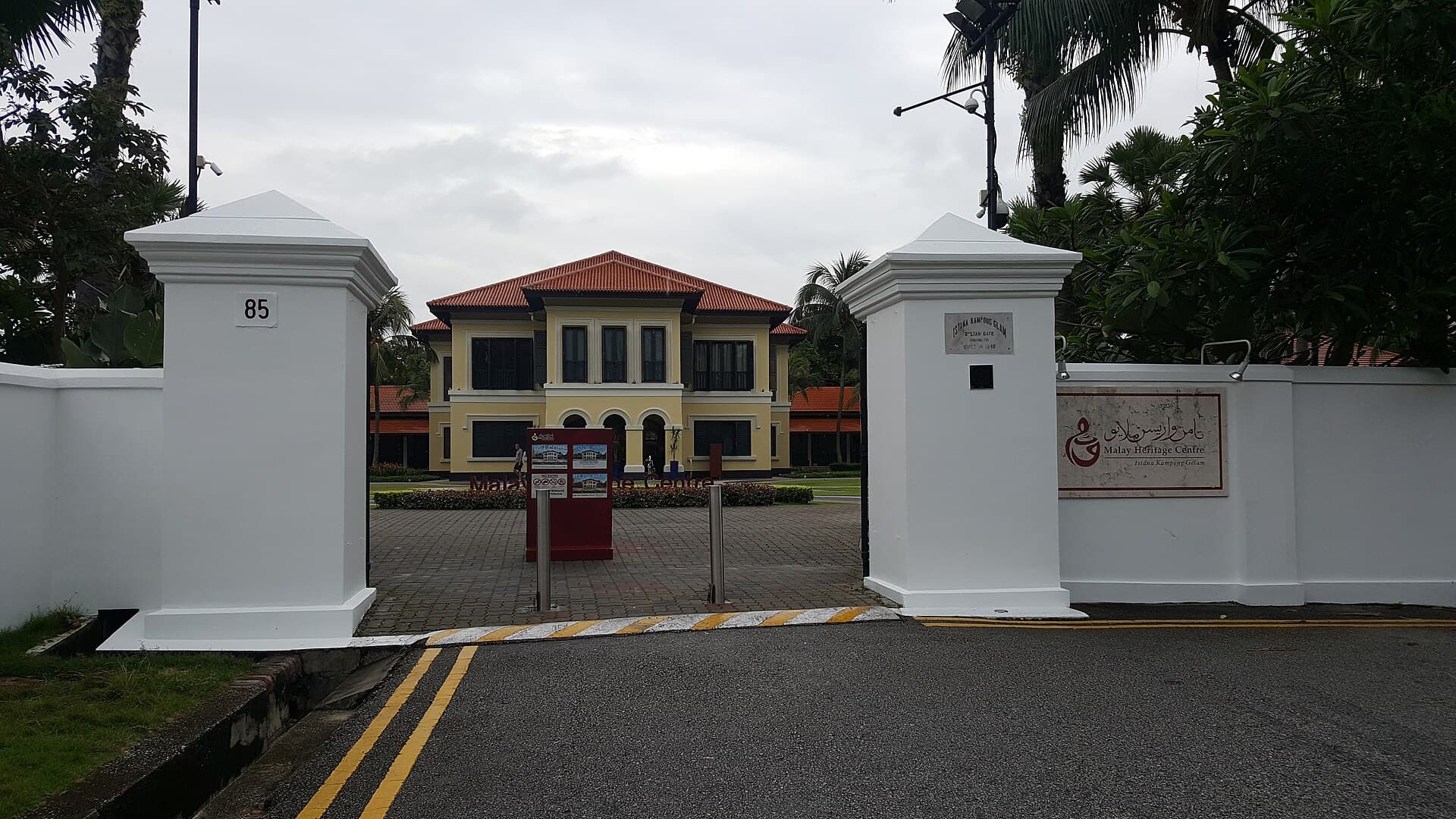
Arab Street, Sultan Mosque and the Malay Heritage Centre in the historic quarter.
Sentosa
A southern leisure island with beaches, cable-car stops and views toward the harbour.
Botanic Gardens
Singapore Botanic Gardens: a national garden since the nineteenth century, World Heritage since 2015.
Want to know Singapore better?
A journey in photos, maps, and figures—one step at a time.
What does a flight to Singapore cost—and when is it cheaper?
Check from your city →FAQ about Singapore
When is the best time to visit Singapore?
The climate is tropical year-round, with humid heat and rain possible in any month. The National Environment Agency describes the northeast and southwest monsoon seasons. Visit Singapore notes that February to April is often relatively drier. No month is “closed” for travel: pack light clothes and an umbrella, and plan for short showers between sights.
How many days do you need in Singapore?
The country is small but dense with experiences. Three days cover Marina Bay, Gardens by the Bay, one cultural district and a hawker centre. Five to seven days allow Sentosa, the Botanic Gardens and all three cultural quarters without rushing, plus time for Orchard Road and galleries. Distances are short by MRT, yet each stop rewards hours on foot.
Is Singapore expensive for travellers?
The general price level in 2025 is about 60% of the United States level, calculated from World Bank PPP and exchange-rate figures. That measures the whole economy, not your hotel or restaurant bill. Daily spending varies widely with the kind of trip. Hawker centres are a moderate option for meals, while Orchard Road and luxury hotels sit at the other end of the scale.
What currency is used, and how do I pay?
The currency is the Singapore dollar. Cards are widely accepted in shops and on the MRT, though some hawker stalls may prefer cash or local e-wallets. Carry some cash for small markets, and confirm payment options at each stall before you order.
What should I eat in Singapore?
Start at a hawker centre: many stalls, shared tables, and a food culture listed by UNESCO as intangible heritage since 2020. Hainanese chicken rice is a signature dish, alongside laksa and char kway teow on everyday menus. The cultural districts add Chinese, Indian and Malay kitchens within a short walk.
How do I get around the city?
The MRT network links Marina Bay, the historic districts and Sentosa on clear lines and stations. Buses fill the gaps. Walking works between nearby central neighbourhoods. From Changi Airport, trains run straight into the centre. Most visitor itineraries do not need a car, and taxis are relatively costly for short hops.
Do I need an entry visa?
Requirements depend on nationality and length of stay, and they change. The official Immigration & Checkpoints Authority site offers a “Check if You Need an Entry Visa” tool. Use it before you book, and consult the consulate for your country of residence if your case is unclear.
Photos (23)
Sources & photo credits(33 sources · 34 photos · last verified 2026-09-26)
- 1.Singapore · Wikipedia · Accessed 2026-09-26
- 2.Geography of Singapore · Wikipedia · Accessed 2026-09-26
- 3.Climate of Singapore · Wikipedia · Accessed 2026-09-26
- 4.Environment — Latest Data · Singapore Department of Statistics · Accessed 2026-09-26
- 5.Singapore — World Heritage properties · UNESCO World Heritage Centre · Accessed 2026-09-26
- 6.Singapore Botanic Gardens · Wikipedia · Accessed 2026-09-26
- 7.Singapore Botanic Gardens · Wikipedia · Accessed 2026-09-26
- 8.Marina Bay · Wikipedia · Accessed 2026-09-26
- 9.Marina Bay Sands · Wikipedia · Accessed 2026-09-26
- 10.Gardens by the Bay · Wikipedia · Accessed 2026-09-26
- 11.Chinatown, Singapore · Wikipedia · Accessed 2026-09-26
- 12.Little India, Singapore · Wikipedia · Accessed 2026-09-26
- 13.Kampong Glam · Wikipedia · Accessed 2026-09-26
- 14.Sultan Mosque · Wikipedia · Accessed 2026-09-26
- 15.Sentosa · Wikipedia · Accessed 2026-09-26
- 16.Singapore Changi Airport · Wikipedia · Accessed 2026-09-26
- 17.Seletar Airport · Wikipedia · Accessed 2026-09-26
- 18.Merlion · Wikipedia · Accessed 2026-09-26
- 19.Founding of modern Singapore · Wikipedia · Accessed 2026-09-26
- 20.Independence of Singapore Agreement 1965 · Wikipedia · Accessed 2026-09-26
- 21.Hawker centres in Singapore · Wikipedia · Accessed 2026-09-26
- 22.Hawker Culture in Singapore · UNESCO Intangible Cultural Heritage · Accessed 2026-09-26
- 23.Shophouse · Wikipedia · Accessed 2026-09-26
- 24.Port of Singapore · Wikipedia · Accessed 2026-09-26
- 25.Check if You Need an Entry Visa · Immigration & Checkpoints Authority (Singapore) · Accessed 2026-09-26
- 26.Weather in Singapore · Singapore Tourism Board (Visit Singapore) · Accessed 2026-09-26
- 27.SingapoReimagine · Singapore Tourism Board (Visit Singapore) · Accessed 2026-09-26
- 28.PPP conversion factor, GDP — Singapore · World Bank · Accessed 2026-09-26
- 29.Official exchange rate — Singapore · World Bank · Accessed 2026-09-26
- 30.Climate of Singapore · National Environment Agency (Singapore) · Accessed 2026-09-26
- 31.Buddha Tooth Relic Temple and Museum · Wikipedia · Accessed 2026-09-26
- 32.Sri Veeramakaliamman Temple · Wikipedia · Accessed 2026-09-26
- 33.National Gallery Singapore · Wikipedia · Accessed 2026-09-26
- Marina Bay skyline at dusk, with the Marina Bay Sands towers above the water. · Benh LIEU SONG (Flickr) · CC BY-SA 4.0
- ArtScience Museum and Marina Bay Sands, a glass façade on the bay. · Basile Morin · CC BY-SA 4.0
- A cricket match in front of Marina Bay Sands against the city skyline. · Basile Morin · CC BY-SA 4.0
- Supertree Grove at Gardens by the Bay, green columns lit at night. · Mustang Joe · CC0
- A path between the glass conservatories at Gardens by the Bay, with tropical plantings around. · Dietmar Rabich · CC BY-SA 4.0
- The skyway between Supertrees at Gardens by the Bay. · Dietmar Rabich · CC BY-SA 4.0
- The Merlion statue spraying water toward Marina Bay. · CEphoto, Uwe Aranas · CC BY-SA 3.0
- Close view of the Merlion, the city symbol on the waterfront. · Dietmar Rabich · CC BY-SA 4.0
- Façade of the Buddha Tooth Relic Temple in Chinatown, with heritage ornament. · Dietmar Rabich · CC BY-SA 4.0
- Pagoda Street in Chinatown, with colourful shophouses. · Dietmar Rabich · CC BY-SA 4.0
- A row of shophouses on Pagoda Street in Chinatown. · Dietmar Rabich · CC BY-SA 4.0
- Serangoon Road in Little India, with busy streets and façades. · Nachoman-au · CC BY-SA 3.0
- A cloudy day in Little India, with markets and passages between buildings. · YoulendreeAppasamy · CC BY-SA 4.0
- An architectural façade in Little India, with South Asian colours and detail. · Matti Blume · CC BY-SA 4.0
- Aerial view of Kampong Glam, traditional roofs among the towers. · ZKang123 · CC BY-SA 4.0
- Istana Kampong Glam at the Malay Heritage Centre, historic façade. · GoAheadFan95 · CC BY-SA 4.0
- Sky over Kampong Glam, between Sultan Mosque and the surrounding streets. · Robert Sim · CC BY-SA 4.0
- Panorama of Sentosa, beach and trees facing the sea. · Banej · CC BY-SA 4.0
- View of Sentosa from the water, a green shoreline. · FN-082 · CC BY-SA 4.0
- Resorts World station on Sentosa, with Singapore’s harbour behind. · Nigos · CC BY-SA 4.0
- The Bandstand and lawns at Singapore Botanic Gardens at midday. · Basile Morin · CC BY-SA 4.0
- A planted archway path in the National Orchid Garden inside the Botanic Gardens. · Basile Morin · CC BY-SA 4.0
- A path among trees at Singapore Botanic Gardens. · Photograph by Mike Peel (www.mikepeel.net). · CC BY-SA 4.0
- Glass façade of a lit mall on Orchard Road at dusk. · Basile Morin · CC BY-SA 4.0
- Flower displays on Orchard Road, shopping-street decoration. · Niall Sohan (talk) · Public domain
- Food hall at Alexandra Food Centre, stalls and shared tables. · Exec8 · CC BY-SA 4.0
- Colourful shophouses on Koon Seng Road. · Basile Morin · CC BY-SA 4.0
- Peranakan Place complex, colourful heritage façades. · PPCsg · CC BY-SA 4.0
- A plate of Hainanese chicken rice in Singapore. · Pauloleong2002 · CC BY-SA 4.0
- Rice with roast chicken and char siu on a table in Singapore. · ProjectManhattan. · CC0
- Port of Singapore, container ships and quays. · Aaaatu · CC BY-SA 4.0
- Keppel container terminal, cranes and colourful stacks. · Noel Reynolds. · CC BY 2.0
- Interior of National Gallery Singapore, a wide exhibition hall. · Basile Morin · CC BY-SA 4.0
- Marina Bay in a panoramic view, bay water and towers. · Dietmar Rabich · CC BY-SA 4.0