
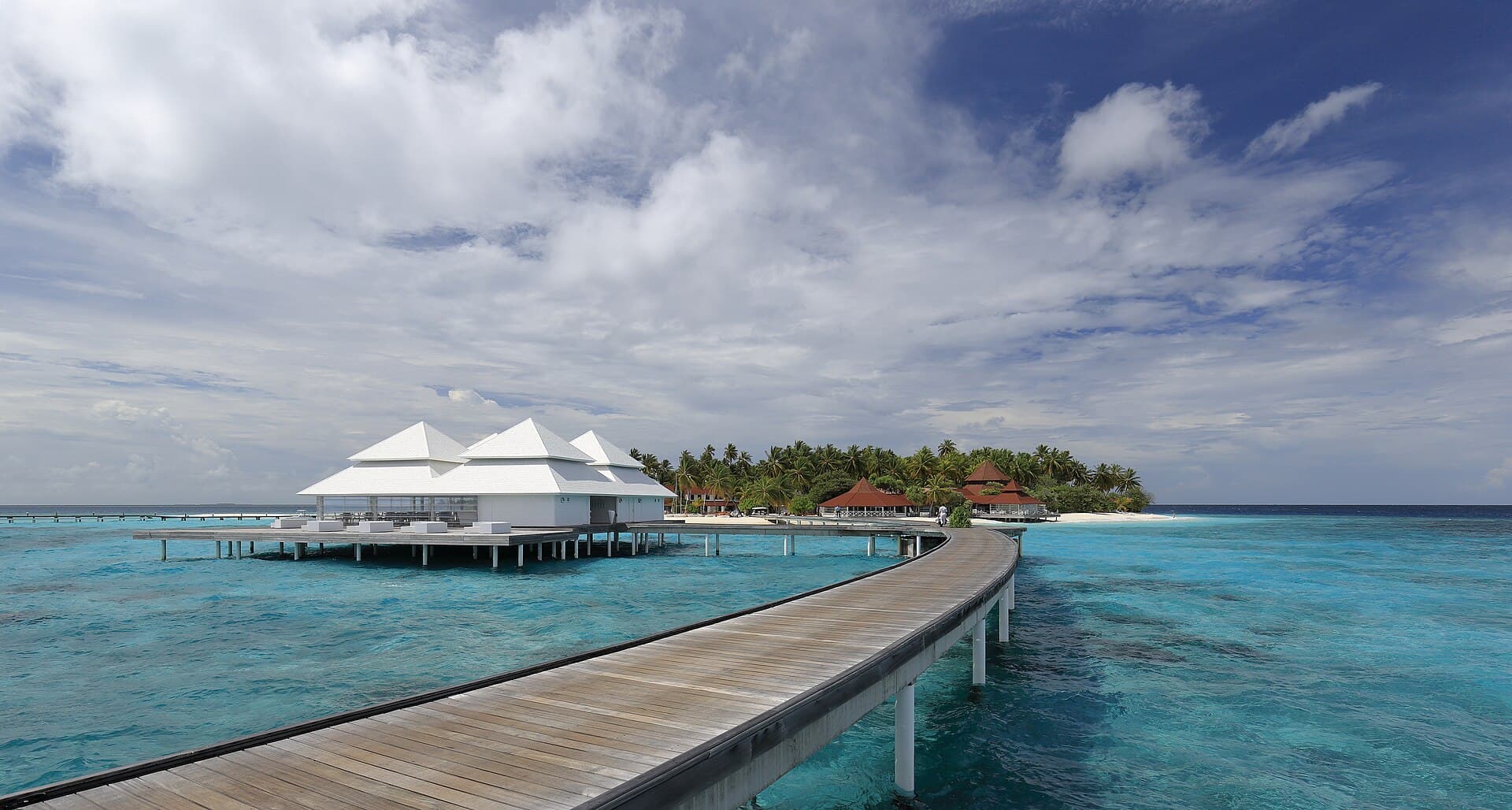
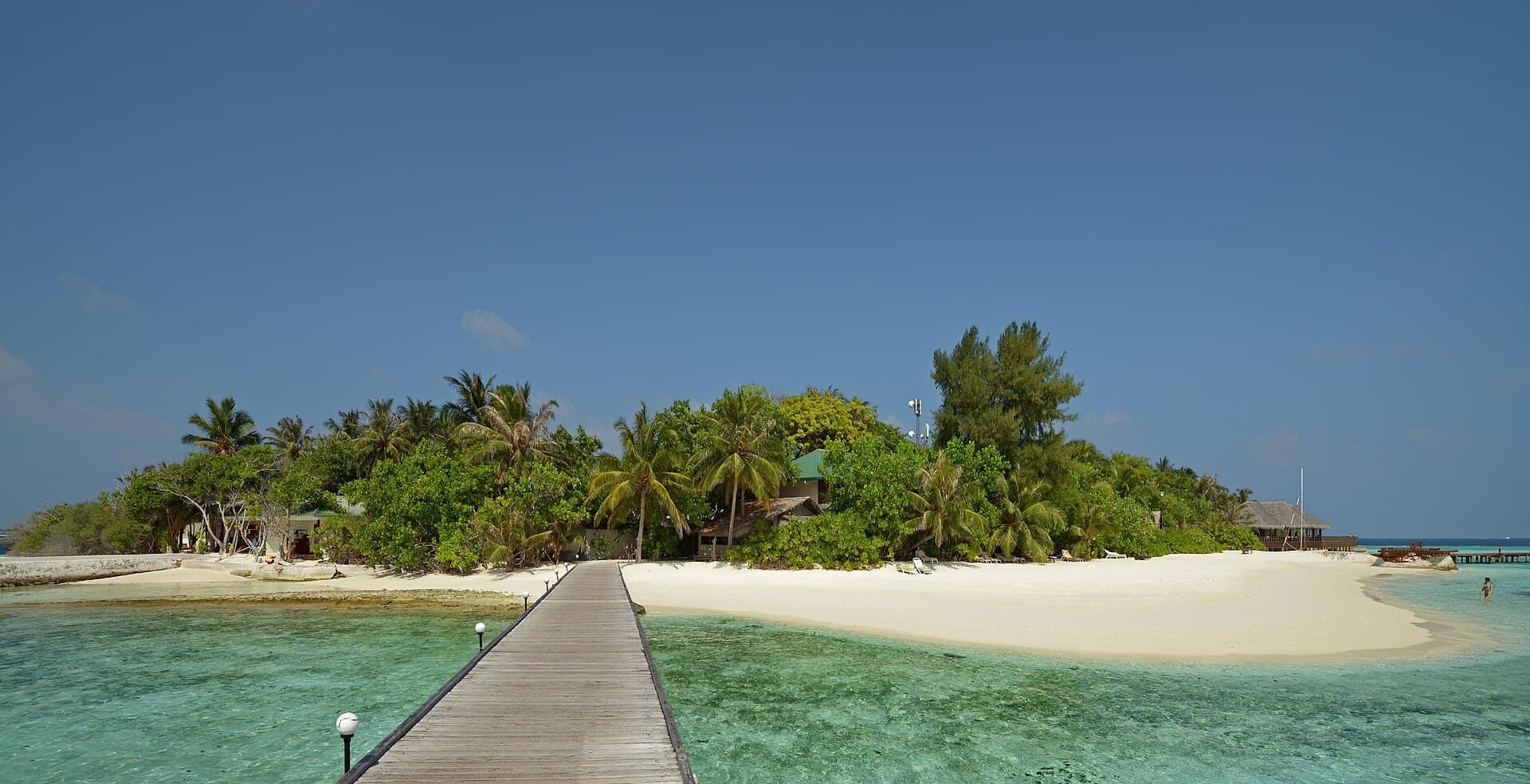
Beach and overwater villas at Thudufushi in Ari Atoll, a wooden walkway over turquoise water.
Photo Martin Falbisoner · CC BY-SA 4.0
Photo on Wikimedia Commons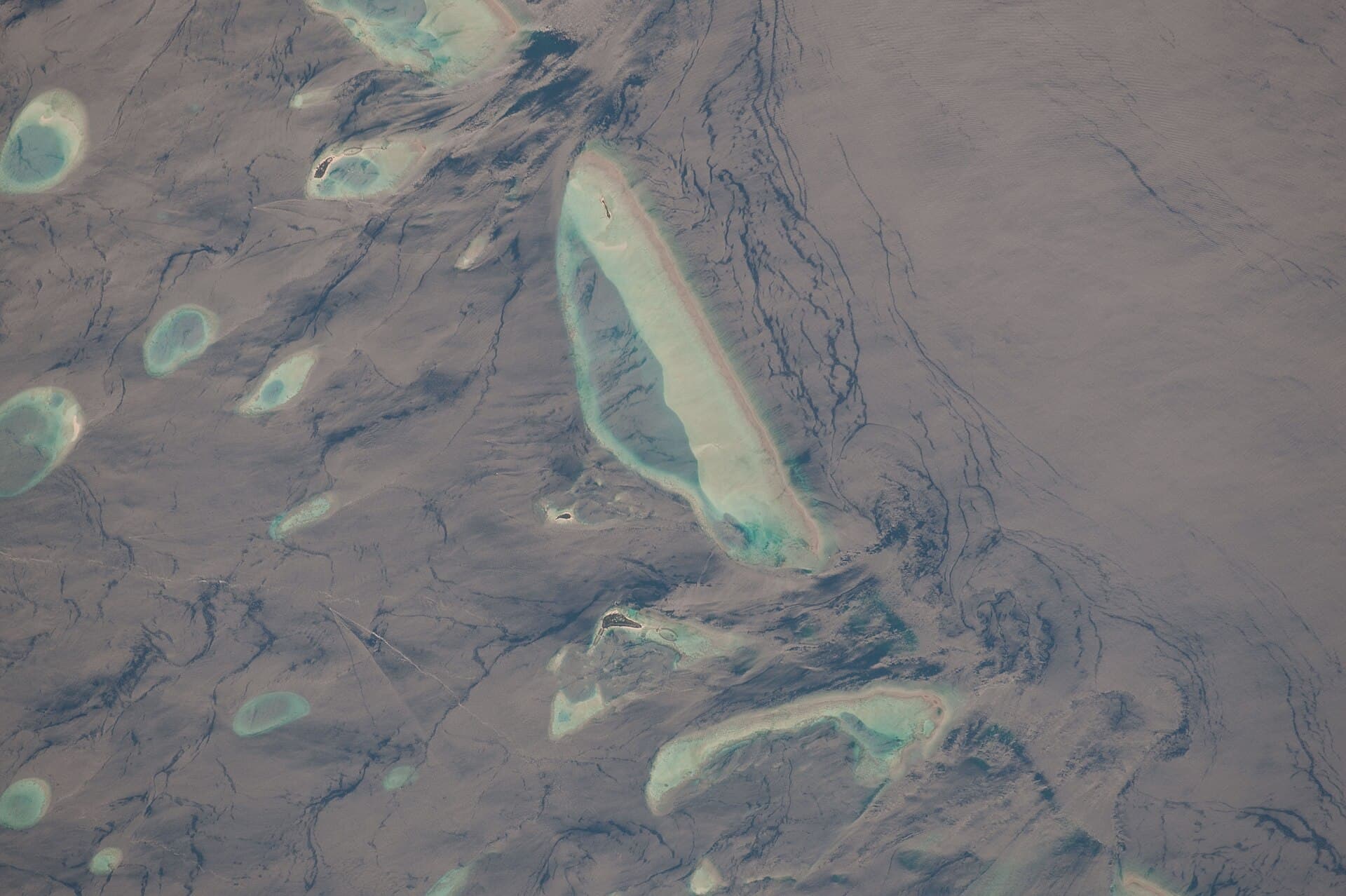
Malé Atoll from the International Space Station: coral rings in the Indian Ocean.
Photo NASA · Public domain
Photo on Wikimedia Commons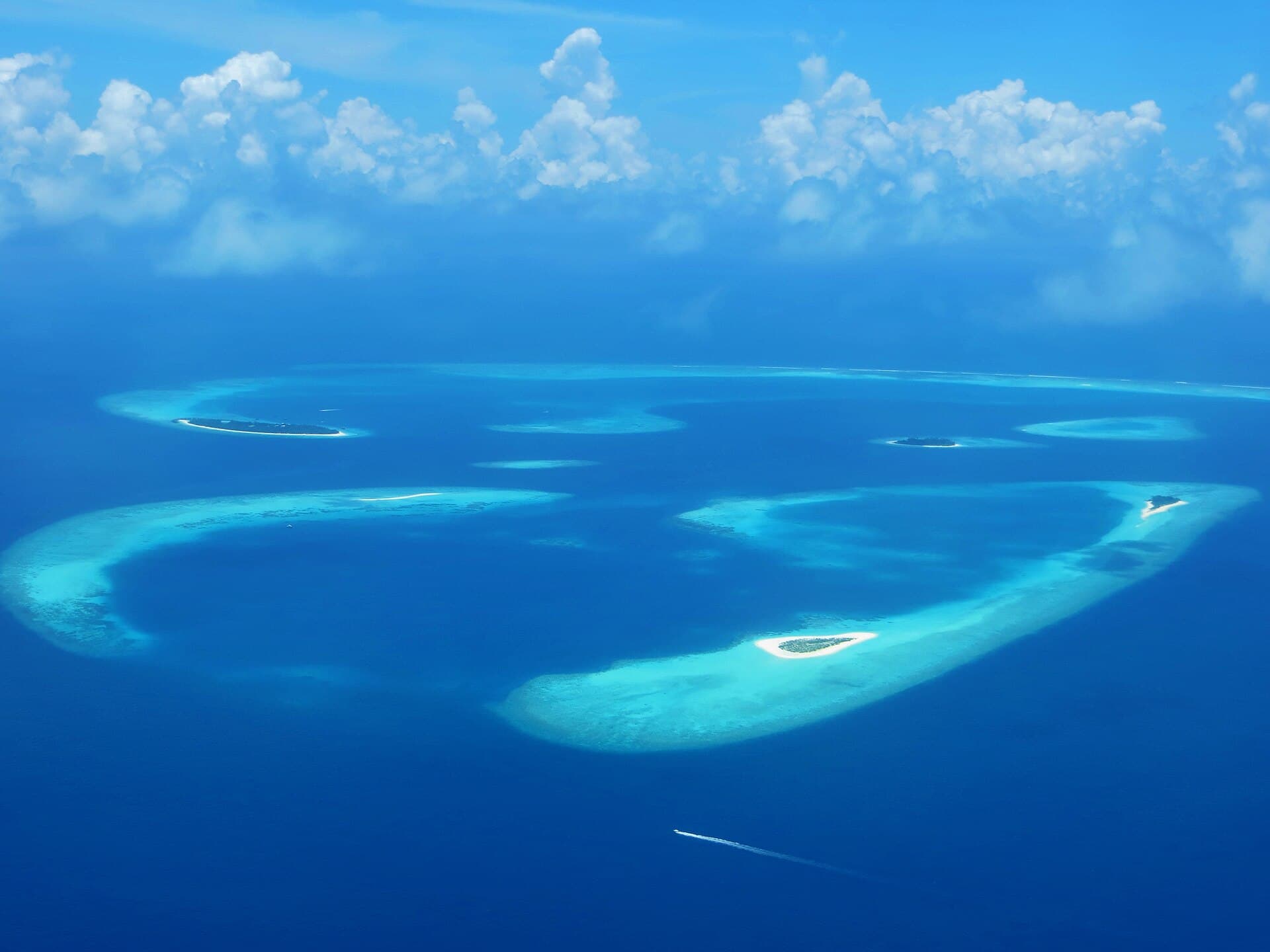
Low islands inside Baa Atoll’s lagoon, shallow reefs ringing the sand.
Photo Frédéric Ducarme · CC BY-SA 4.0
Photo on Wikimedia Commons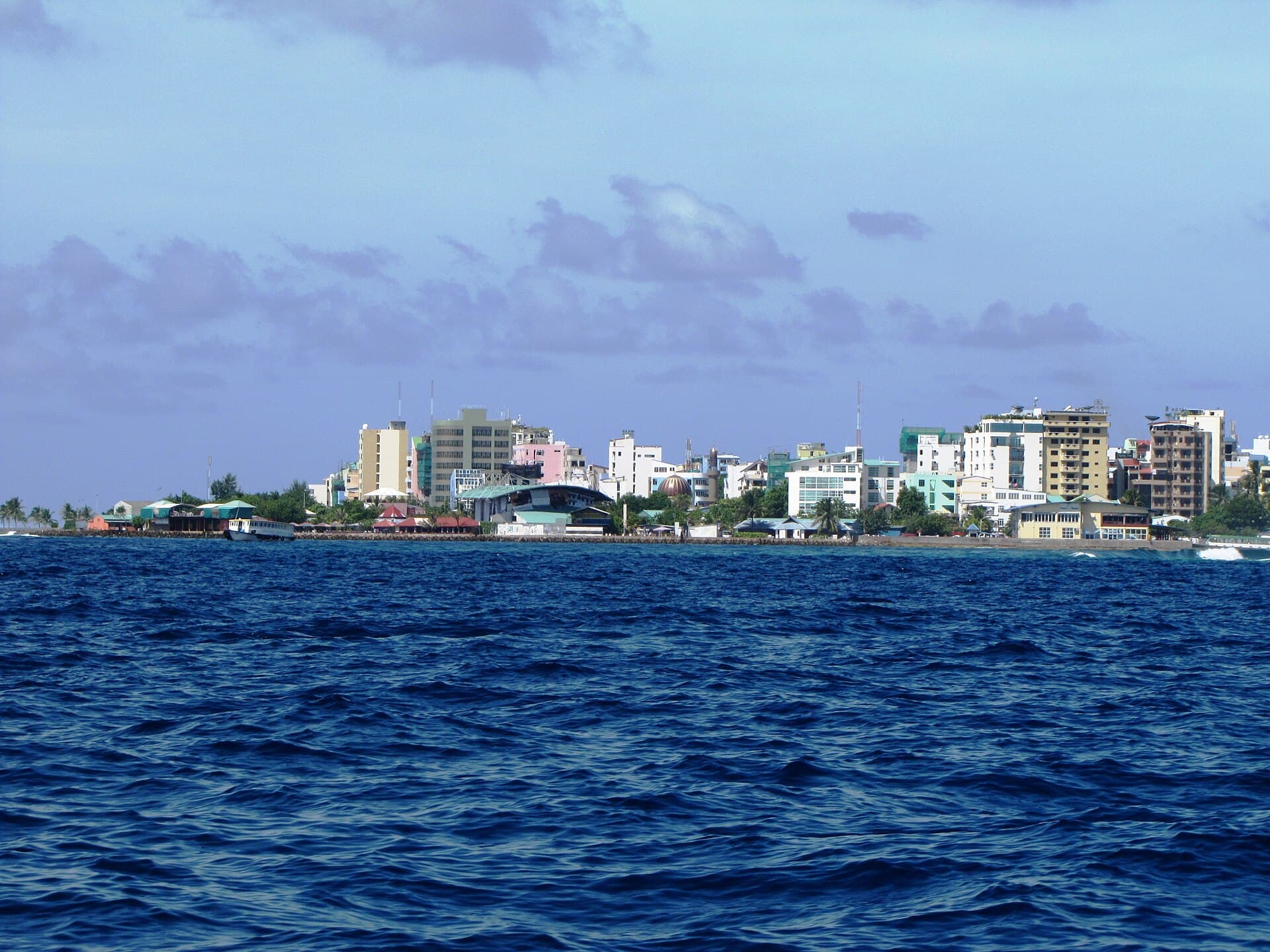
Malé skyline from the sea: dense buildings on the capital island above turquoise water.
Photo U.S. Department of State from United States · Public domain
Photo on Wikimedia Commons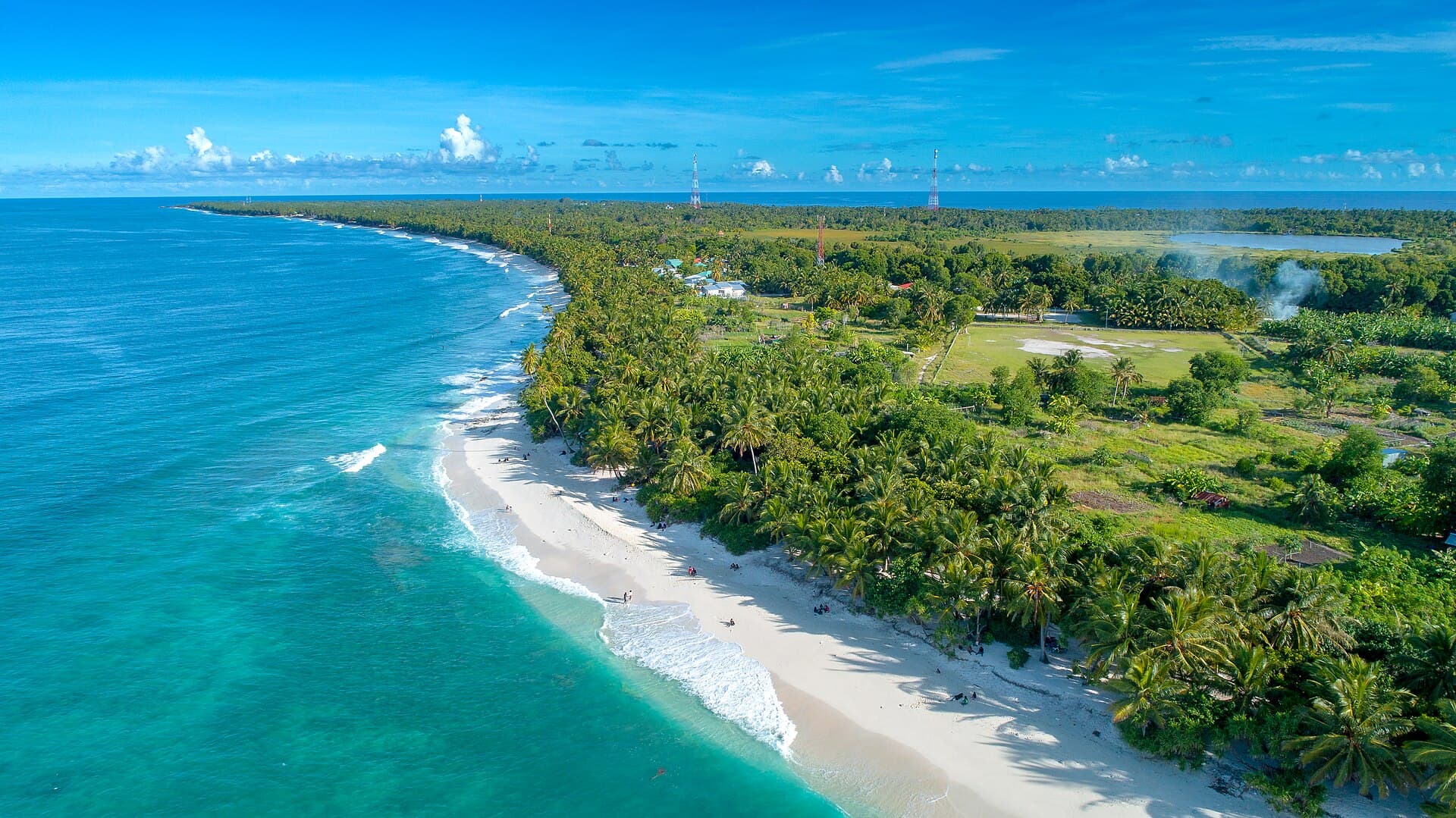
Thoondu pebble beach on Fuvahmulah from the air, a coastal arc on the ocean.
Photo Asaymirus · CC BY 4.0
Photo on Wikimedia Commons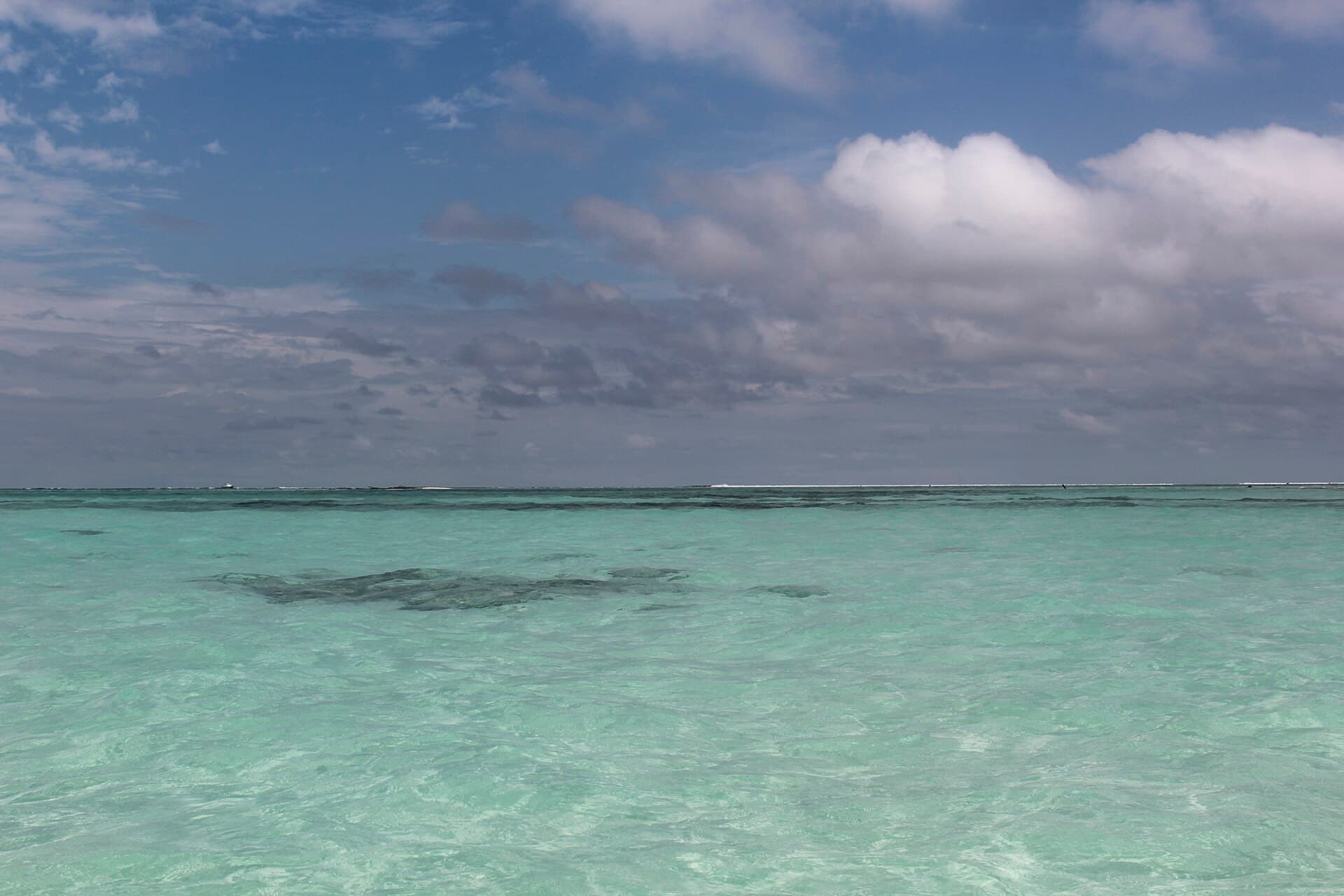
Pale Maafushi beach with light surf and palms on the sand.
Photo Buiobuione · CC BY-SA 4.0
Photo on Wikimedia Commons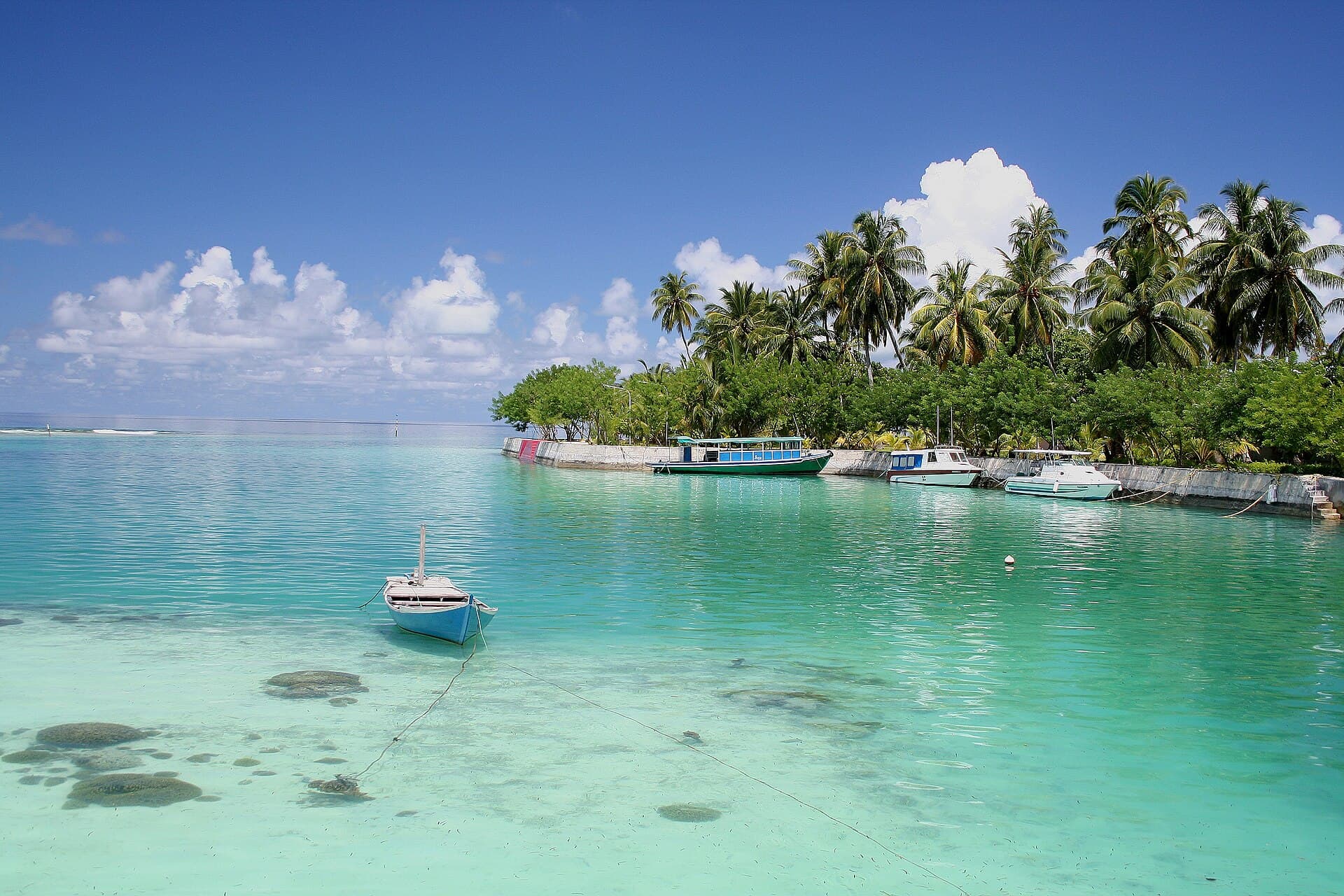
Addu Atoll coast: turquoise water and boats near a low southern shore.
Photo Mark Hodson Photos · CC BY 2.0
Photo on Wikimedia Commons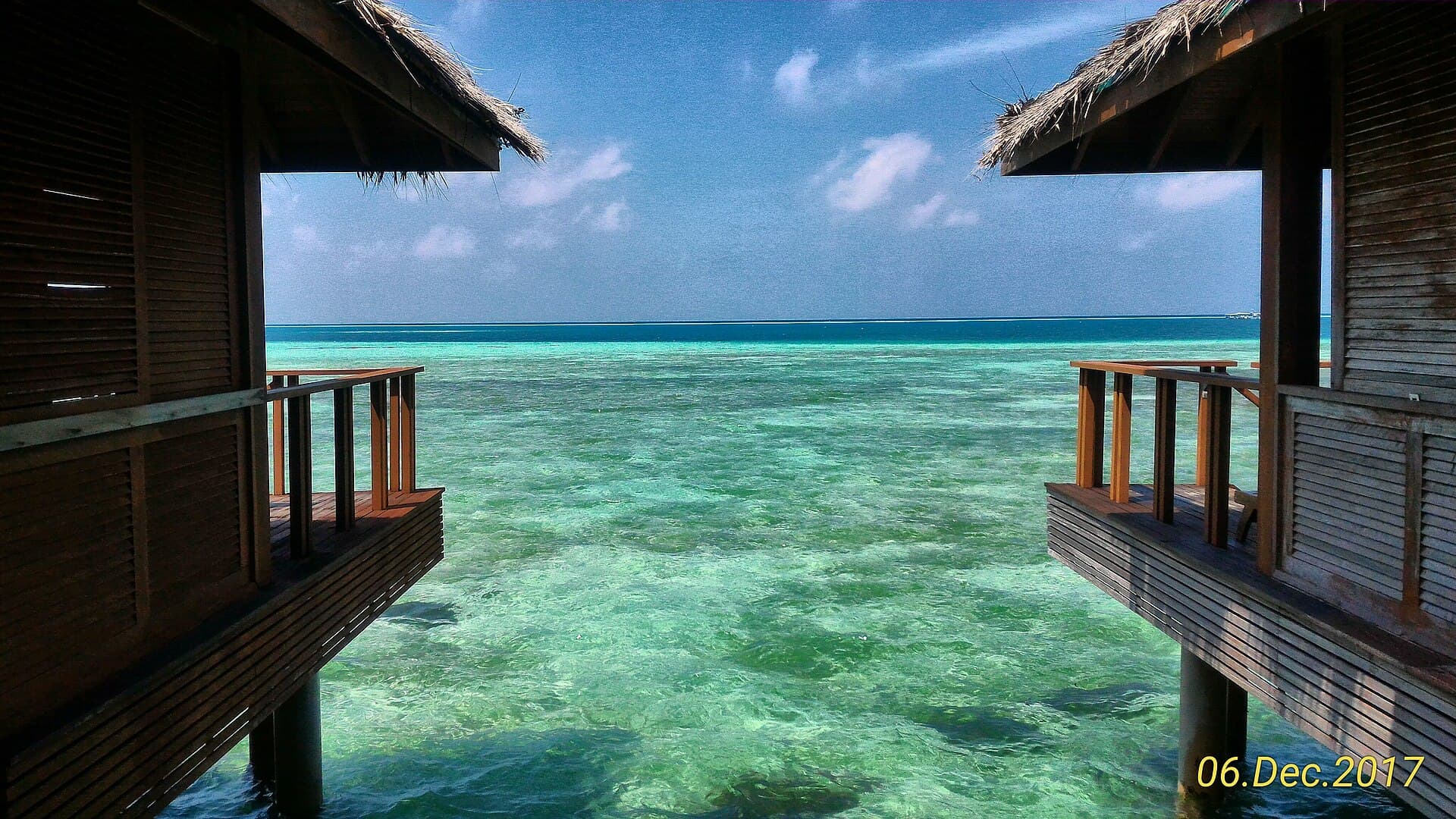
View from overwater villas at Medhufushi resort, a wooden walkway over turquoise water.
Photo Priyaflorenceshah · CC BY-SA 4.0
Photo on Wikimedia CommonsSouth Asia · Indian Ocean
Maldives
An archipelago of coral rings: turquoise lagoons, a crowded capital, and resort islands.
The Maldives is an Indian Ocean archipelago southwest of India and Sri Lanka, strung along a chain of 26 atolls from the north down to Addu Atoll in the south. There are roughly 1,190 coral islands scattered across about 90,000 square kilometres of ocean, while dry land amounts to only about 298 square kilometres. That split matters: the nation is tiny by square metre and vast by boat distance. The capital, Malé, is a crowded island-city on the southern rim of North Malé Atoll—not a resort town stretched along a broad sandy beach.
What defines the landscape is not a mountain range or a long boulevard, but a coral ring, a shallow lagoon, and a sandy islet inside it. Mean land elevation is about 1.5 metres above sea level, and even the highest points rise only a few metres. Reefs and lagoons are what visitors see from the plane and the boat: turquoise water that drops into deep blue beyond the reef crest.
Tourism here was built on the island-resort model after the first resort opened in 1972 on an island in North Malé Atoll. Later rules also allowed guesthouses on inhabited local islands such as Maafushi in South Malé Atoll. The result is a two-layer trip: a dense capital and an airport on Hulhulé, then a transfer by speedboat or seaplane to a resort atoll or a local island. Baa Atoll joined UNESCO’s World Network of Biosphere Reserves in June 2011 without yet being a World Heritage site; the World Heritage List still records zero inscribed properties for the country, with a Tentative List entry for coral-stone mosques.
The climate is tropical marine: a drier season tied to northeast winds roughly from early December through the end of March, and a wetter season with southwest winds roughly from late April through the end of October, per Maldives geography sources. Temperatures stay high year-round; the real contrast is wind and rainfall, not a cold winter. The official language is Dhivehi, the currency is the Maldivian rufiyaa, and the time zone is UTC+5. The main gateway is Velana International Airport near Malé, with Gan Airport in the south serving Addu Atoll.
This is not a city-state jammed along a strait, nor an archipelago of volcanoes and million-resident cities on large islands. The Maldives moves to a different beat: island, then boat, then reef. Malé’s architecture ranges from the Old Friday Mosque in coral stone to the Islamic Centre with its white dome. The explore journey goes deeper, place by place.
Key cities and regions
Malé
The capital: a dense island of harbour, coral-stone mosques, and an Islamic Centre with a white dome.
North Malé Atoll
The geographic atoll around the capital: resorts on separate islands, and the country’s first resort opened here in 1972.
South Malé Atoll
The atoll south of the capital; Maafushi is an inhabited island with local guesthouses and beaches near Malé.
Ari Atoll
A large western atoll, split administratively into north and south, known for lagoons and island resorts.
Baa Atoll
A west-central atoll; a UNESCO biosphere reserve since June 2011, with reefs and islands inside the lagoon.
Addu Atoll
The far south of the country, crossing into the Southern Hemisphere; Addu City and Gan Airport sit on Gan island.
Fuvahmulah
A single southern island-atoll, with Thoondu’s pebble beach on the northern tip.
Want to know Maldives better?
A journey in photos, maps, and figures—one step at a time.
What does a flight to Maldives cost—and when is it cheaper?
Check from your city →FAQ about Maldives
When is the best time to visit the Maldives?
Maldives geography describes two seasons: a drier stretch tied to northeast winds roughly from early December through the end of March, and a wetter stretch with southwest winds roughly from late April through the end of October. Heat stays high all year; the bigger difference is rain and wind, not cold. The dry season is clearer for beaches and boat transfers, while the wet season remains workable if you expect heavier showers.
How many days do you need in the Maldives?
Five to seven days allow a day in Malé or around the airport, then three to five days on one atoll—whether a resort or a local island such as Maafushi. Ten days open two different atolls—for example North Malé then Ari or Baa—because transfers between atolls rely on speedboats or seaplanes and can take half a day. Do not measure distance in road kilometres; measure it in boat and domestic-flight schedules.
Is tourism in the Maldives expensive?
The general 2025 price level is about 51% of the United States level by the World Bank calculation from purchasing-power parity and the exchange rate, and that figure covers the whole economy—not a resort bill. Resorts on private islands usually cost more than guesthouses on local islands, which expanded after regulatory changes around 2009. Daily costs differ sharply between the two models.
What currency is used, and are cards accepted?
The official currency is the Maldivian rufiyaa. US dollars are widely accepted in tourism. Cards are common in resorts and hotels, while local islands may mix cash and cards depending on the guesthouse. Carry some cash for small purchases in Malé and inhabited islands, and confirm payment methods when you book.
How do you travel between islands and atolls?
From Velana Airport near Malé you transfer by speedboat or seaplane to a resort island, or by ferry or boat to nearby local islands such as Maafushi. Distances inside the archipelago are marine; there is no rail network. Gan Airport serves the far south on Addu Atoll. Plan transfers with your stay, because timings follow resort boats or public speedboat schedules.
What is the difference between a resort island and a local island?
The classic tourism model since 1972 dedicates a whole island to one resort, as with the first Kurumba resort in North Malé Atoll. From around 2009, visitor stays also expanded into guesthouses on inhabited islands where Maldivians live, such as Maafushi. The first keeps beach and services inside the resort; the second places you on a local-island street with clearer self-guided options between beach and cafés.
Do I need a visa to enter?
Rules vary by nationality and length of stay, and they change. Check the tourist-visa page on the official Maldives Immigration website before you book, and consult the relevant mission for your country of residence if your case is unclear.
Photos (23)
Sources & photo credits(26 sources · 40 photos · last verified 2026-09-27)
- 1.Maldives · Wikipedia · Accessed 2026-09-27
- 2.Geography of the Maldives · Wikipedia · Accessed 2026-09-27
- 3.Malé · Wikipedia · Accessed 2026-09-27
- 4.Kaafu Atoll · Wikipedia · Accessed 2026-09-27
- 5.Maafushi (Kaafu Atoll) · Wikipedia · Accessed 2026-09-27
- 6.Ari Atoll · Wikipedia · Accessed 2026-09-27
- 7.Baa Atoll · Wikipedia · Accessed 2026-09-27
- 8.Baa Atoll Biosphere Reserve · Wikipedia · Accessed 2026-09-27
- 9.Baa Atoll Biosphere Reserve — Maldives · UNESCO (Man and the Biosphere) · Accessed 2026-09-27
- 10.Addu Atoll (Seenu Atoll) · Wikipedia · Accessed 2026-09-27
- 11.Fuvahmulah · Wikipedia · Accessed 2026-09-27
- 12.Thoondu · Wikipedia · Accessed 2026-09-27
- 13.Velana International Airport · Wikipedia · Accessed 2026-09-27
- 14.Gan International Airport · Wikipedia · Accessed 2026-09-27
- 15.Islamic Centre (Maldives) · Wikipedia · Accessed 2026-09-27
- 16.Malé Friday Mosque · Wikipedia · Accessed 2026-09-27
- 17.Tourism in the Maldives · Wikipedia · Accessed 2026-09-27
- 18.Kurumba Maldives · Wikipedia · Accessed 2026-09-27
- 19.Hulhumalé · Wikipedia · Accessed 2026-09-27
- 20.Maldives — World Heritage properties · UNESCO World Heritage Centre · Accessed 2026-09-27
- 21.Coral Stone Mosques of Maldives (Tentative List) · UNESCO World Heritage Centre · Accessed 2026-09-27
- 22.Visit Maldives · Visit Maldives Corporation · Accessed 2026-09-27
- 23.Visit Maldives Destination Video · Visit Maldives · Accessed 2026-09-27
- 24.Tourist Visa · Maldives Immigration · Accessed 2026-09-27
- 25.PPP conversion factor, GDP — Maldives · World Bank · Accessed 2026-09-27
- 26.Official exchange rate — Maldives · World Bank · Accessed 2026-09-27
- Malé skyline from the sea: dense buildings on the capital island above turquoise water. · U.S. Department of State from United States · Public domain
- The white dome and minaret of the Islamic Centre in Malé, an architectural landmark on the city. · Zairon · CC BY-SA 4.0
- Malé skyline from nearby Villingili island, with packed buildings beyond the water. · Adam Jones from Kelowna, BC, Canada · CC BY-SA 2.0
- Eriyadu island in North Malé Atoll from the west: sandy beach and a palm line inside the lagoon. · Ввласенко · CC BY-SA 3.0
- Overwater villas on Meeru island, a wooden walkway above the shallow lagoon. · JaseW · CC BY-SA 4.0
- A traditional boat in turquoise Maldivian water near a low island. · Laika ac from UK · CC BY-SA 2.0
- Sandy beach on Maafushi in South Malé Atoll, shallow water and trees along the edge. · Adam Jones from Kelowna, BC, Canada · CC BY-SA 2.0
- Pale Maafushi beach with light surf and palms on the sand. · Buiobuione · CC BY-SA 4.0
- Wide view of Maafushi and surrounding Kaafu islands from low altitude. · Buiobuione · CC BY-SA 4.0
- Maafushi beach with water-sports gear on the sand facing the lagoon. · Saaremees · CC BY-SA 4.0
- Beach and overwater villas at Thudufushi in Ari Atoll, a wooden walkway over turquoise water. · Martin Falbisoner · CC BY-SA 4.0
- A row of overwater villas at Thudufushi, shadows on the shallow lagoon. · Martin Falbisoner · CC BY-SA 4.0
- Bathala island beach in Ari Atoll, white sand and palms facing the sea. · Gzzz · CC BY-SA 4.0
- A coral atoll ring from the air: a sandy island inside a turquoise lagoon in the ocean. · Syd Sujuaan sydsujuaan · CC0
- Low islands inside Baa Atoll’s lagoon, shallow reefs ringing the sand. · Frédéric Ducarme · CC BY-SA 4.0
- Landaa Giraavaru island in Baa Atoll, dense vegetation on sand. · Frédéric Ducarme · CC BY-SA 4.0
- Pale sandy beach around Baa Atoll, shallow water without high surf. · B166-er · CC BY-SA 3.0
- A small island in Baa Atoll from low altitude, a sand ring inside the lagoon. · Frédéric Ducarme · CC BY-SA 4.0
- Addu Atoll coast: turquoise water and boats near a low southern shore. · Mark Hodson Photos · CC BY 2.0
- Sunset over Addu Atoll waters, an open horizon with no mountains. · ╚ DD╔ from Male, Maldives · CC BY-SA 2.0
- Sunrise on Addu Atoll, warm light on calm water. · ╚ DD╔ from Male, Maldives · CC BY-SA 2.0
- Thoondu pebble beach on Fuvahmulah from the air, a coastal arc on the ocean. · Asaymirus · CC BY 4.0
- Waves on Thoondu beach, pale pebbles on the island’s northern tip. · Shifaaz shamoon sotti · CC0
- Sunset point at Fuvahmulah harbour, an open water horizon. · Ibrahim Asad · CC BY 3.0
- Sandy Fuvahmulah beach, light waves on the southern coast. · Asaymirus · CC BY 4.0
- Indian Ocean surface over nearshore reefs, clear water for snorkelling. · Rudolph.A.furtado · CC0
- A wooden Maldivian fishing dhoni on the water, a traditional open-deck boat. · Ibrahim Asad · CC BY 3.0
- Aerial view of Guraidhoo island: a sand ring and palms inside a shallow lagoon. · Luka Peternel · CC BY-SA 4.0
- Malé Atoll from the International Space Station: coral rings in the Indian Ocean. · NASA · Public domain
- Sandy beach in Vaavu Atoll, palms leaning over shallow water. · goldpicasa · CC BY 3.0
- Vaavu Atoll shore, white sand and a tree line facing the lagoon. · goldpicasa · CC BY 3.0
- View from overwater villas at Medhufushi resort, a wooden walkway over turquoise water. · Priyaflorenceshah · CC BY-SA 4.0
- A row of overwater villas at Medhufushi, wooden decks above the lagoon. · Priyaflorenceshah · CC BY-SA 4.0
- The Islamic Centre in Malé from a side angle, dome and minaret rising above the rooftops. · Zairon · CC BY-SA 4.0
- Facade of the Islamic Centre in Malé, a white structure with a tall minaret. · Zairon · CC BY-SA 4.0
- A swing on Hulhumalé beach, sand and shallow water near the capital. · Saaremees · CC BY-SA 4.0
- Komandoo island in Lhaviyani Atoll: a curved beach and shallow lagoon from the air. · eNil from Portsmouth, UK · CC BY 2.0
- A boat in turquoise water near a low island in the archipelago. · Laika ac from UK · CC BY-SA 2.0
- Another beach in the Baa Atoll area, palms on the edge of turquoise water. · B166-er · CC BY-SA 3.0
- Beachfront and villas at Thudufushi, shallow water tipping toward green. · Martin Falbisoner · CC BY-SA 4.0