
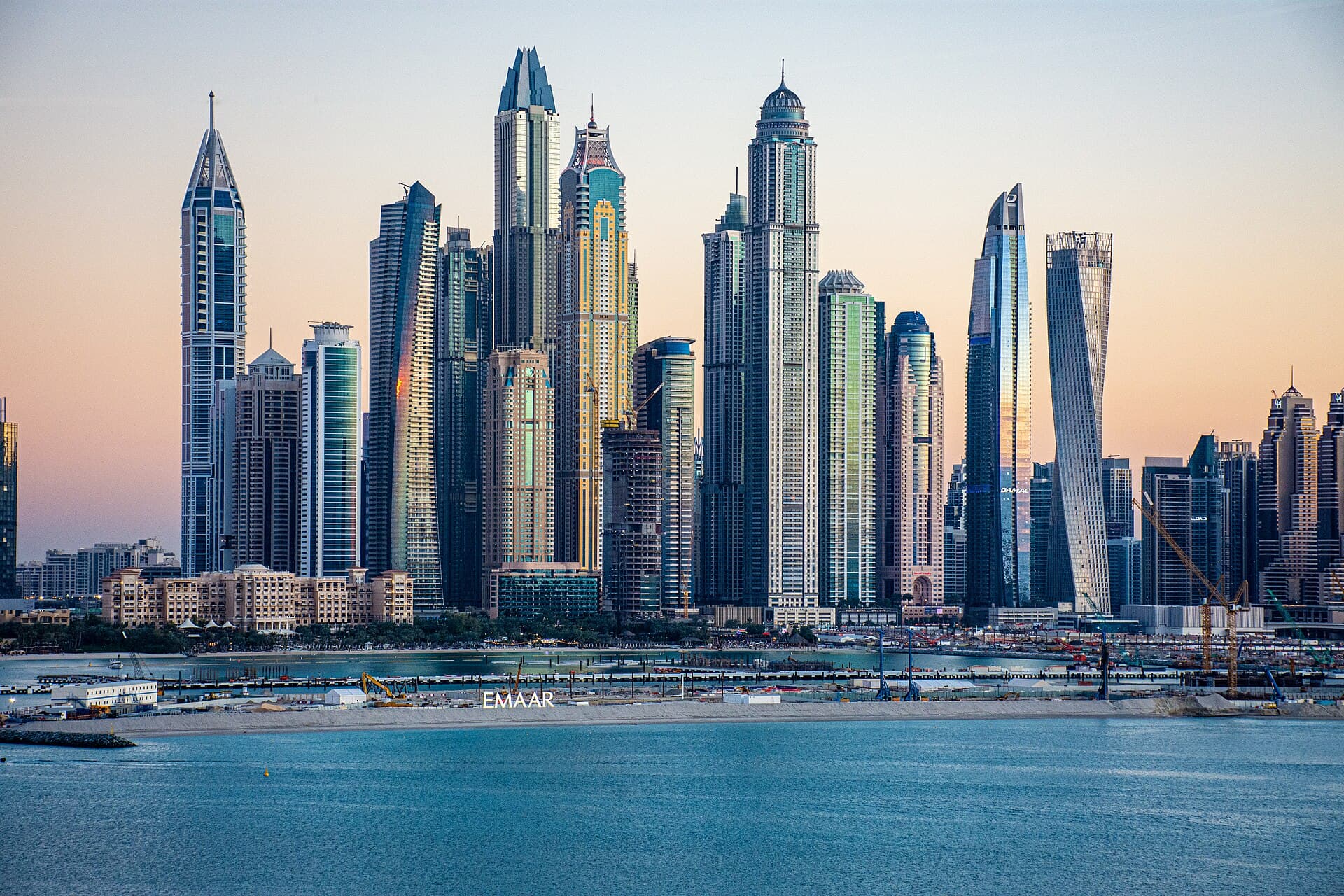
The towers of Dubai Marina along the sea at sunset.
Photo Norlando Pobre · CC BY 2.0
Photo on Wikimedia Commons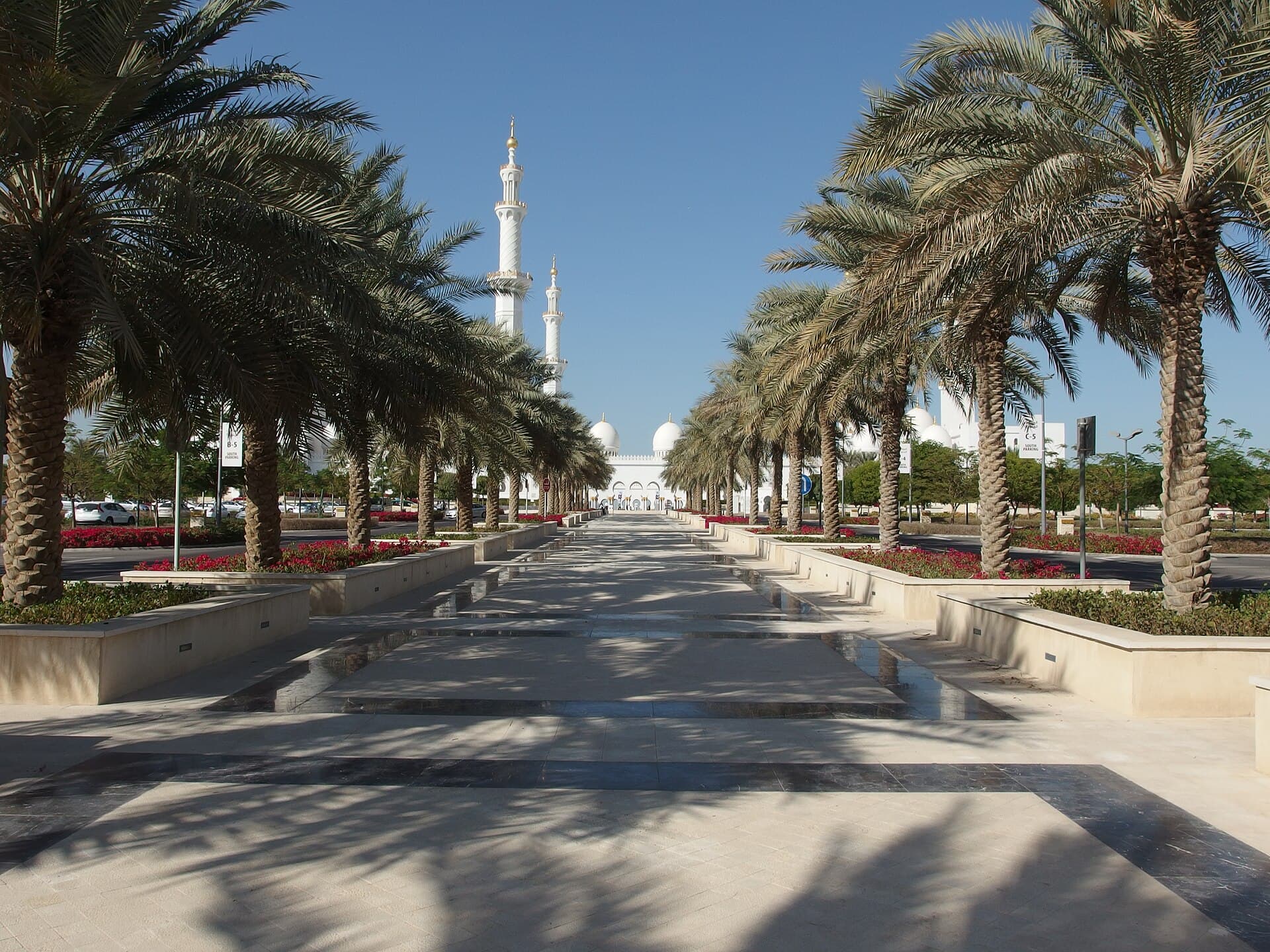
A palm-shaded walkway leading to the minarets and white domes of the Sheikh Zayed Grand Mosque in Abu Dhabi.
Photo Guilhem Vellut from Annecy, France · CC BY 2.0
Photo on Wikimedia Commons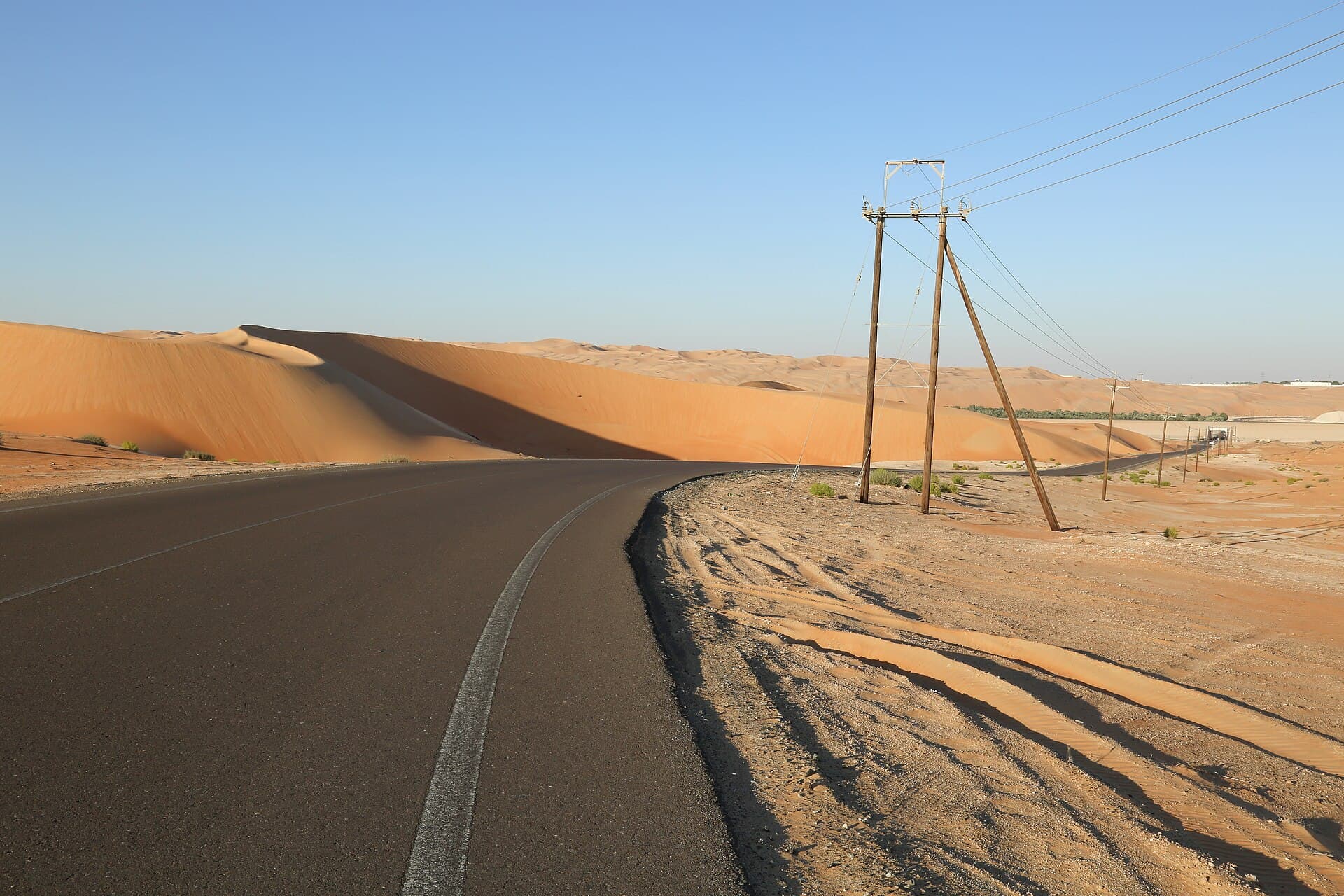
Tall sand dunes beside a road in the Liwa desert.
Photo JSPhotography2016 · CC BY-SA 4.0
Photo on Wikimedia Commons
The winding road up Jebel Hafeet near Al Ain, seen from the air.
Photo Nicolascornet · CC BY-SA 4.0
Photo on Wikimedia Commons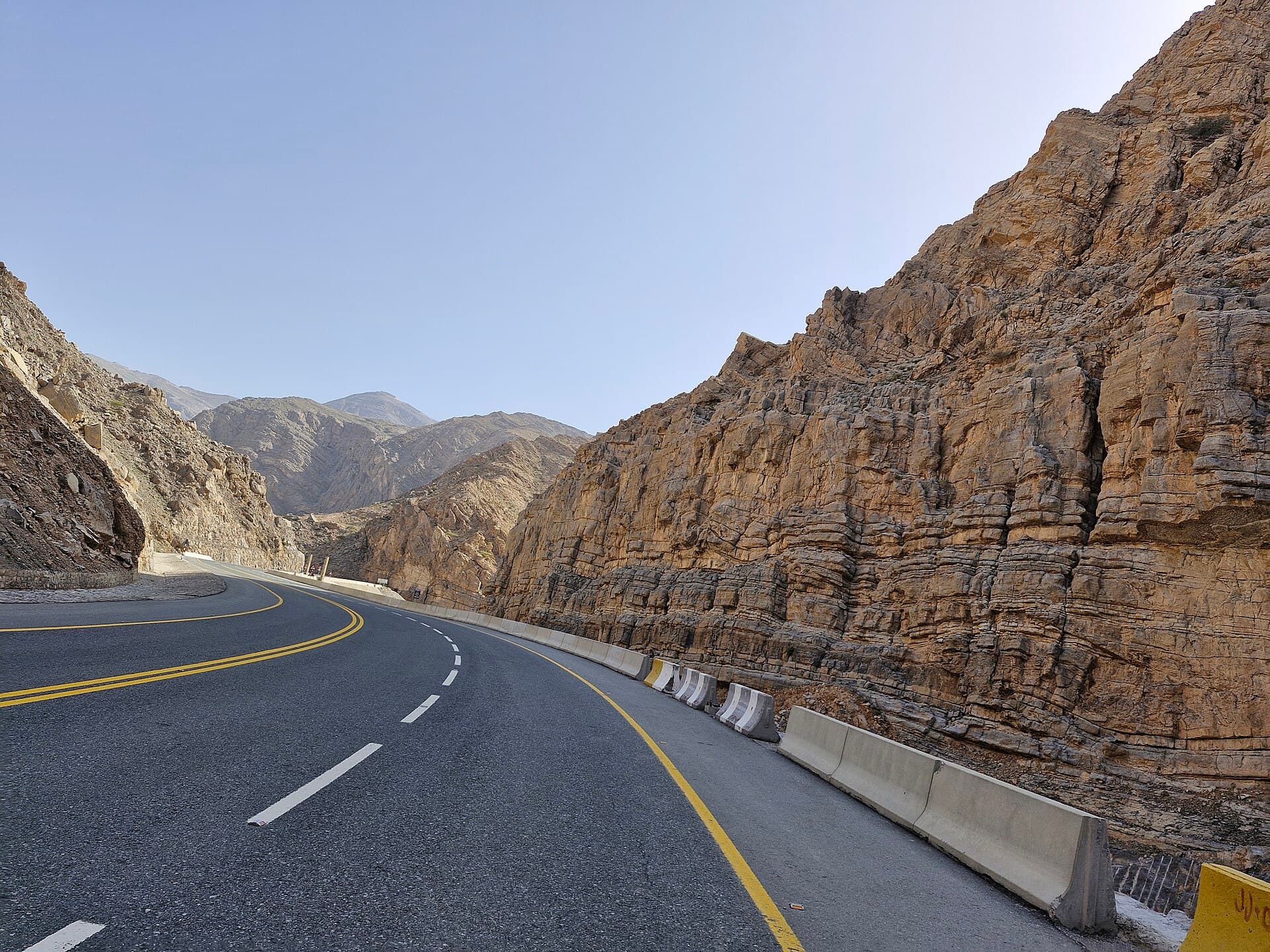
The Jebel Jais road curving between rocks in Ras Al Khaimah.
Photo Montaserarqob · CC BY-SA 4.0
Photo on Wikimedia Commons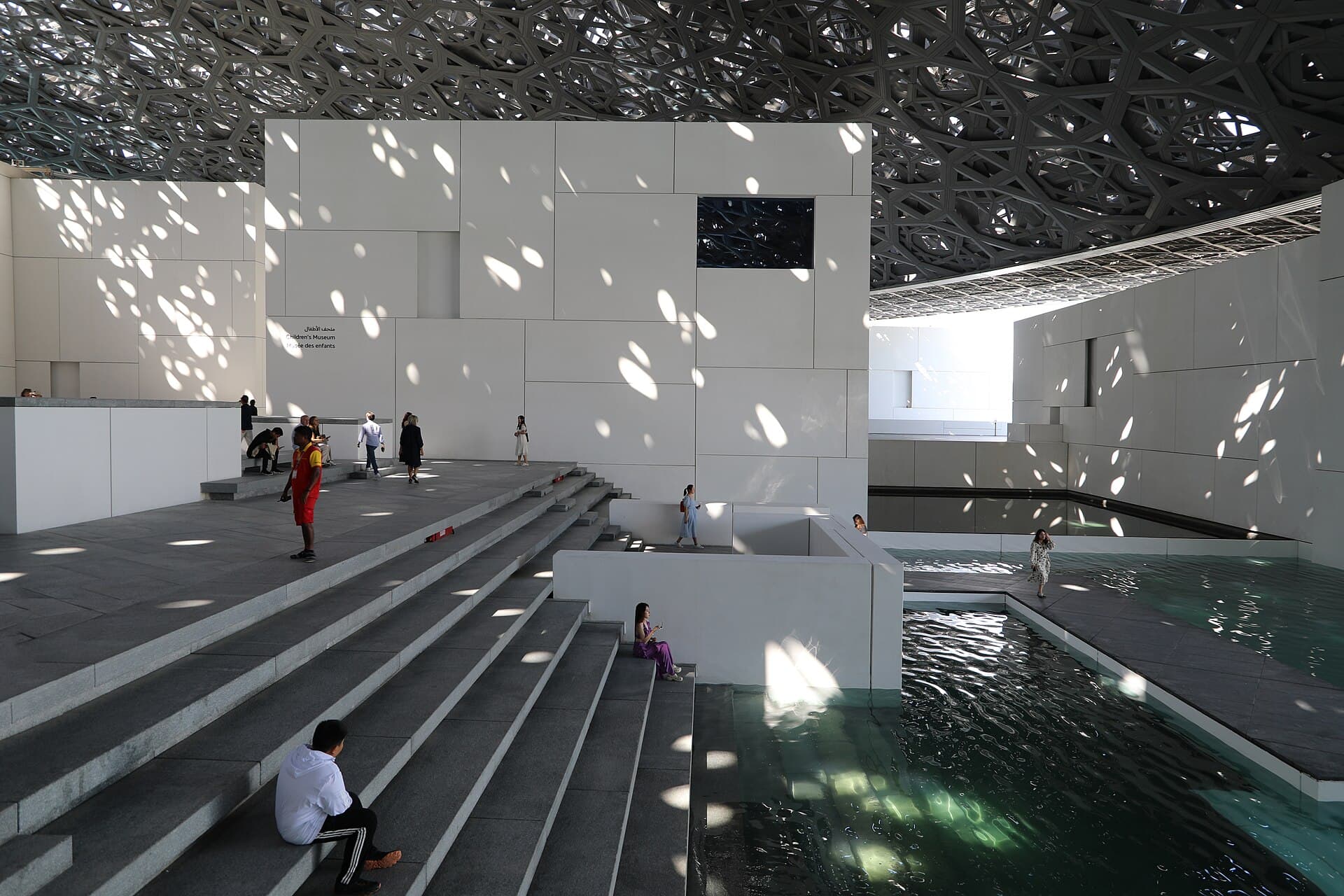
A courtyard inside the Louvre Abu Dhabi, with dappled light from the lattice dome on white walls and water.
Photo Francesco Bini · CC BY-SA 4.0
Photo on Wikimedia Commons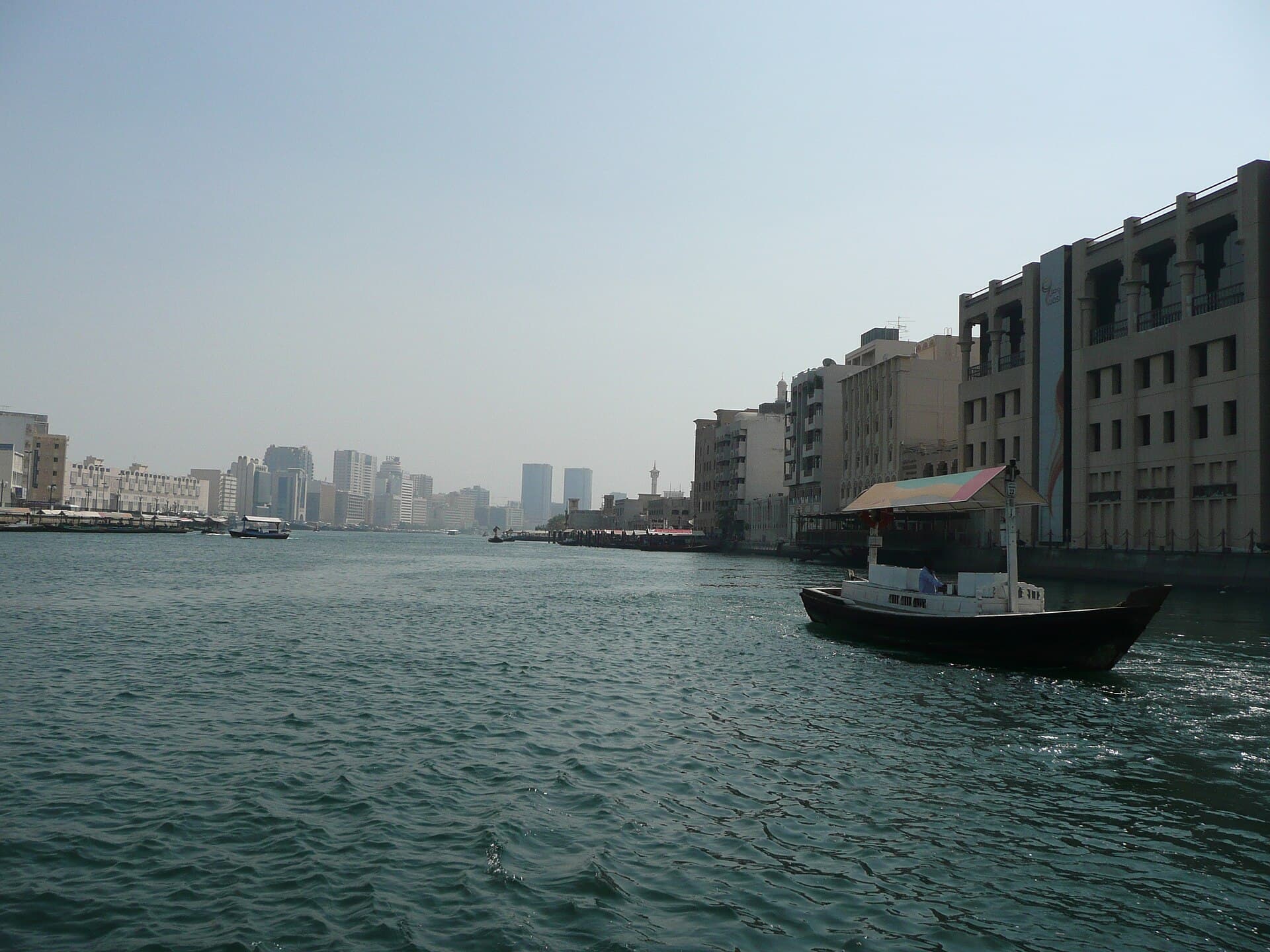
A wooden abra crossing Dubai Creek between the two banks.
Photo CT Cooper · Public domain
Photo on Wikimedia CommonsArabian Peninsula, on the Arabian Gulf and the Gulf of Oman
United Arab Emirates
Seven emirates between dunes, mountains and sea: towers, forts and oases.
The United Arab Emirates is a federation of seven emirates on the eastern tip of the Arabian Peninsula, facing the Arabian Gulf to the west and the Gulf of Oman to the east. The union was formed on 2 December 1971. Abu Dhabi is the capital and Dubai the largest city. The country covers about 83,600 square kilometres and has more than 11 million people. In that fairly compact space you find open desert, rugged mountains and two very different coasts, so a two-hour drive can take you from red dunes to a beach framed by peaks.
Abu Dhabi is an island city that pairs modern architecture with heritage. It holds the Sheikh Zayed Grand Mosque with its 82 white domes, the Louvre Abu Dhabi, opened in 2017 beneath a latticed metal dome, and Qasr Al Hosn, built in 1761 and the oldest building in the city. Dubai pairs the 828-metre Burj Khalifa, the tallest building in the world, with its old creek, where wooden abra boats still ferry people between the banks, and Al Fahidi Fort, built in 1787.
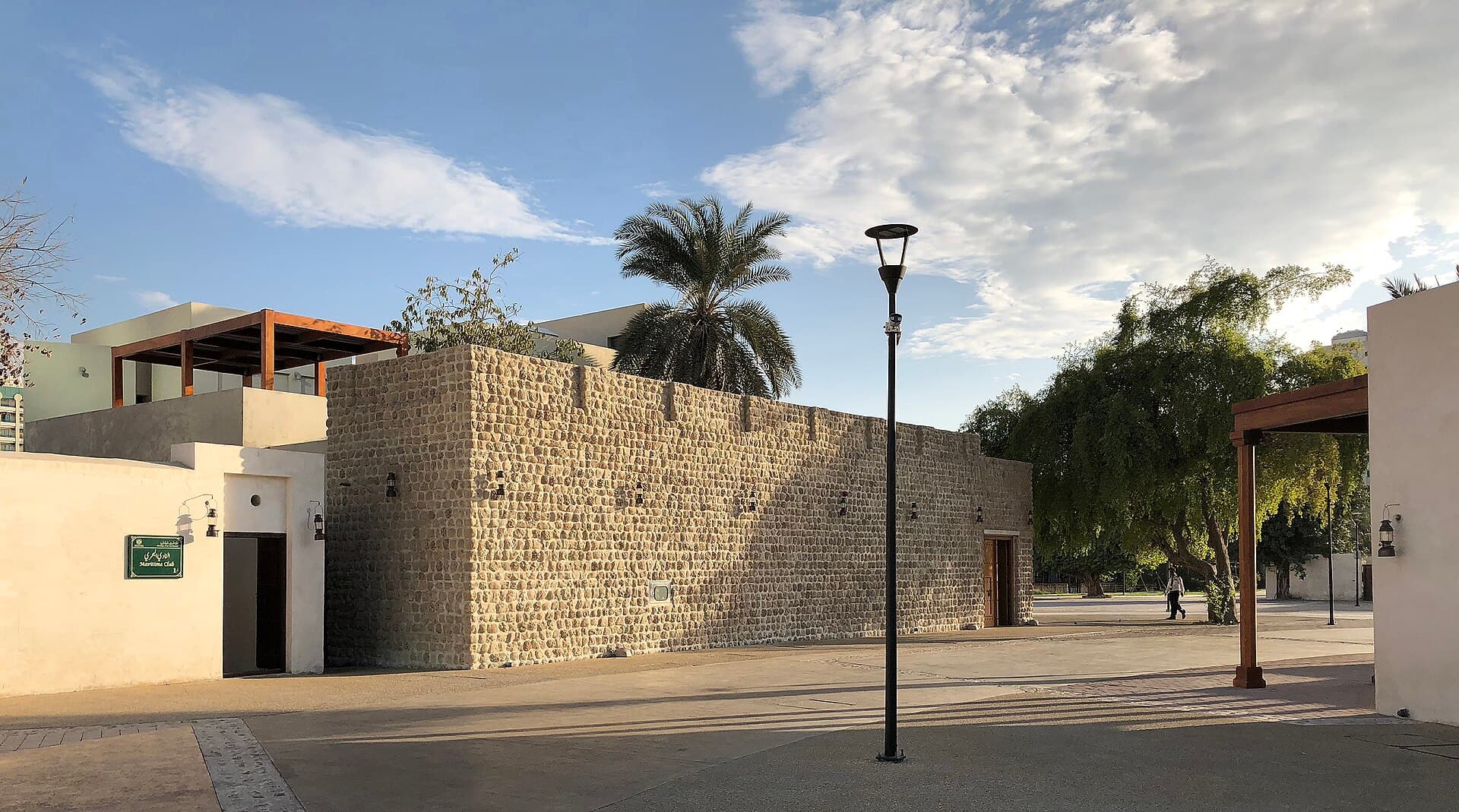
To the north, Sharjah has museums and a restored historic heart, and was named World Book Capital for 2019. Inland on the border with Oman lies Al Ain, the garden city of oases. Its cultural sites were the first in the country to join the World Heritage List, in 2011, among them the Hili tombs from the third millennium BC.
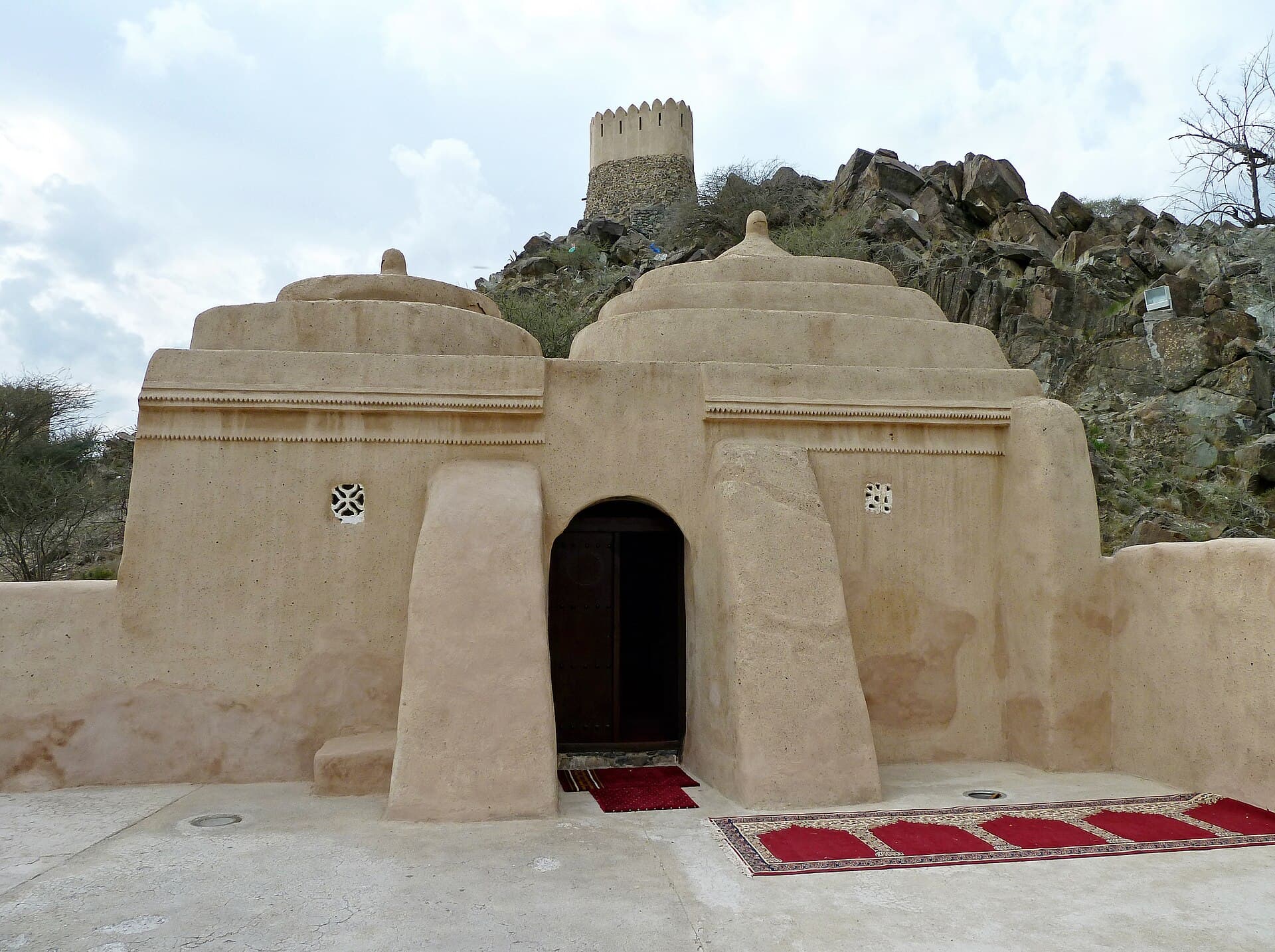
In Ras Al Khaimah a 36-kilometre road climbs Jebel Jais close to the country's highest ground, where snow has fallen in rare winters. On the east coast, Fujairah sits between the Hajar Mountains and the Gulf of Oman. It is home to Al Bidya Mosque, thought to date from 1446 and built of stone and mud, and to Wadi Wurayah, inscribed as World Heritage in 2026. In the southwest, Liwa Oasis curves along the edge of the Empty Quarter, near the Moreeb Dune, about 300 metres high.
The best time to visit is winter, from December to February, when the weather is mild; in July and August average highs on the coast can pass 48 °C. The currency is the UAE dirham and the time zone is UTC+4. The local kitchen is simple and generous: machboos, harees and luqaimat, with Arabic coffee and dates offered to every guest. Getting around is easy, with modern roads, signs in Arabic and English and short distances between cities. The explore journey goes deeper, emirate by emirate.
Key cities and regions
Abu Dhabi
The capital: Sheikh Zayed Grand Mosque, Louvre Abu Dhabi, Qasr Al Hosn and the Corniche.
Dubai
The largest city: Burj Khalifa, the creek and its abras, and the Al Fahidi historic district.
Sharjah
A city of museums and heritage, World Book Capital for 2019.
Al Ain
The oasis city below Jebel Hafeet, World Heritage since 2011.
Ras Al Khaimah
Jebel Jais and its mountain road, Dhayah Fort and the old town of Jazirat Al Hamra.
Fujairah
The east coast between the Hajar Mountains and the Gulf of Oman, with Al Bidya Mosque and Wadi Wurayah.
Liwa
An oasis on the edge of the Empty Quarter, beside the 300-metre Moreeb Dune.
Want to know United Arab Emirates better?
A journey in photos, maps, and figures—one step at a time.
What does a flight to United Arab Emirates cost—and when is it cheaper?
Check from your city →FAQ about United Arab Emirates
When is the best time to visit the UAE?
Winter, from December to February, is the best season for time outdoors, with January and February lows between 10 and 14 °C. July and August are the hottest months, when average highs on the coast can pass 48 °C, so summer trips lean on air-conditioned museums, malls and hotels.
How many days do I need?
Four days give a first look at Abu Dhabi and Dubai. A week adds Sharjah, Al Ain and a day in the desert or on Jebel Jais. Ten days open up the east coast around Fujairah and a night in Liwa on the edge of the Empty Quarter; distances are short, but each emirate has its own pace.
Is the UAE expensive to visit?
The general price level in 2024 was about 63% of the US level, calculated from World Bank PPP and exchange-rate data. That figure covers the whole economy rather than a hotel bill, and real costs vary widely between luxury hotels, local restaurants and public transport.
What is the currency?
The currency is the UAE dirham, pegged to the US dollar at 3.6725 dirhams in World Bank data for recent years. Cards are widely used in the big cities, but carry a little cash for traditional markets and for the abra boats on Dubai Creek.
Which Emirati dishes should I try?
Machboos is rice cooked with meat and spices; harees is wheat and meat cooked slowly until smooth and joined UNESCO's intangible heritage list in 2023. For something sweet, try luqaimat, fried dough balls drizzled with date syrup. Arabic coffee is served with dates when a guest arrives, and UNESCO listed it in 2024.
How do I get around between the emirates?
Highways link the cities, and Al Ain, Abu Dhabi and Dubai are each about 130 kilometres apart. Many visitors rent a car to reach the mountains, the desert and the east coast. In Dubai itself, abras still cross the creek between Deira and Bur Dubai, as they have for decades.
Do I need a visa?
It depends on your nationality, and the rules change. Before booking, check the site of the Federal Authority for Identity, Citizenship, Customs and Port Security, ask the UAE embassy in your country of residence if your case is unclear, and check again a few days before you travel.
Photos (24)
Sources & photo credits(24 sources · 33 photos · last verified 2026-09-28)
- 1.United Arab Emirates · Wikipedia · Accessed 2026-09-28
- 2.Climate of the United Arab Emirates · Wikipedia · Accessed 2026-09-28
- 3.United Arab Emirates — World Heritage properties · UNESCO World Heritage Centre · Accessed 2026-09-28
- 4.United Arab Emirates — Intangible Cultural Heritage elements · UNESCO · Accessed 2026-09-28
- 5.Abu Dhabi · Wikipedia · Accessed 2026-09-28
- 6.Sheikh Zayed Grand Mosque · Wikipedia · Accessed 2026-09-28
- 7.Louvre Abu Dhabi · Wikipedia · Accessed 2026-09-28
- 8.Dubai · Wikipedia · Accessed 2026-09-28
- 9.Dubai Creek · Wikipedia · Accessed 2026-09-28
- 10.Al Fahidi Fort (Dubai Museum) · Wikipedia · Accessed 2026-09-28
- 11.Sharjah · Wikipedia · Accessed 2026-09-28
- 12.Al Ain · Wikipedia · Accessed 2026-09-28
- 13.Hili Archaeological Park · Wikipedia · Accessed 2026-09-28
- 14.Ras Al Khaimah · Wikipedia · Accessed 2026-09-28
- 15.Jebel Jais · Wikipedia · Accessed 2026-09-28
- 16.Fujairah · Wikipedia · Accessed 2026-09-28
- 17.Al Bidya Mosque · Wikipedia · Accessed 2026-09-28
- 18.Wadi Wurayah · Wikipedia · Accessed 2026-09-28
- 19.Liwa Oasis · Wikipedia · Accessed 2026-09-28
- 20.Emirati cuisine · Wikipedia · Accessed 2026-09-28
- 21.PPP conversion factor, GDP (LCU per international $) — United Arab Emirates · World Bank · Accessed 2026-09-28
- 22.Official exchange rate (LCU per US$, period average) — United Arab Emirates · World Bank · Accessed 2026-09-28
- 23.Federal Authority for Identity, Citizenship, Customs & Port Security (official) · UAE Government · Accessed 2026-09-28
- 24.Abu Dhabi. Live it all · Visit Abu Dhabi (YouTube) · Accessed 2026-09-28
- A palm-shaded walkway leading to the minarets and white domes of the Sheikh Zayed Grand Mosque in Abu Dhabi. · Guilhem Vellut from Annecy, France · CC BY 2.0
- A courtyard inside the Louvre Abu Dhabi, with dappled light from the lattice dome on white walls and water. · Francesco Bini · CC BY-SA 4.0
- Abu Dhabi towers lit up at night behind the Corniche road and its trees. · Sabithnav · CC BY-SA 4.0
- The courtyard and round tower of Qasr Al Hosn among the towers of central Abu Dhabi. · Aeroid · CC BY-SA 4.0
- The white wall and round tower of Qasr Al Hosn in the centre of Abu Dhabi. · Peturrunar · CC BY-SA 4.0
- Dubai's skyline from the air, with Burj Khalifa rising above the towers and neighbourhoods. · Tim Reckmann from Hamm, Deutschland · CC BY-SA 3.0
- A wooden abra crossing Dubai Creek between the two banks. · CT Cooper · Public domain
- The towers of Dubai Marina along the sea at sunset. · Norlando Pobre · CC BY 2.0
- A coral-stone wall in the restored historic heart of Sharjah. · Wael Mohammed Al-Masri · CC BY-SA 4.0
- A gallery in the Sharjah Museum of Islamic Civilization, with jewellery, weapons and textiles. · EditQ · CC0
- Sharjah's waterfront and towers seen from the water. · SHARON VISHAKHAM · CC BY-SA 4.0
- The winding road up Jebel Hafeet near Al Ain, seen from the air. · Nicolascornet · CC BY-SA 4.0
- The rocky flank of Jebel Hafeet above the plain of Al Ain. · Opulentmonk · CC BY-SA 4.0
- Dense date palms in Al Ain Oasis under a blue sky. · Radosław Botev · CC BY 3.0 pl
- Al Jahili Fort in Al Ain, with its towers and mud-brick walls. · Glenn2477 · CC BY-SA 4.0
- The round Hili Grand Tomb in Hili Archaeological Park, Al Ain. · SUNILKUMAR NAIR · CC BY-SA 4.0
- The Jebel Jais road curving between rocks in Ras Al Khaimah. · Montaserarqob · CC BY-SA 4.0
- Hairpin bends on the Jebel Jais road and the Hajar Mountains around it. · Montaserarqob · CC BY-SA 4.0
- Dhayah Fort on a rocky hill in Ras Al Khaimah. · Balaji Rai · CC BY-SA 4.0
- An old house with a wind tower in Jazirat Al Hamra. · Slywire · CC BY-SA 4.0
- Al Bidya Mosque, with four small domes and walls of stone and mud. · Bobak Ha'Eri · CC BY 3.0
- The restored Fujairah Fort and its mud towers. · Mike Che · CC BY-SA 3.0
- The Hajar Mountains around the Wadi Wurayah dam in Fujairah. · IbrahimKumar · CC BY-SA 4.0
- Tall sand dunes beside a road in the Liwa desert. · JSPhotography2016 · CC BY-SA 4.0
- A road between the palms of Liwa Oasis and the dunes. · JSPhotography2016 · CC BY-SA 4.0
- A large dune behind the palms and trees of the Liwa oasis. · Xiaotong Gao · CC BY-SA 3.0
- A plate of harees with ghee and cinnamon. · Miansari66 · CC0
- Rice with meat and spices in the style of machboos, with fresh vegetables. · Sammy Six · CC BY 2.0
- Bunches of dates on the palms of Al Ain Oasis. · Slywire · CC BY-SA 4.0
- A traditional wind tower above an old house in Dubai's Al Fahidi historic district. · Ankur Panchbudhe · CC BY 2.0
- Abras on Dubai Creek, with a minaret and old buildings on the bank. · CT Cooper · Public domain
- Wooden dhows and cargo on a wharf in Deira beside Dubai Creek. · Iwona Rege · CC BY-SA 4.0
- Sunrise over the Gulf of Oman from a beach on the east coast. · Stzeman · CC BY-SA 3.0