
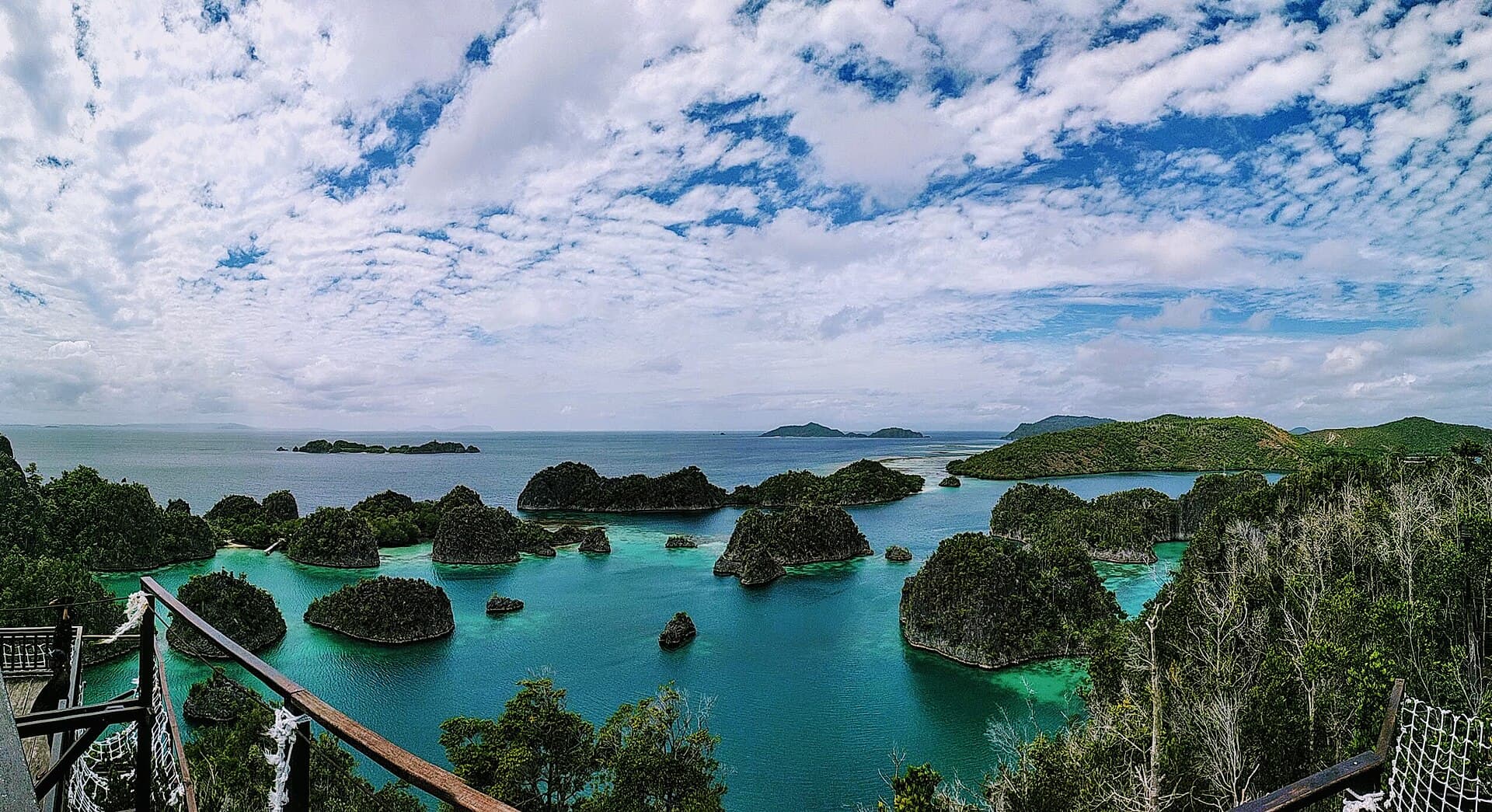
Piaynemo Island in Raja Ampat: small green hills rising from turquoise water
Photo Irma Ade · CC BY-SA 4.0
Photo on Wikimedia Commons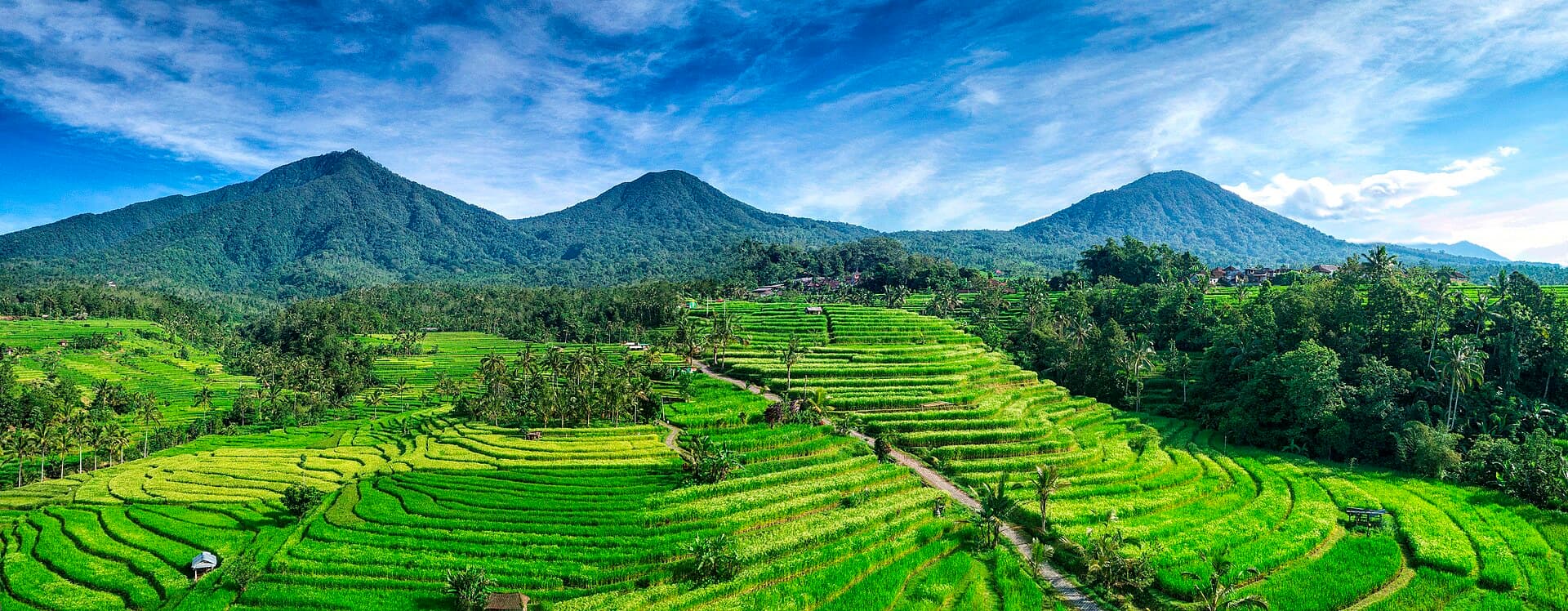
Green rice terraces at Jatiluwih in central Bali, with mountains behind
Photo Imacim · CC BY-SA 4.0
Photo on Wikimedia Commons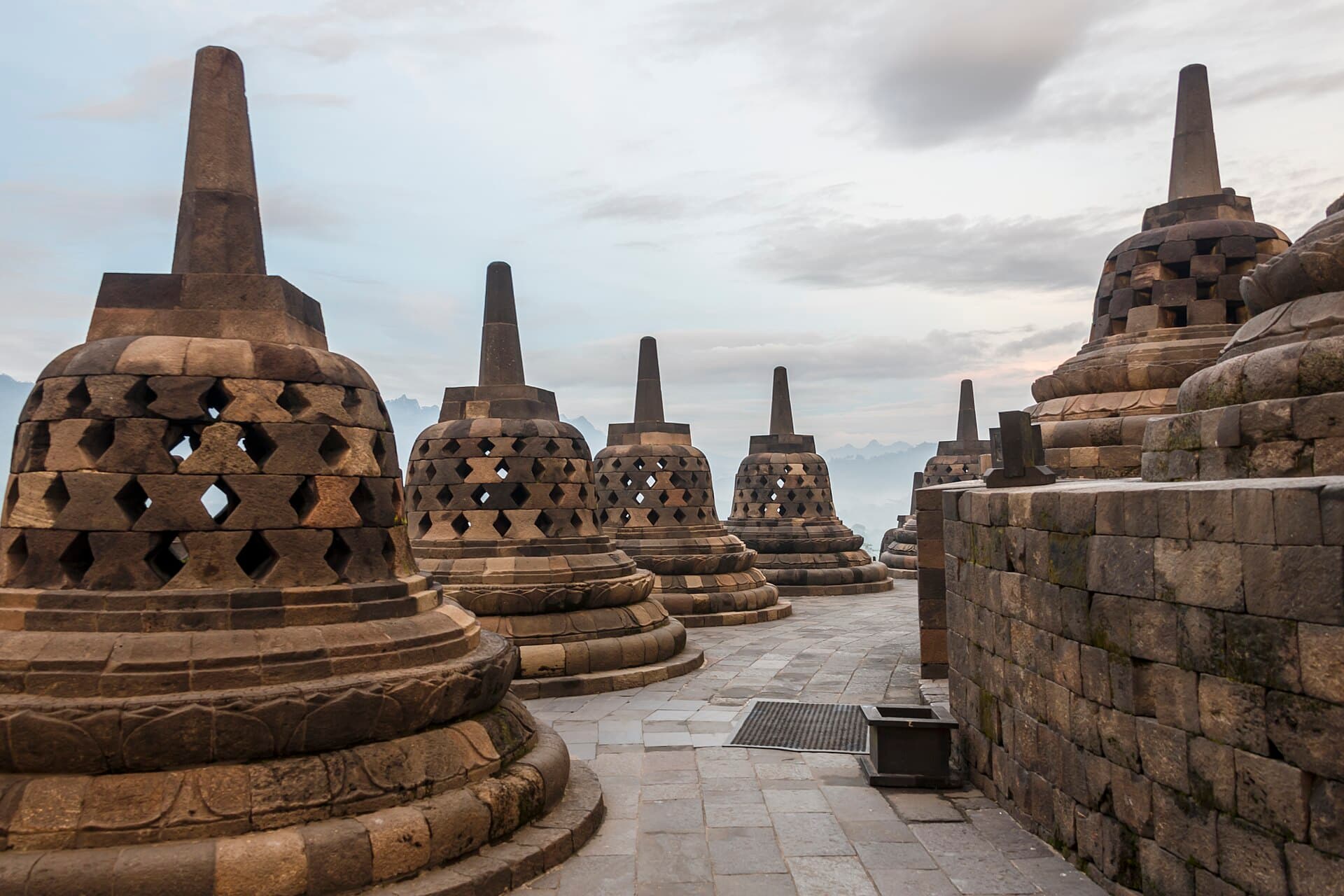
Stone stupas at the top of Borobudur Temple in the morning light
Photo CEphoto, Uwe Aranas · CC BY-SA 3.0
Photo on Wikimedia Commons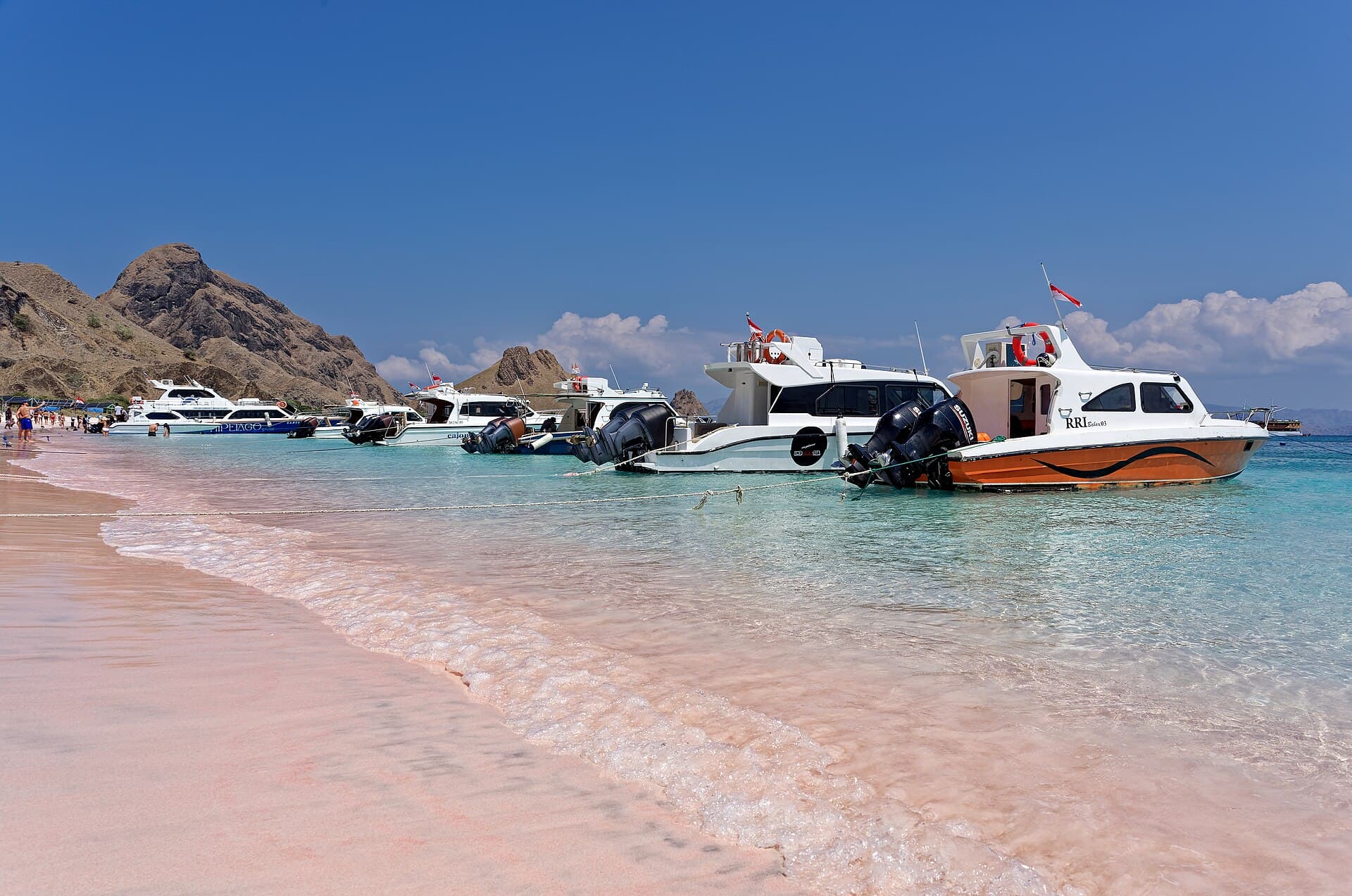
The pink beach on Padar Island with visitor boats offshore
Photo Jakub Hałun · CC BY 4.0
Photo on Wikimedia Commons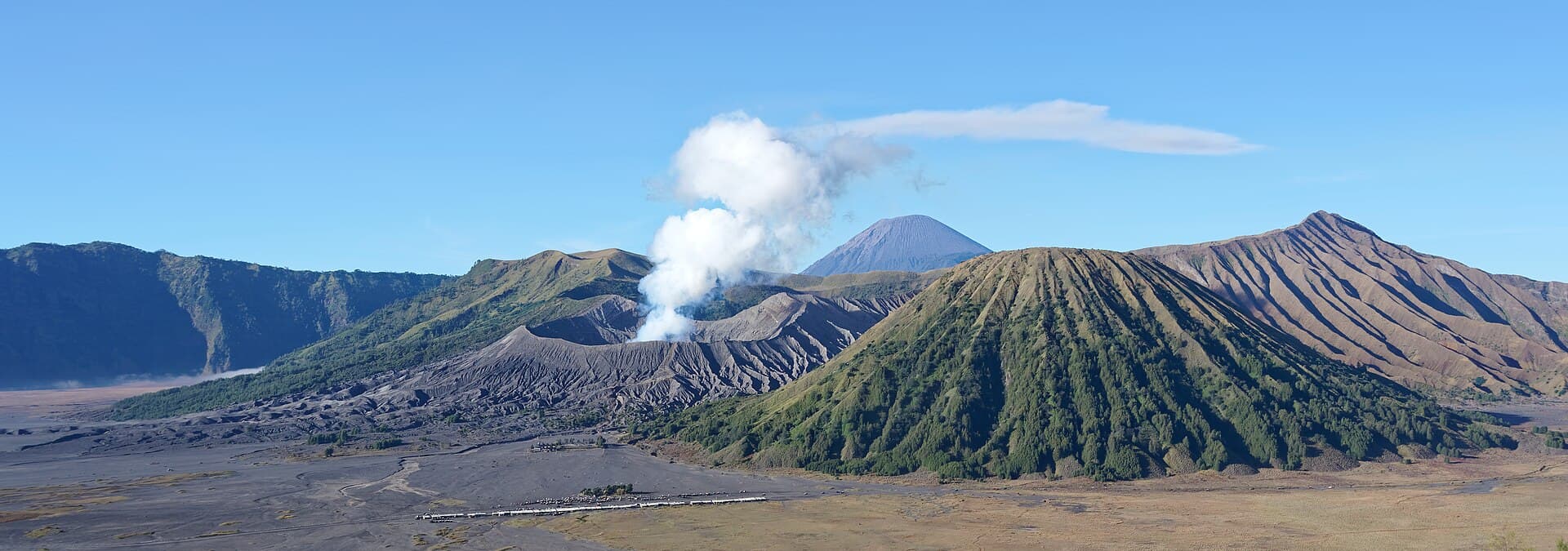
Tengger caldera: Mount Bromo and Mount Batok, with Mount Semeru beyond
Photo Jakub Hałun · CC BY-SA 4.0
Photo on Wikimedia Commons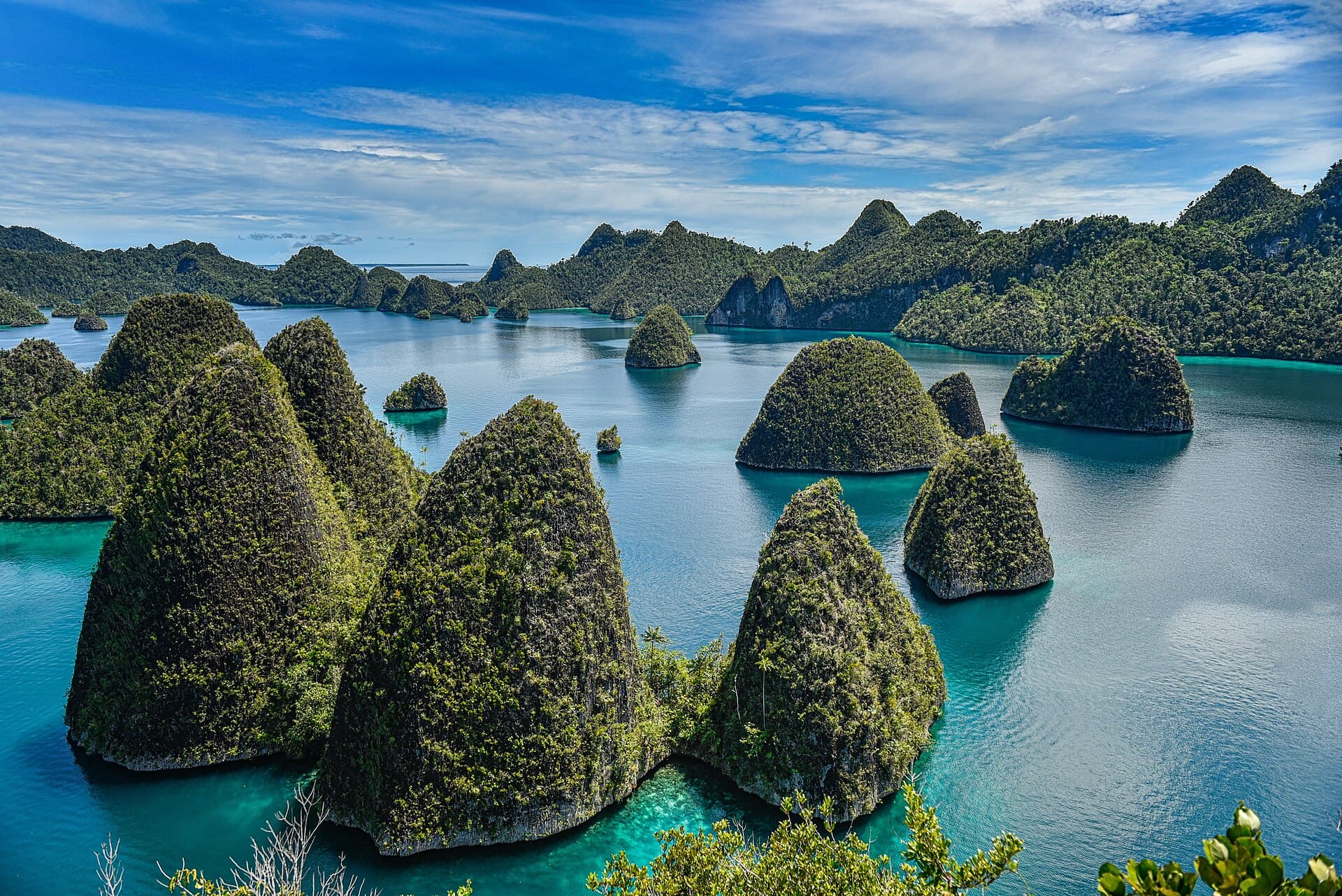
Green limestone islands of Wayag in Raja Ampat
Photo Rolandandika · CC BY-SA 4.0
Photo on Wikimedia Commons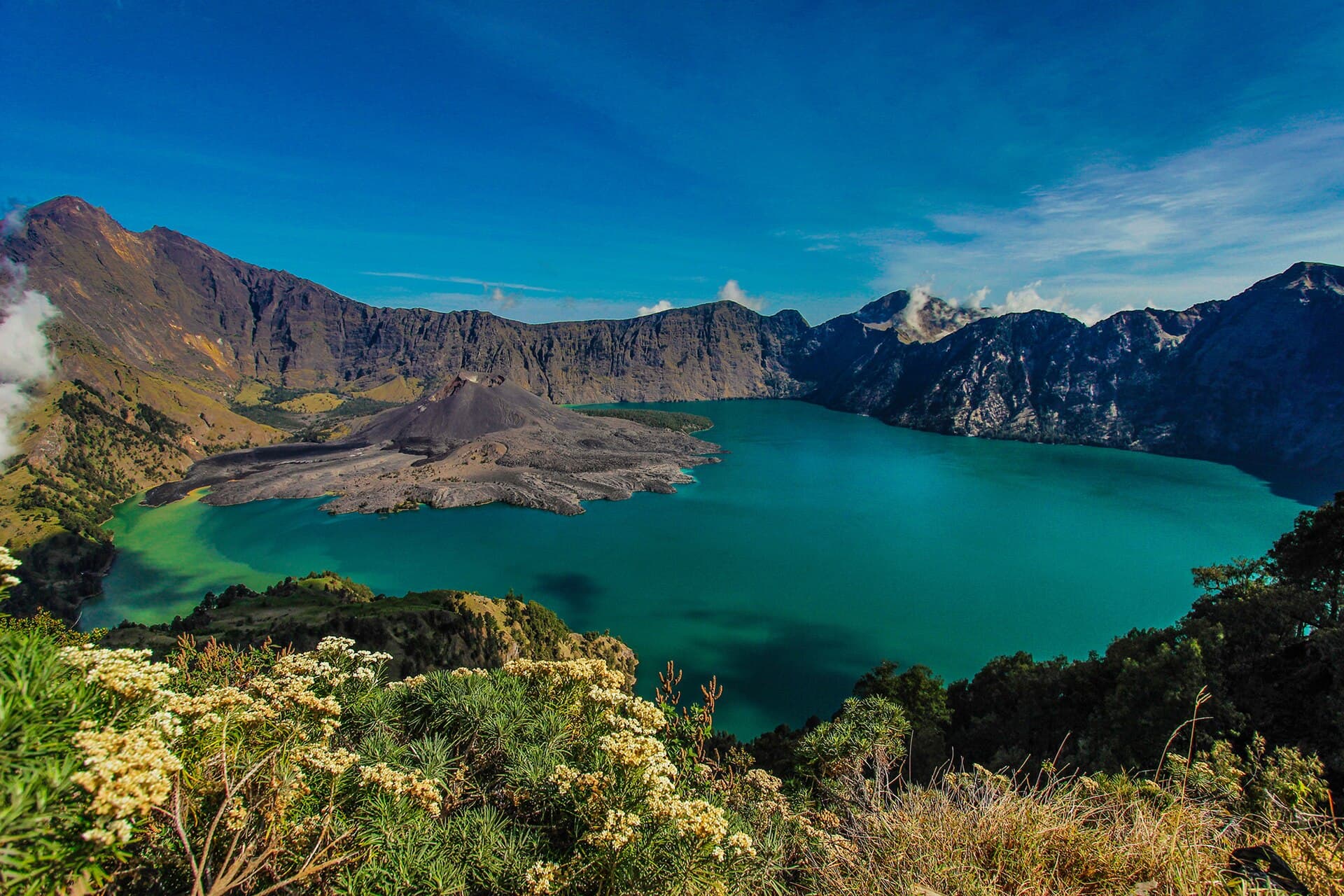
Segara Anak Lake inside Mount Rinjani’s crater on Lombok
Photo Aldoarianto.87 · CC BY-SA 4.0
Photo on Wikimedia Commons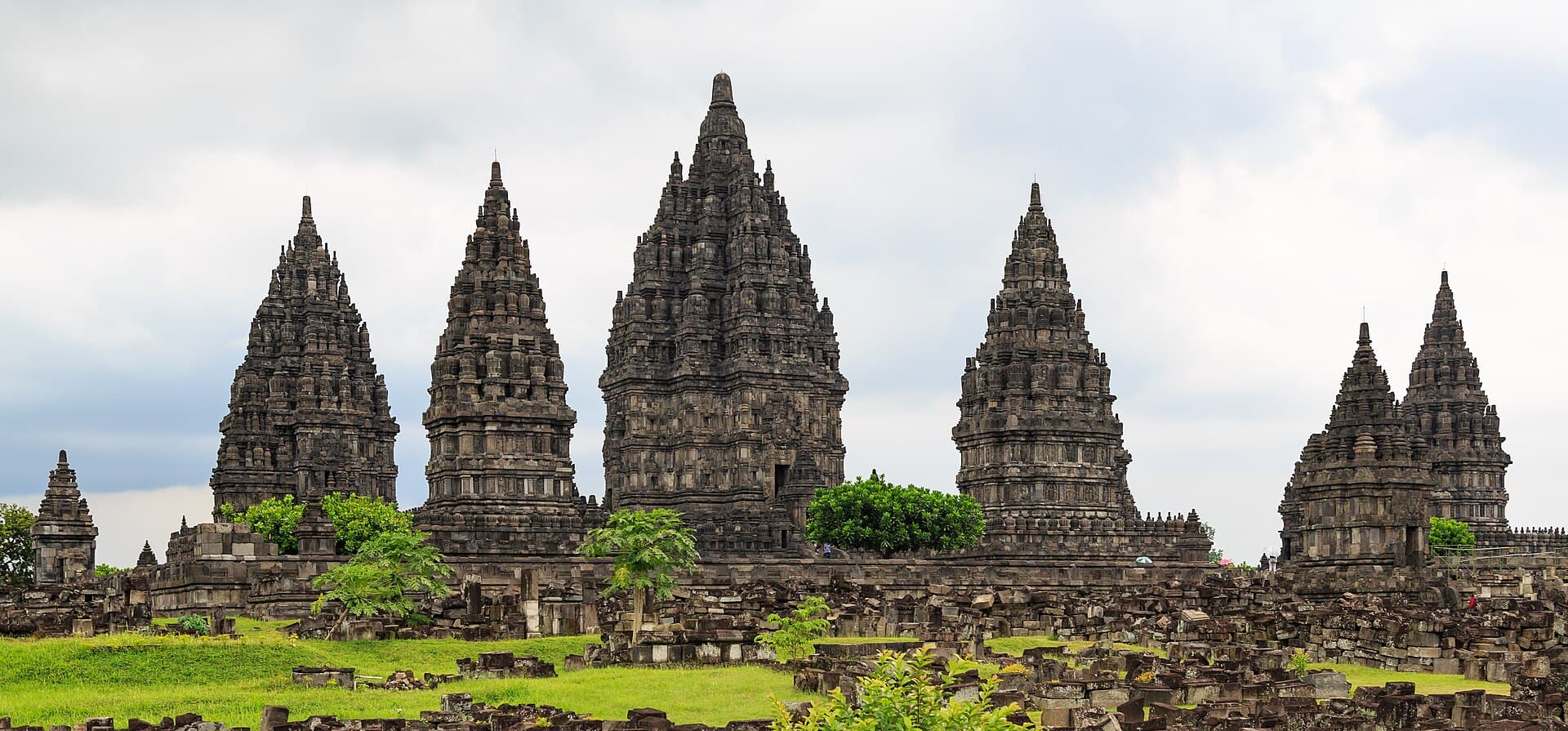
The Hindu temple complex of Prambanan near Yogyakarta
Photo CEphoto, Uwe Aranas · CC BY-SA 3.0
Photo on Wikimedia CommonsSoutheast Asia & Oceania
Indonesia
Thousands of equatorial islands: volcanoes, temples, and coral reefs.
Indonesia is the world’s largest archipelagic country. Thousands of islands stretch along the equator between the Indian and Pacific Oceans, bridging Asia and Australia, and more than 280 million people call them home. You can start a day on a volcanic rim, finish it on a white-sand beach, and move in a single week from noisy cities to villages framed by rice terraces.
Most journeys begin in Jakarta, the capital and the country’s largest city, where skyscrapers sit beside the old Batavia square and its museums. In the heart of Java lies Yogyakarta—a hub of Javanese arts, batik, and music—and nearby stand Borobudur, the world’s largest Buddhist temple, built in the ninth century, and the Prambanan temples, raised around the year 850. Farther east, Mount Bromo rises above a sea of volcanic sand; visitors climb before dawn to watch the sun come up behind it.
Then comes Bali, with seaside temples, rice terraces watered by the Subak irrigation system inscribed on the World Heritage List, and the town of Ubud, long the island’s artistic center. Neighboring Lombok feels quieter, with Mount Rinjani—Indonesia’s second-highest volcano—and the small Gili Islands, where cars do not run.
Farther east still, Komodo National Park is home to the Komodo dragon, the world’s largest lizard, among dry hills, blue bays, and a pink beach. At the far eastern edge, the waters of Raja Ampat hold more than 600 species of hard coral—about three-quarters of those known worldwide—making them among the finest dive sites on the planet.
Indonesia’s variety is cultural as well as natural. Across roughly six thousand inhabited islands live more than 600 ethnic groups, each with its own regional language, architecture, dress, and dishes. Every island can feel like a different country: wooden houses in Java are not those of Bali or Lombok; markets, music, and dance shift from one region to the next. What stays constant is a warm welcome for visitors.
Through it all runs a warm tropical climate year-round, a cuisine rich in rice, spices, and grilled dishes, and living crafts such as batik and wayang puppet theatre—both listed by UNESCO as intangible cultural heritage. Overall price levels in Indonesia sit well below those in Europe or the Gulf, so a longer trip remains within reach on a moderate budget.
Key cities and regions
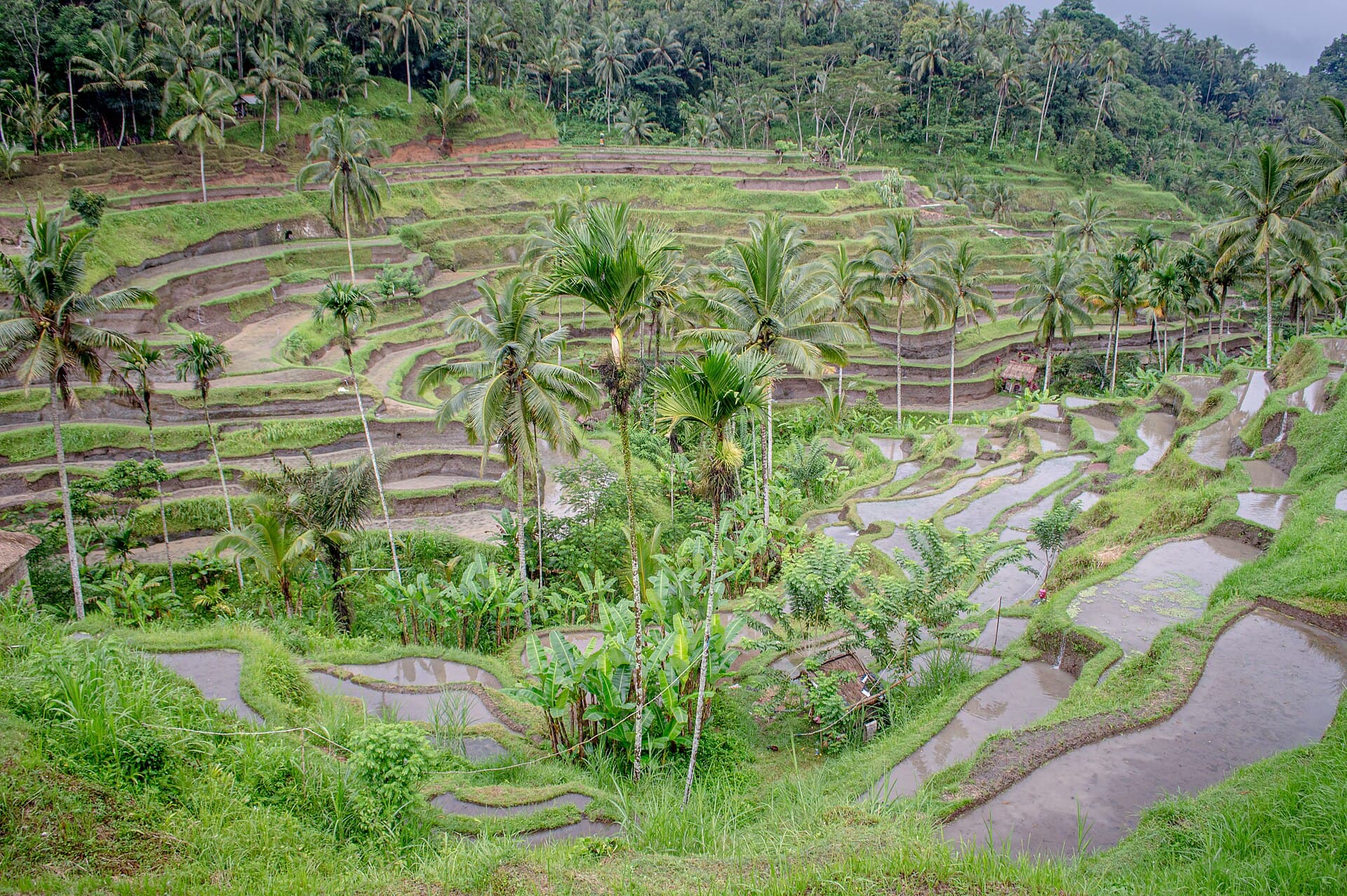
Bali
Island of temples, rice terraces, and beaches.
Yogyakarta
Java’s cultural heart, and the gateway to Borobudur and Prambanan.
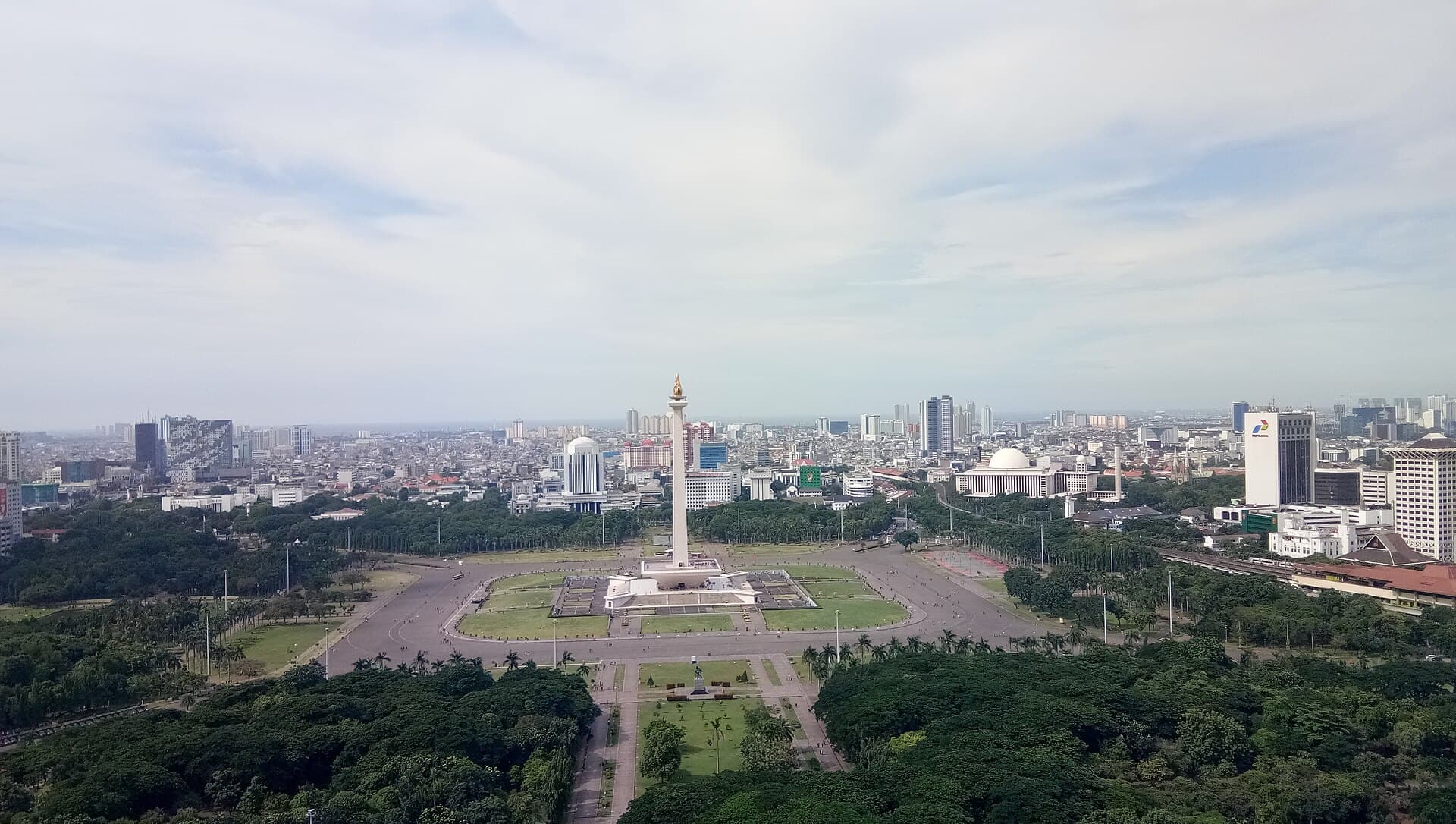
Jakarta
The capital, and the country’s main international gateway.
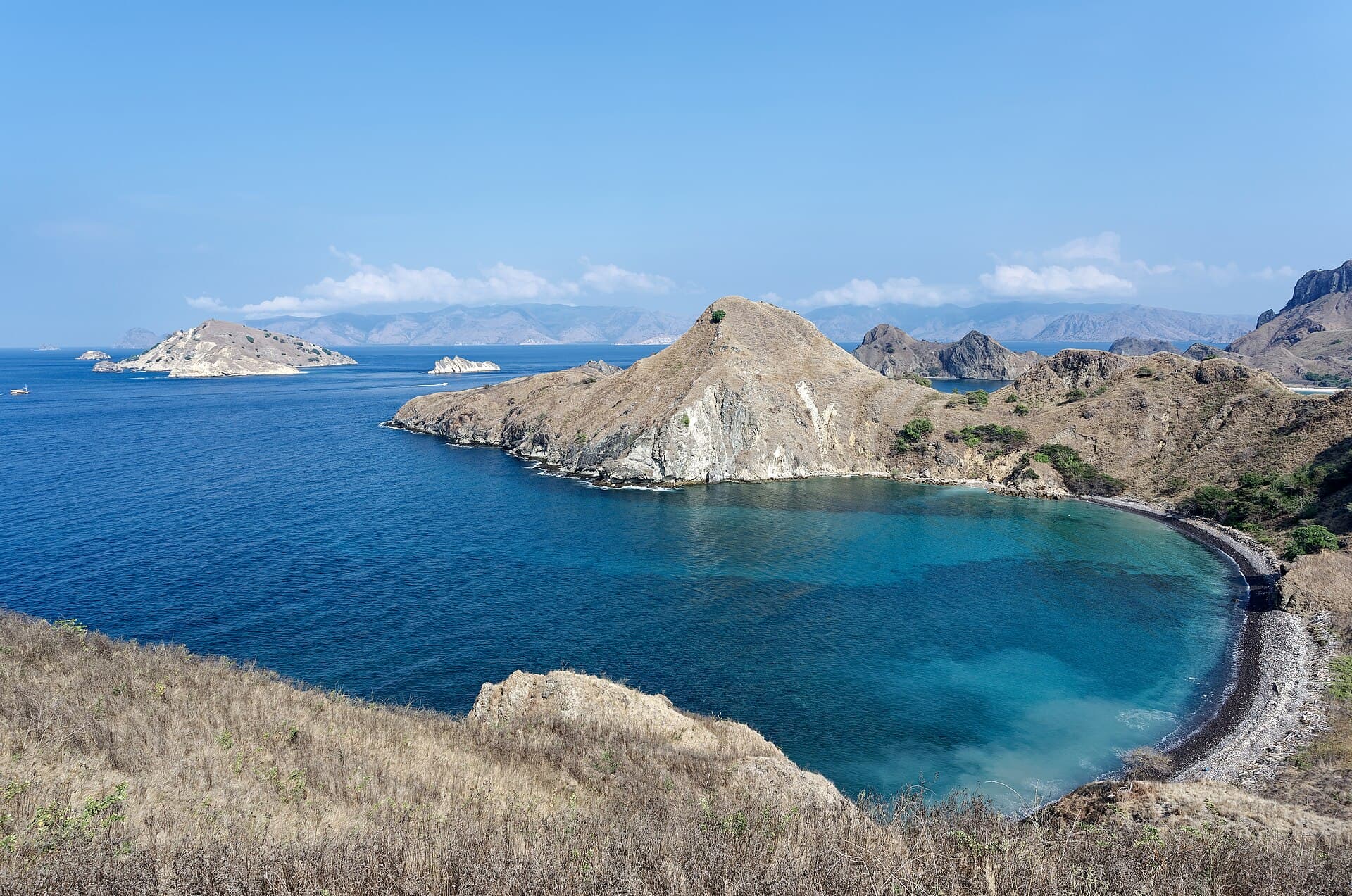
Labuan Bajo & Komodo
Gateway to Komodo National Park, home of the world’s largest lizards.
Raja Ampat
More than 1,500 small islands and rare coral reefs.
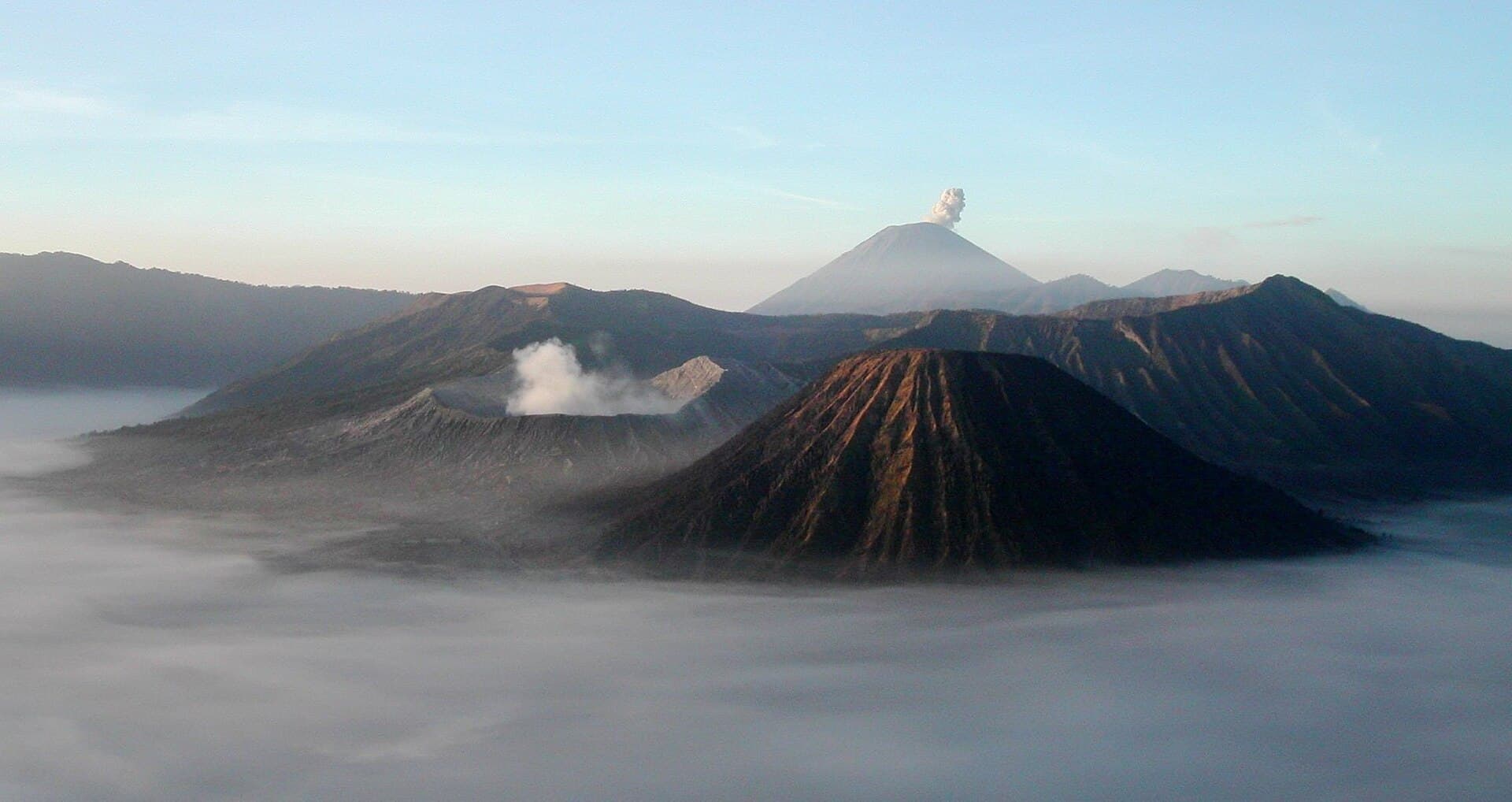
Bromo
An East Java volcano, best known for its sunrise views.
Lombok
East of Bali, with quieter shores and Mount Rinjani.
Want to know Indonesia better?
A journey in photos, maps, and figures—one step at a time.
What does a flight to Indonesia cost—and when is it cheaper?
Check from your city →FAQ about Indonesia
When is the best time to visit Indonesia?
Across most of the country the broad pattern is two seasons: a dry season from April to September, and a wet season from October to March. The dry months suit beaches, volcano climbs, and diving best, but weather still varies by region—some eastern islands follow their own rainfall rhythms.
How many days do you need in Indonesia?
The country is vast, so it helps to pick one or two regions. A week covers Bali with a short hop to Lombok or the Gili Islands. Two weeks can add Java (Yogyakarta, Borobudur, and Bromo) or a boat trip through Komodo. Raja Ampat, far to the east, deserves roughly a week on its own because of the distance.
Is travel in Indonesia expensive?
Generally no. World Bank data for 2025 put Indonesia’s overall price level at about 29% of the United States. That figure covers the whole economy, not tourism alone, and costs in popular destinations such as Bali run higher than elsewhere.
What currency does Indonesia use?
The official currency is the Indonesian rupiah, coded IDR. Banknote numbers are large, so watch the zeros when you pay. Carry some cash for markets, small shops, and villages, and use a card at larger hotels and restaurants.
Do I need a visa to enter Indonesia?
Entry rules depend on your nationality and change over time. Check before you travel on the official e-visa site of Indonesia’s Directorate General of Immigration at evisa.imigrasi.go.id, or contact the Indonesian embassy in your country.
How do you get between islands?
Domestic flights are the fastest option; most major cities are linked by air. Government ferries connect islands, and fast boats link nearby ones such as Bali, Lombok, and the Gilis. Java has a rail network, including a high-speed train between Jakarta and Bandung that has operated since 2023.
Photos (28)
Sources & photo credits(35 sources · 34 photos · last verified 2026-09-26)
- 1.Indonesia · Wikipedia · Accessed 2026-09-25
- 2.Nusantara (city) · Wikipedia · Accessed 2026-09-25
- 3.Climate of Indonesia · Wikipedia · Accessed 2026-09-25
- 4.Indonesia — World Heritage properties · UNESCO World Heritage Centre · Accessed 2026-09-25
- 5.Tourism in Indonesia · Wikipedia · Accessed 2026-09-25
- 6.Soekarno–Hatta International Airport · Wikipedia · Accessed 2026-09-25
- 7.Borobudur · Wikipedia · Accessed 2026-09-25
- 8.Komodo National Park · Wikipedia · Accessed 2026-09-25
- 9.Raja Ampat Islands · Wikipedia · Accessed 2026-09-25
- 10.Prambanan · Wikipedia · Accessed 2026-09-26
- 11.Jakarta · Wikipedia · Accessed 2026-09-26
- 12.National Monument (Indonesia) · Wikipedia · Accessed 2026-09-26
- 13.Kota Tua Jakarta · Wikipedia · Accessed 2026-09-26
- 14.Thousand Islands (Indonesia) · Wikipedia · Accessed 2026-09-26
- 15.Yogyakarta · Wikipedia · Accessed 2026-09-26
- 16.Kraton Ngayogyakarta Hadiningrat · Wikipedia · Accessed 2026-09-26
- 17.Mount Bromo · Wikipedia · Accessed 2026-09-26
- 18.Bali · Wikipedia · Accessed 2026-09-26
- 19.Ubud · Wikipedia · Accessed 2026-09-26
- 20.Tanah Lot · Wikipedia · Accessed 2026-09-26
- 21.Uluwatu Temple · Wikipedia · Accessed 2026-09-26
- 22.Tabanan Regency (Jatiluwih) · Wikipedia · Accessed 2026-09-26
- 23.Lombok · Wikipedia · Accessed 2026-09-26
- 24.Mount Rinjani · Wikipedia · Accessed 2026-09-26
- 25.Gili Islands · Wikipedia · Accessed 2026-09-26
- 26.Labuan Bajo · Wikipedia · Accessed 2026-09-26
- 27.Rinca · Wikipedia · Accessed 2026-09-26
- 28.Padar Island · Wikipedia · Accessed 2026-09-26
- 29.Misool · Wikipedia · Accessed 2026-09-26
- 30.Indonesian cuisine · Wikipedia · Accessed 2026-09-26
- 31.Transport in Indonesia · Wikipedia · Accessed 2026-09-26
- 32.Indonesia — Intangible Cultural Heritage elements · UNESCO · Accessed 2026-09-26
- 33.PPP conversion factor, GDP (LCU per international $) — Indonesia · World Bank · Accessed 2026-09-26
- 34.Official exchange rate (LCU per US$, period average) — Indonesia · World Bank · Accessed 2026-09-26
- 35.Indonesia e-Visa (official) · Directorate General of Immigration, Indonesia · Accessed 2026-09-26
- Piaynemo Island in Raja Ampat: small green hills rising from turquoise water · Irma Ade · CC BY-SA 4.0
- Coral reef and a diver in the waters off Piaynemo, Raja Ampat · Rizalubun · CC BY-SA 4.0
- Underwater coral reef in Raja Ampat · Akbar raf · CC BY-SA 4.0
- Rice terraces at Tegallalang in Bali · Philip Nalangan · CC BY 4.0
- Sunset over Kuta Beach in Bali · Jakub Hałun · CC BY-SA 4.0
- Stone stupas at the top of Borobudur Temple in the morning light · CEphoto, Uwe Aranas · CC BY-SA 3.0
- The Hindu temple complex of Prambanan near Yogyakarta · CEphoto, Uwe Aranas · CC BY-SA 3.0
- Mount Bromo and nearby volcanoes at sunrise, with Mount Semeru in the distance · Thomas Hirsch · CC BY-SA 3.0
- Padar Island in Komodo National Park · Jakub Hałun · CC BY 4.0
- A Komodo dragon on Komodo Island · Jakub Hałun · CC BY 4.0
- Tugu monument in the center of Yogyakarta · CEphoto, Uwe Aranas · CC BY-SA 3.0
- The National Monument (Monas) in Jakarta · Ramayoni · CC BY-SA 4.0
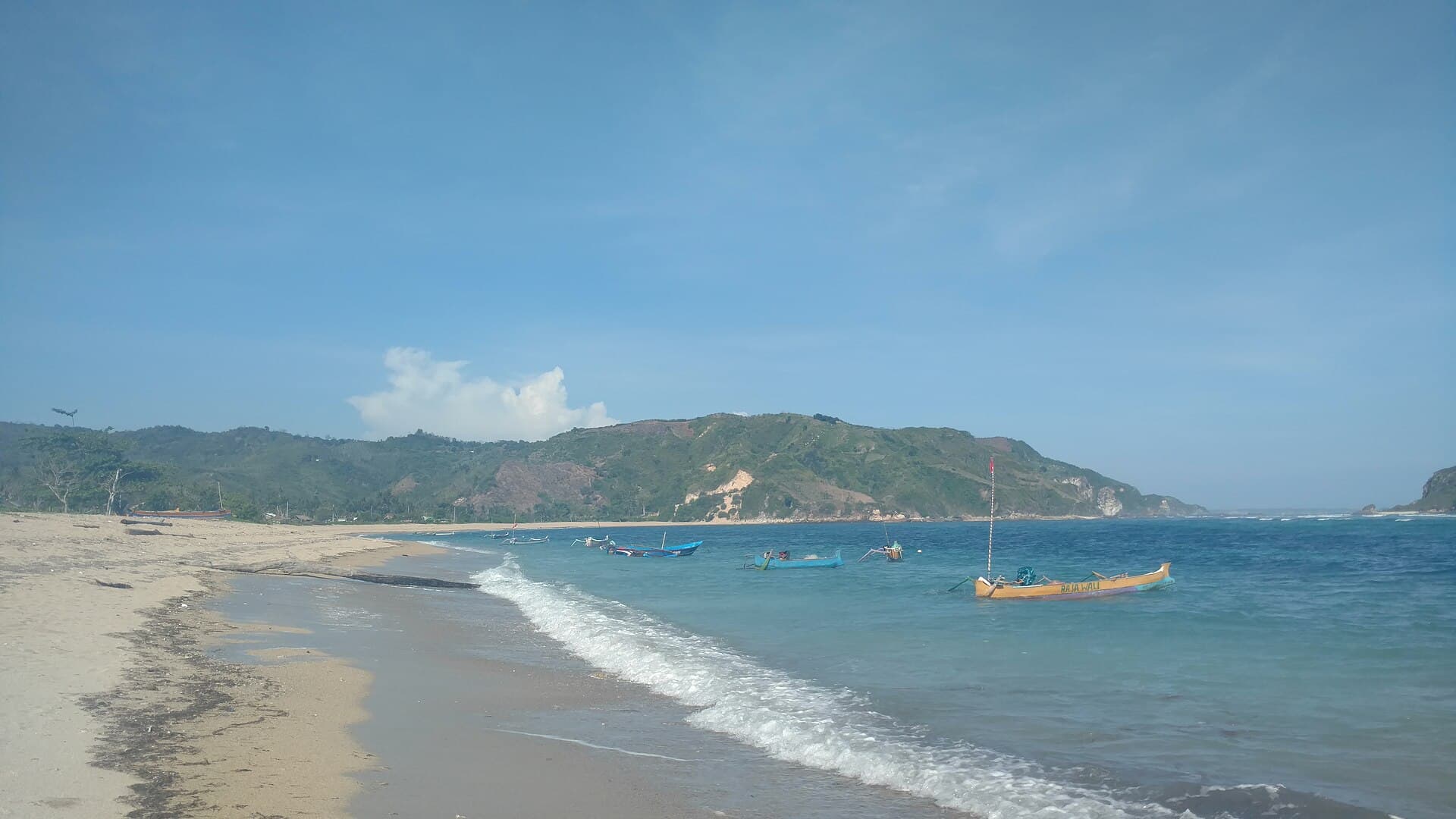
- A beach on the island of Lombok · Lasthib · CC0
- Fatahillah Square and the old Batavia city hall in Jakarta · Aisha Tanduk · CC BY-SA 4.0
- Jakarta’s skyline of skyscrapers, with the National Monument (Monas) at the center · Gunawan Kartapranata · CC BY-SA 3.0
- Sandy beach and a wooden hut on Pari Island in the Thousand Islands near Jakarta · Agungpnug · CC BY-SA 4.0
- Tengger caldera: Mount Bromo and Mount Batok, with Mount Semeru beyond · Jakub Hałun · CC BY-SA 4.0
- Mount Bromo’s crater with smoke rising from within · Jakub Hałun · CC BY-SA 4.0
- Tanah Lot Temple on a rock in the sea on Bali’s west coast · Jakub Hałun · CC BY-SA 4.0
- Green rice terraces at Jatiluwih in central Bali, with mountains behind · Imacim · CC BY-SA 4.0
- Uluwatu Temple on a high cliff above the ocean in southern Bali · CEphoto, Uwe Aranas · CC BY-SA 3.0
- Segara Anak Lake inside Mount Rinjani’s crater on Lombok · Aldoarianto.87 · CC BY-SA 4.0
- A sailing boat on turquoise water near the Gili Islands · Vyacheslav Argenberg · CC BY 4.0
- The east coast of Gili Air, with Lombok on the horizon · Laurent Bigué · CC BY-SA 3.0
- Hills and bays of Rinca Island in Komodo National Park · Pambudiyoga · CC BY-SA 4.0
- The pink beach on Padar Island with visitor boats offshore · Jakub Hałun · CC BY 4.0
- Green limestone islands of Wayag in Raja Ampat · Rolandandika · CC BY-SA 4.0
- A sea fan and coral reef underwater near Misool · Rizalubun · CC BY-SA 4.0
- Donopratono Gate at the Kraton palace in Yogyakarta · Chainwit. · CC BY 4.0
- A plate of nasi goreng, Indonesian fried rice, with an egg and krupuk crackers · Supardisahabu · CC BY-SA 4.0
- Chicken satay skewers on a banana leaf in Java · Gunawan Kartapranata · CC BY-SA 3.0
- A hand drawing batik patterns in wax with a canting tool · Ivuvisual · CC BY-SA 4.0
- Javanese wayang kulit shadow-puppet figures made of leather · Suranto Dwi Saputra (RANT 73) · CC0
- Instruments of a traditional Javanese gamelan: bronze bells and drums · Michael Gunther · CC BY-SA 4.0