
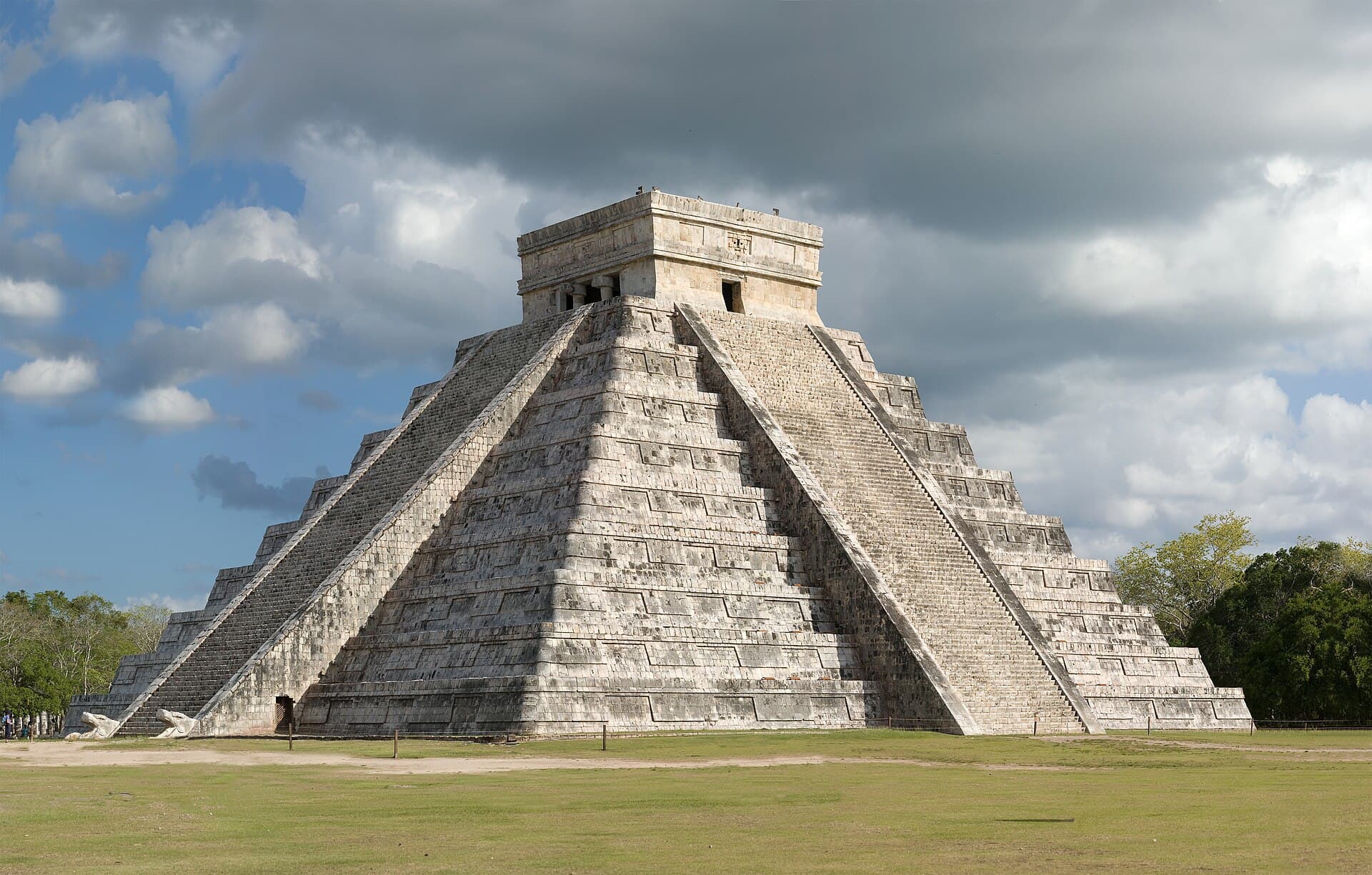
The stepped Pyramid of Kukulcán at Chichén Itzá with four stairways and a temple on top, under heavy clouds.
Photo Fcb981 · CC BY-SA 3.0
Photo on Wikimedia Commons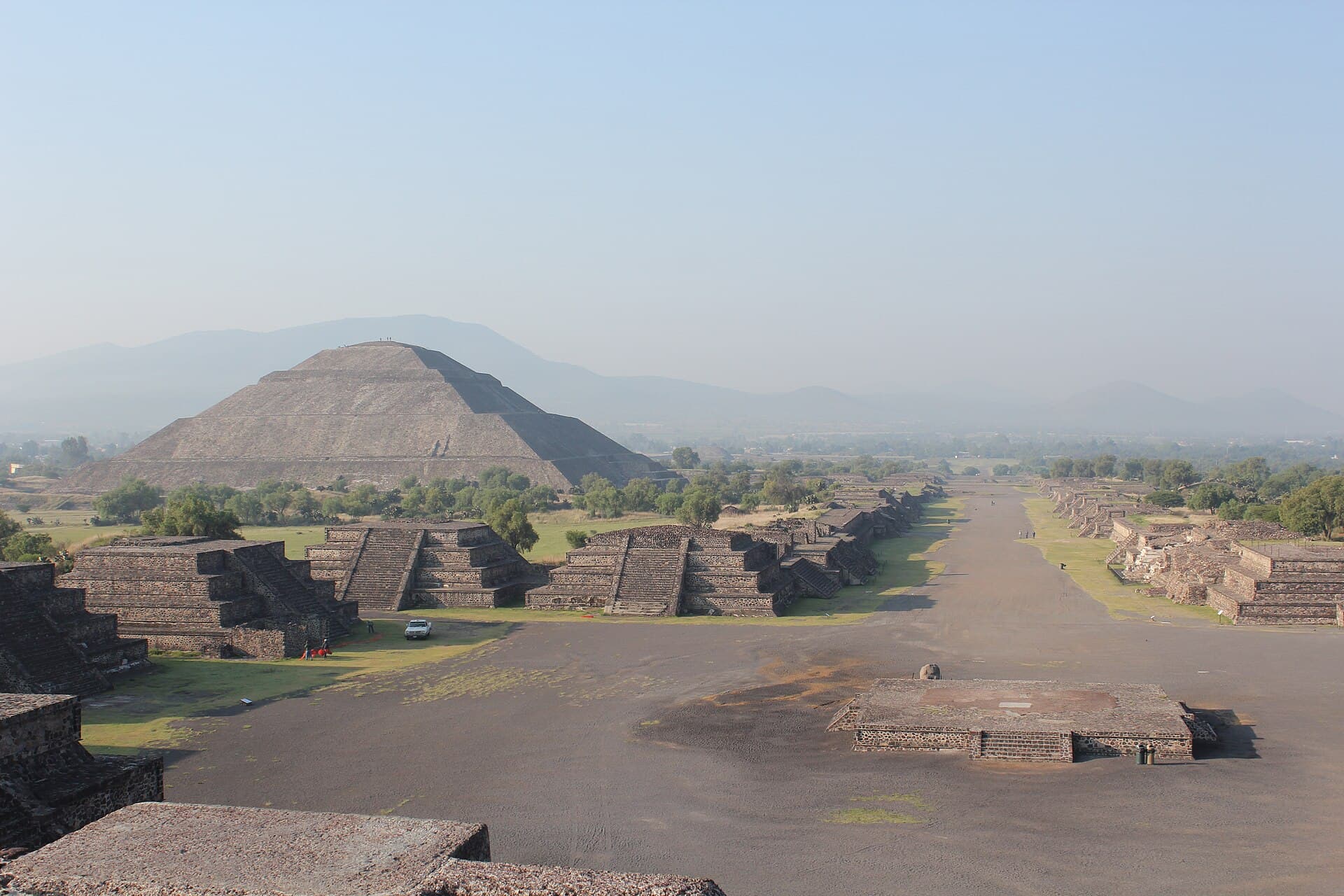
Teotihuacan's Avenue of the Dead running straight between stone platforms, the massive Pyramid of the Sun to its left.
Photo Arian Zwegers from Brussels, Belgium · CC BY 2.0
Photo on Wikimedia Commons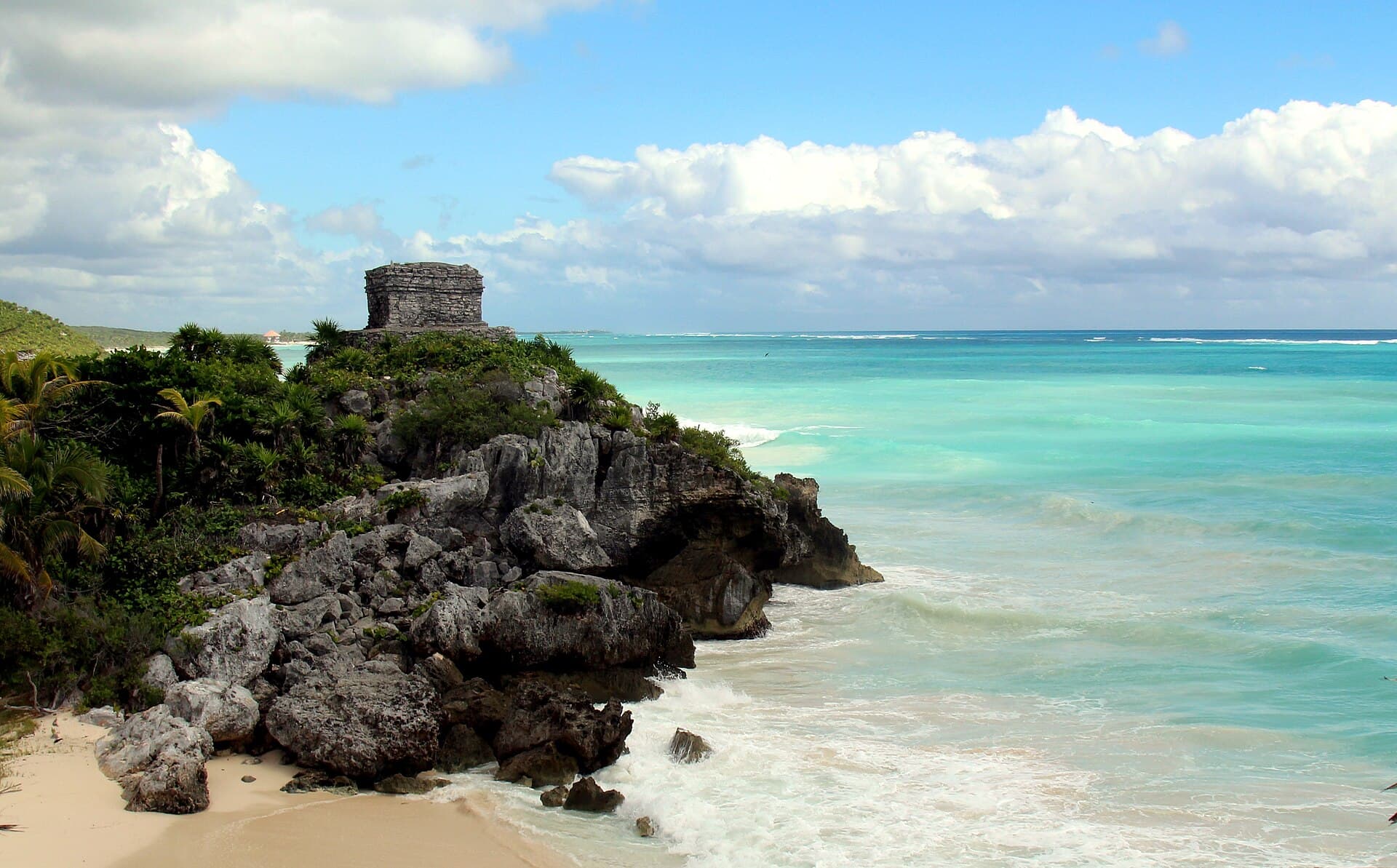
The ruins of Tulum on a green rocky point above a small cove of white sand and turquoise water.
Photo Thank You (23 Millions+) views · CC BY 2.0
Photo on Wikimedia Commons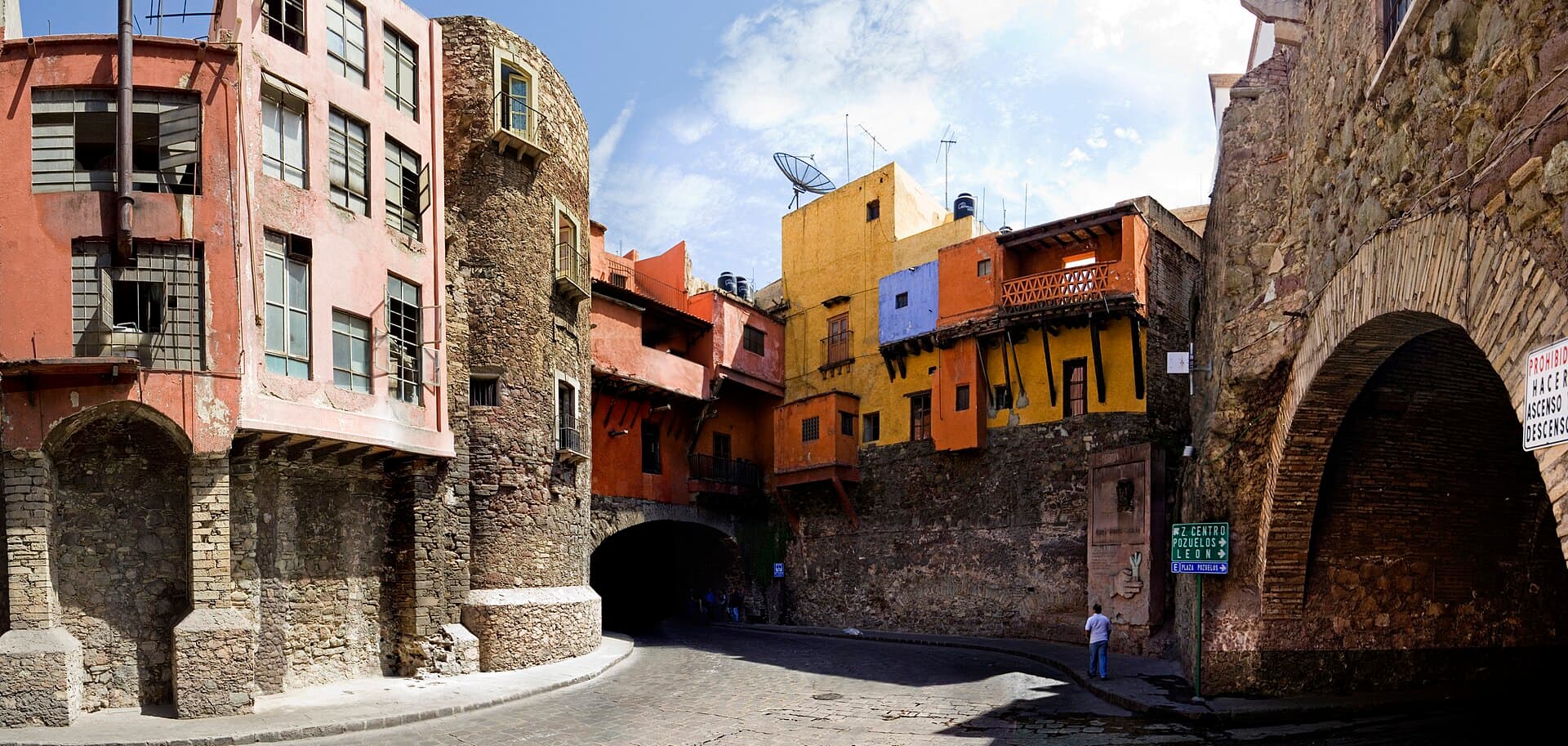
Guanajuato's colourful houses packed into the valley around a yellow church with a red dome.
Photo Edorta Subijana · CC BY-SA 2.0
Photo on Wikimedia Commons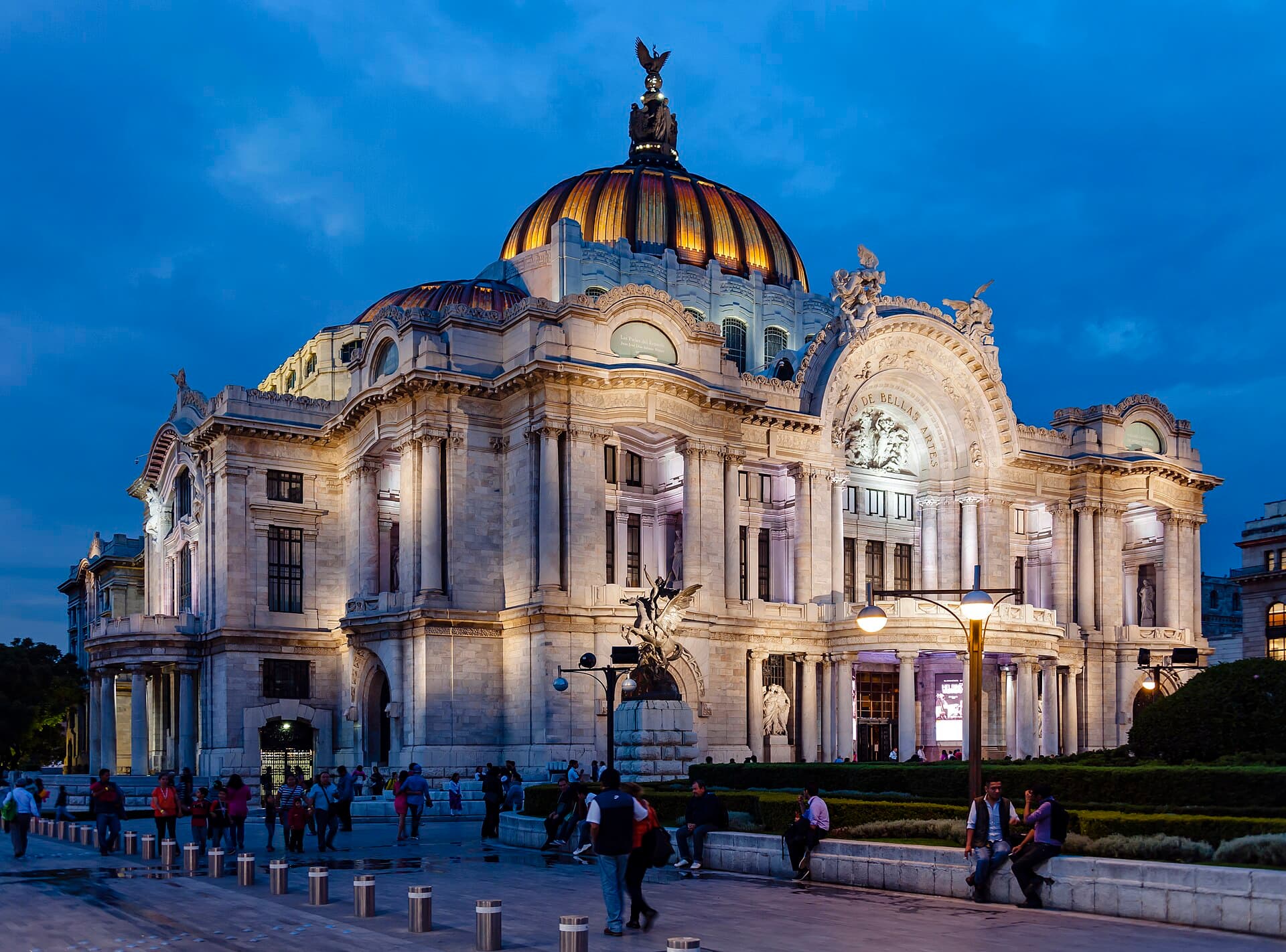
The Palace of Fine Arts in Mexico City at dusk, its golden dome and marble facade lit up.
Photo Daniel Case · CC BY-SA 3.0
Photo on Wikimedia Commons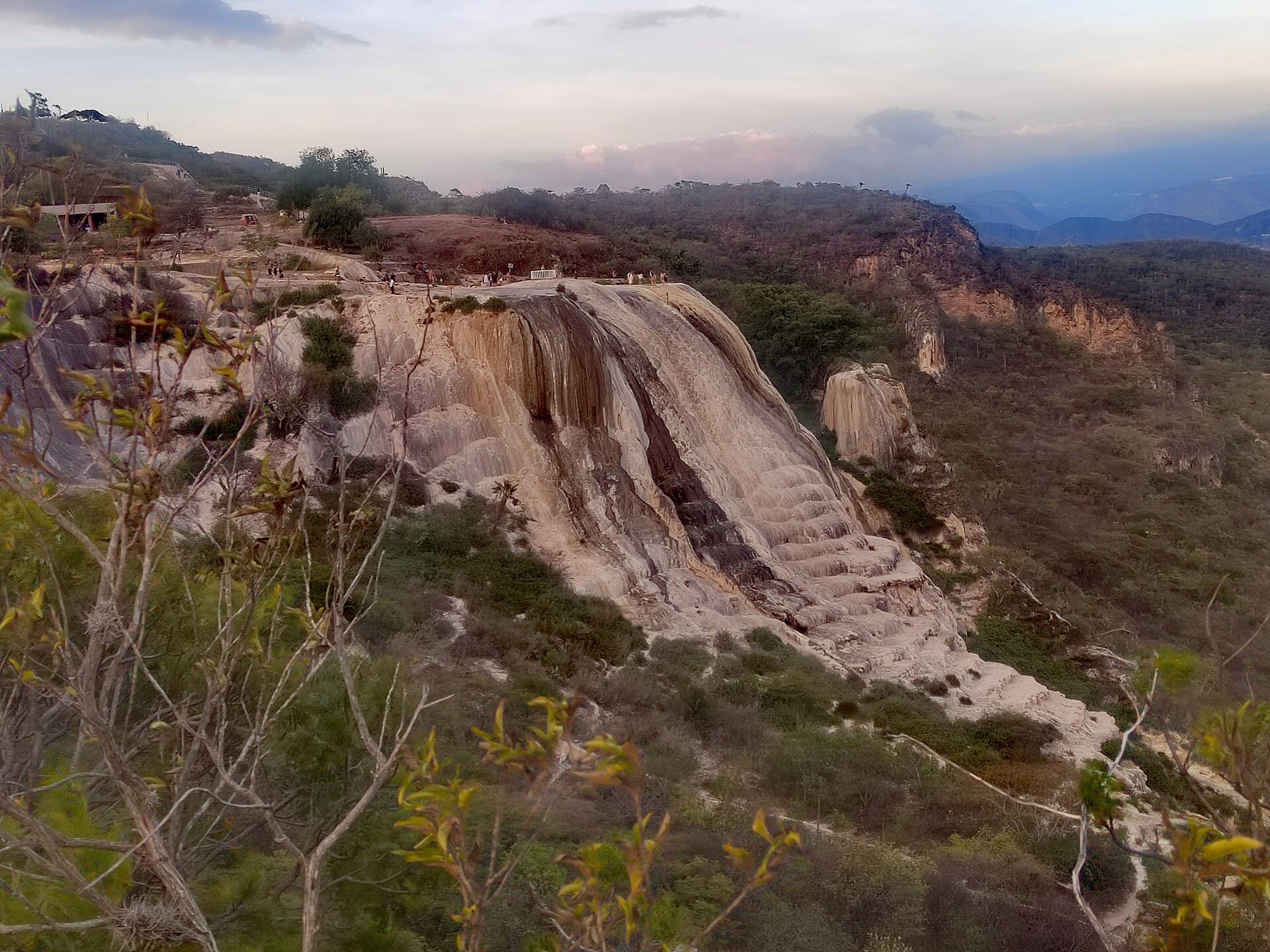
White rock formations flowing down a cliff at Hierve el Agua like a frozen waterfall, among wooded hills.
Photo JishaBP · CC BY-SA 4.0
Photo on Wikimedia Commons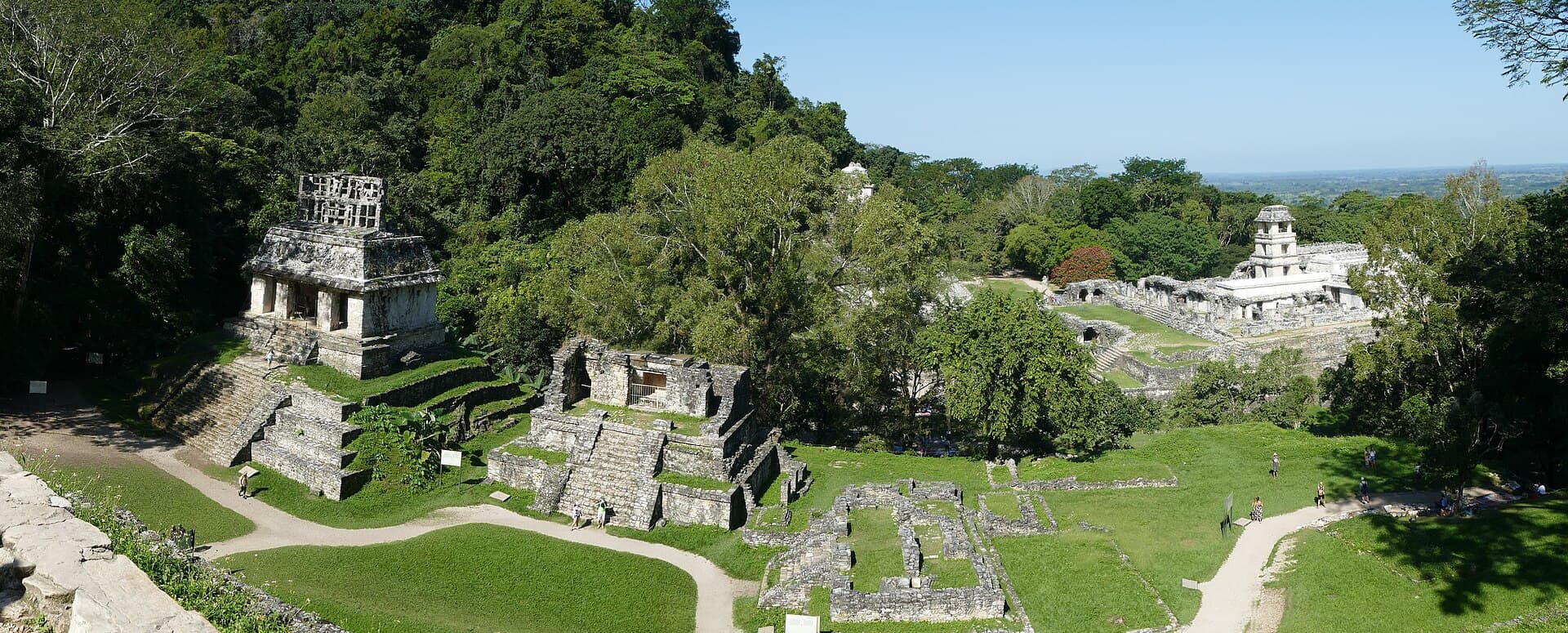
Palenque's stone temples among the trees, the Temple of the Sun on the left and the Palace on the right.
Photo Bernard DUPONT · CC BY-SA 2.0
Photo on Wikimedia Commons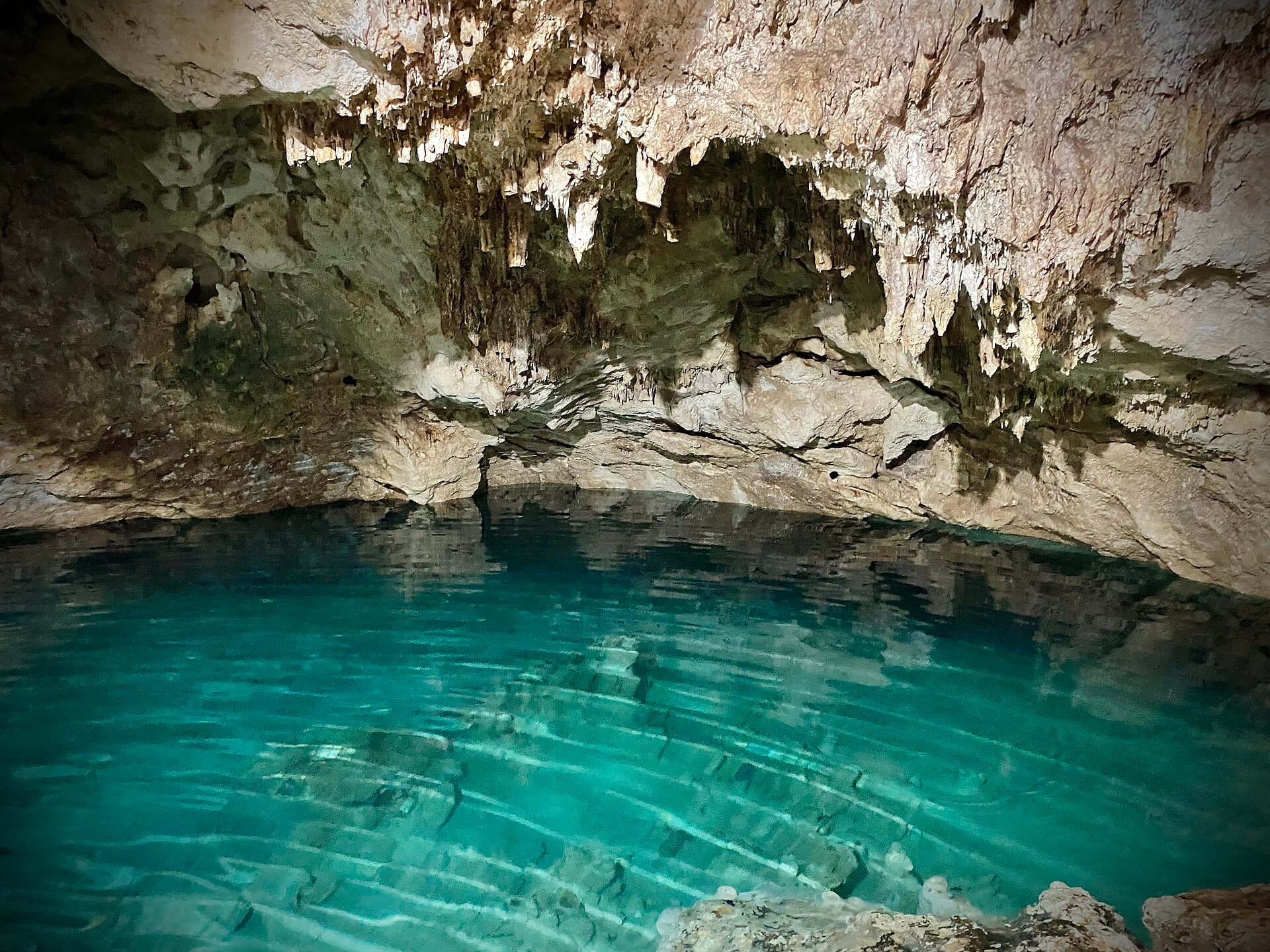
A cave cenote in Homún with stalactites hanging over clear turquoise water.
Photo Sharon Hahn Darlin · CC BY 2.0
Photo on Wikimedia CommonsSouthern North America, between the Pacific Ocean, the Gulf of Mexico and the Caribbean Sea
Mexico
Maya and Aztec pyramids, turquoise Caribbean beaches, colourful colonial towns and a cuisine on UNESCO's list.
Mexico fills the southern end of North America. The United States lies to the north, Guatemala and Belize to the southeast; the Pacific and the Gulf of California wash its western shores, the Gulf of Mexico and the Caribbean its eastern ones. With 1,972,550 square kilometres and roughly 131 million people, it is the most populous Spanish-speaking country on earth. Mexico City is both capital and largest city.
The capital sits 2,240 metres up in the Valley of Mexico, on the site of Tenochtitlan, the island city the Mexica founded around 1325 in Lake Texcoco. Its historic centre and the canals of Xochimilco have been a World Heritage Site since 1987. About 40 kilometres away stands Teotihuacan, whose Pyramids of the Sun and Moon belonged to the largest city in the Americas during the first centuries AD.
To the southeast the flat Yucatán Peninsula juts into the sea. Its Caribbean shore holds Cancún, Playa del Carmen and the cliff-top ruins of Tulum, with the Mesoamerican Barrier Reef, the second-longest reef system in the world, just offshore. Inland lie the stepped pyramid of Chichén Itzá, the white city of Mérida and thousands of cenotes: natural wells that opened where limestone collapsed over groundwater.
The heart of the country is a high plateau framed by the Sierra Madre ranges and crossed by a belt of volcanoes. Here rises Pico de Orizaba, at 5,636 metres the country's highest point and the tallest volcano in North America, along with the snow-capped Popocatépetl and Iztaccíhuatl near the capital. Further south are Oaxaca and the ancient site of Monte Albán, and in the Chiapas forest the ruins of Palenque.
Mexico counts 36 UNESCO World Heritage Sites, more than any other country in the Americas, among them the colourful silver towns of Guanajuato and San Miguel de Allende. Traditional Mexican cuisine joined UNESCO's intangible heritage list in 2010 and the Day of the Dead in 2008. On the Pacific, Puerto Vallarta curves around the Bay of Banderas.
Most trips work best in the dry season, December to May. Rain falls from June to mid-October, and hurricane season on both coasts runs from June to November. The currency is the Mexican peso, and the overall price level is about 54% of that in the United States. The busiest airports are in Mexico City and Cancún.
Key cities and regions
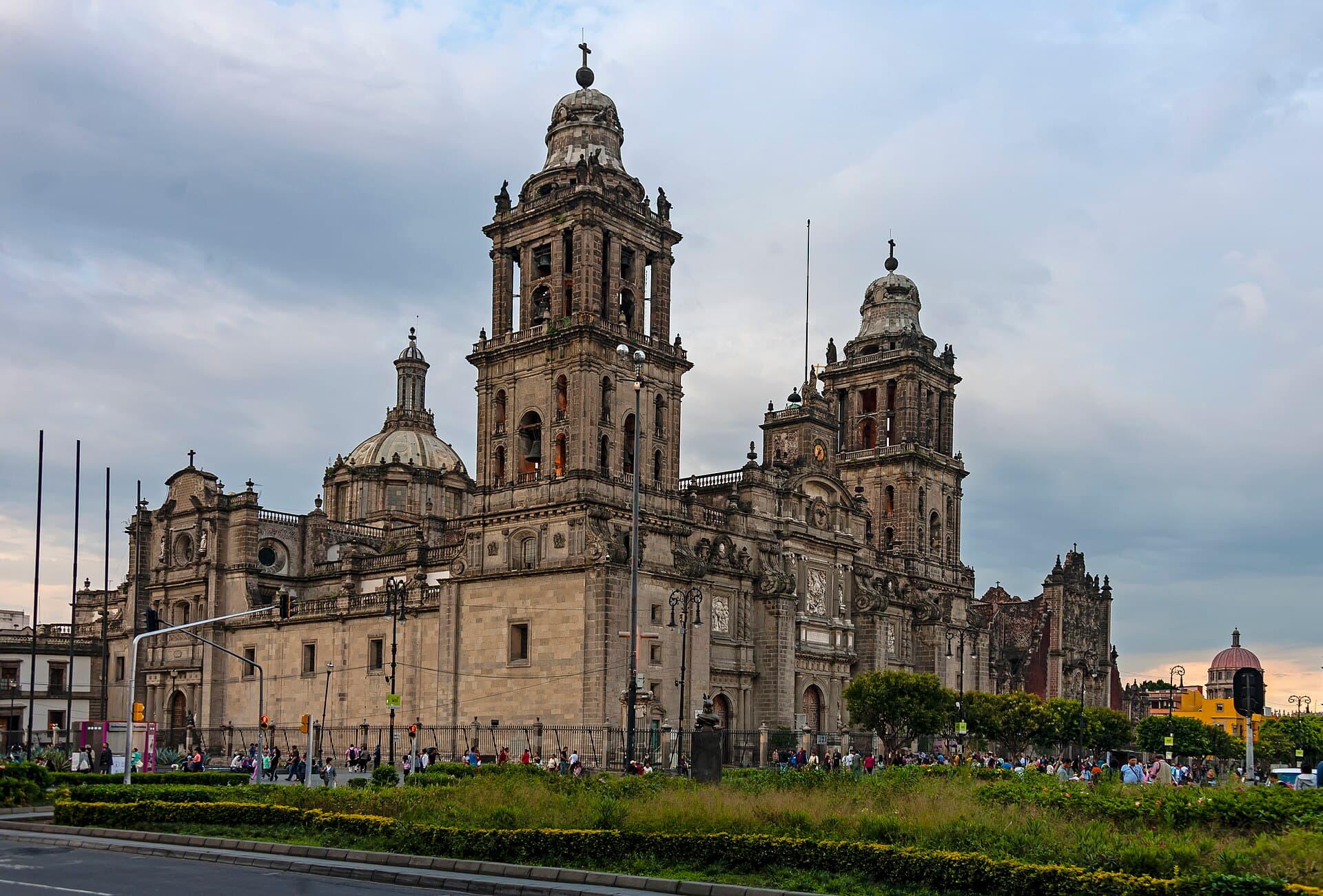
Mexico City
A high-altitude capital: the Zócalo, the cathedral, the Palace of Fine Arts, the canals of Xochimilco and the pyramids of Teotihuacan nearby.
Cancún and the Riviera Maya
Caribbean beaches from Cancún to Playa del Carmen and Tulum, Maya ruins on the cliffs, and the reefs of Cozumel.
Chichén Itzá and Yucatán
The stepped pyramid of Chichén Itzá, white-walled Mérida, Uxmal, and cenotes for a swim in clear groundwater.
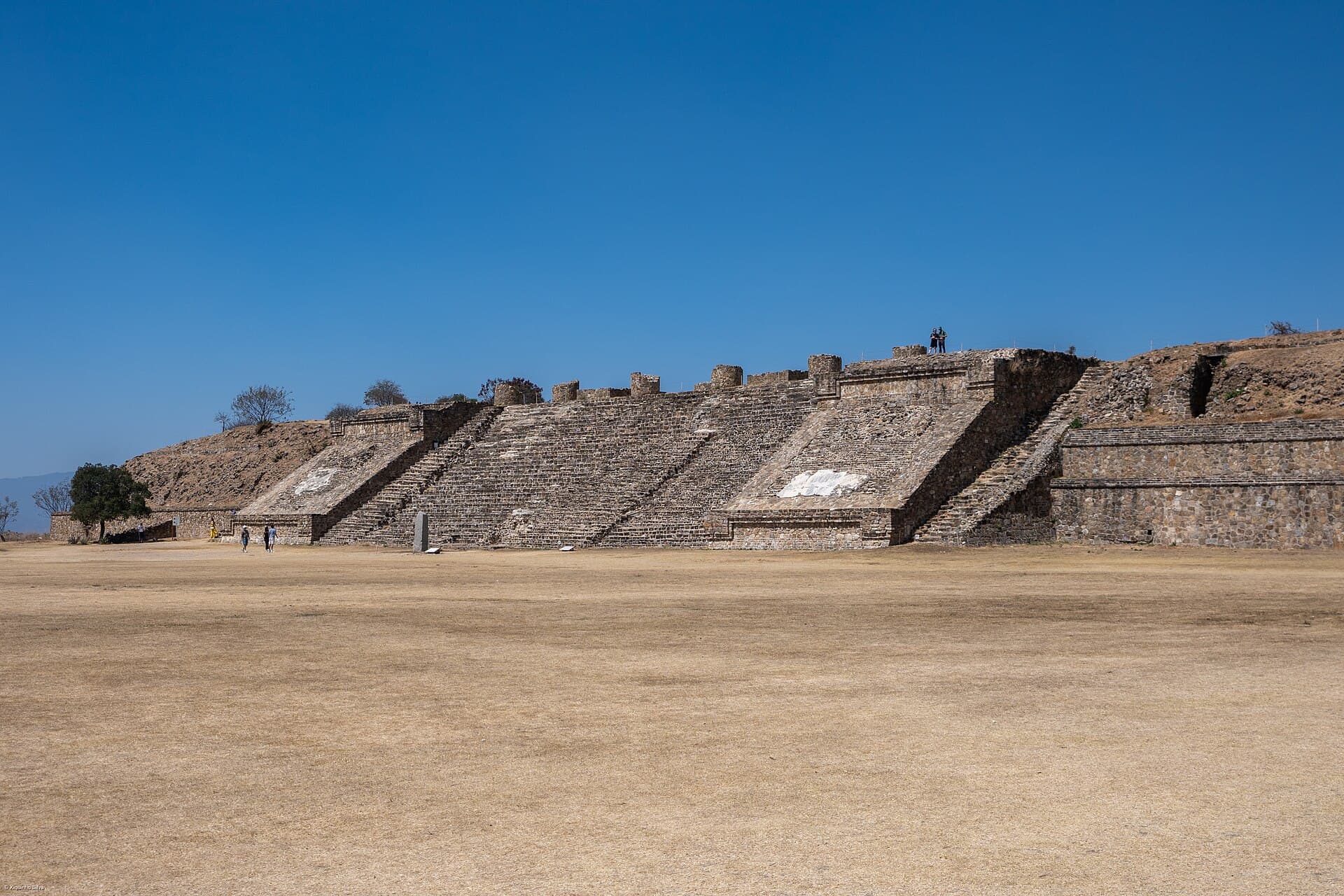
Oaxaca and Monte Albán
A colonial city in a southern valley, below the old Zapotec capital of Monte Albán and near the stone falls of Hierve el Agua.
Guanajuato and San Miguel de Allende
Two silver towns in central Mexico: painted houses on the slopes of a narrow valley, tunnels and colonial squares.
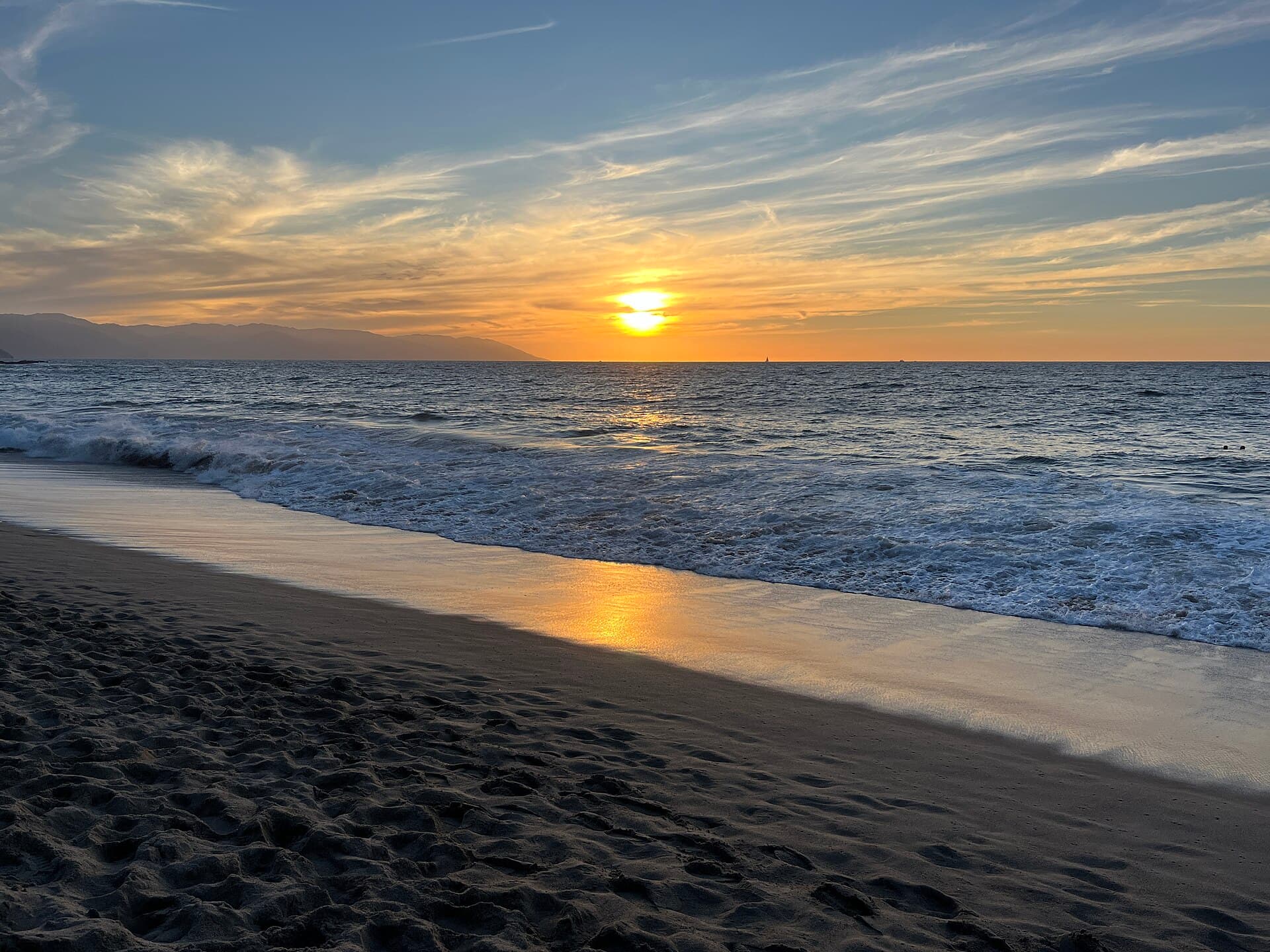
Puerto Vallarta
A beach city on the Pacific's Bay of Banderas, with a sculpture-lined seafront and sunsets over the water.
Palenque
A Maya city in the Chiapas forest with some of the finest Maya architecture and carving, the Temple of the Inscriptions and a towered palace.
Want to know Mexico better?
A journey in photos, maps, and figures—one step at a time.
What does a flight to Mexico cost—and when is it cheaper?
Check from your city →FAQ about Mexico
When is the best time to visit Mexico?
December to May, the dry season across most of the country, suits most trips. The rainy season runs from June to mid-October, and hurricane season on the Caribbean and Pacific coasts lasts from June to November.
How many days do I need?
Two weeks make a good first trip: a few days in Mexico City with a visit to Teotihuacan, then Cancún, Tulum, Chichén Itzá and the cenotes of Yucatán. Add a week for Oaxaca, Guanajuato or Palenque, as the distances between regions are long.
Is Mexico expensive to travel in?
Mexico's overall price level is about 54% of the US level, based on World Bank figures for 2025. That covers the whole economy rather than tourism, and hotels, tours and site tickets vary widely, so check current prices when you book.
What is the currency?
The Mexican peso, code MXN, divided into 100 centavos and written with the same $ sign as the dollar. It is the most traded Latin American currency in the world. Exchange rates move, so check before you travel.
Which Mexican dishes should I try?
Tacos first: a small corn tortilla folded around a filling, including tacos al pastor with seasoned meat cooked on a vertical spit. Mole is a thick sauce whose origin Puebla and Oaxaca both claim. In August and September look for chiles en nogada, peppers in walnut sauce with pomegranate.
How do I get around?
Distances are large, so domestic flights are the quickest way between the capital, Yucatán and the Pacific coast. Each region has its own airport: Cancún for the Caribbean, Mérida for Yucatán, plus Oaxaca, Puerto Vallarta, Palenque and León–Guanajuato for the centre.
Can you swim in the cenotes?
Yes, many cenotes in Yucatán are open for swimming, and their water is usually clear because it is rain that has filtered slowly through limestone. The peninsula has thousands: some open to the sky, some inside caves, and some leading into flooded cave systems that draw divers.
Do I need a visa?
It depends on your nationality, and some travellers are exempt if they hold a valid visa or residence permit for certain other countries. Rules change, so check with Mexico's National Institute of Migration and the Mexican embassy or consulate where you live before booking.
Photos (32)
Sources & photo credits(54 sources · 42 photos · last verified 2026-10-08)
- 1.Mexico · Wikipedia · Accessed 2026-10-08
- 2.Geography of Mexico · Wikipedia · Accessed 2026-10-08
- 3.Climate of Mexico · Wikipedia · Accessed 2026-10-08
- 4.Mexico — World Heritage properties · UNESCO World Heritage Centre · Accessed 2026-10-08
- 5.Time in Mexico · Wikipedia · Accessed 2026-10-08
- 6.Mexican peso · Wikipedia · Accessed 2026-10-08
- 7.Pico de Orizaba · Wikipedia · Accessed 2026-10-08
- 8.Popocatépetl · Wikipedia · Accessed 2026-10-08
- 9.Iztaccihuatl · Wikipedia · Accessed 2026-10-08
- 10.Mexico City · Wikipedia · Accessed 2026-10-08
- 11.Historic center of Mexico City · Wikipedia · Accessed 2026-10-08
- 12.Zócalo · Wikipedia · Accessed 2026-10-08
- 13.Mexico City Metropolitan Cathedral · Wikipedia · Accessed 2026-10-08
- 14.Templo Mayor · Wikipedia · Accessed 2026-10-08
- 15.Palacio de Bellas Artes · Wikipedia · Accessed 2026-10-08
- 16.Chapultepec · Wikipedia · Accessed 2026-10-08
- 17.National Museum of Anthropology (Mexico) · Wikipedia · Accessed 2026-10-08
- 18.Xochimilco · Wikipedia · Accessed 2026-10-08
- 19.Tenochtitlan · Wikipedia · Accessed 2026-10-08
- 20.Teotihuacan · Wikipedia · Accessed 2026-10-08
- 21.Cancún · Wikipedia · Accessed 2026-10-08
- 22.Playa del Carmen · Wikipedia · Accessed 2026-10-08
- 23.Tulum · Wikipedia · Accessed 2026-10-08
- 24.Riviera Maya · Wikipedia · Accessed 2026-10-08
- 25.Cozumel · Wikipedia · Accessed 2026-10-08
- 26.Isla Mujeres · Wikipedia · Accessed 2026-10-08
- 27.Sian Ka'an · Wikipedia · Accessed 2026-10-08
- 28.Mesoamerican Barrier Reef System · Wikipedia · Accessed 2026-10-08
- 29.Chichen Itza · Wikipedia · Accessed 2026-10-08
- 30.Mérida, Yucatán · Wikipedia · Accessed 2026-10-08
- 31.Uxmal · Wikipedia · Accessed 2026-10-08
- 32.Valladolid, Yucatán · Wikipedia · Accessed 2026-10-08
- 33.Cenote · Wikipedia · Accessed 2026-10-08
- 34.Oaxaca City · Wikipedia · Accessed 2026-10-08
- 35.Monte Albán · Wikipedia · Accessed 2026-10-08
- 36.Hierve el Agua · Wikipedia · Accessed 2026-10-08
- 37.Guanajuato (city) · Wikipedia · Accessed 2026-10-08
- 38.Teatro Juárez · Wikipedia · Accessed 2026-10-08
- 39.San Miguel de Allende · Wikipedia · Accessed 2026-10-08
- 40.Puerto Vallarta · Wikipedia · Accessed 2026-10-08
- 41.Palenque · Wikipedia · Accessed 2026-10-08
- 42.Mexican cuisine · Wikipedia · Accessed 2026-10-08
- 43.Mole (sauce) · Wikipedia · Accessed 2026-10-08
- 44.Chiles en nogada · Wikipedia · Accessed 2026-10-08
- 45.Taco · Wikipedia · Accessed 2026-10-08
- 46.Day of the Dead · Wikipedia · Accessed 2026-10-08
- 47.Alebrije · Wikipedia · Accessed 2026-10-08
- 48.Talavera pottery · Wikipedia · Accessed 2026-10-08
- 49.Mexico City International Airport · Wikipedia · Accessed 2026-10-08
- 50.Cancún International Airport · Wikipedia · Accessed 2026-10-08
- 51.Licenciado Gustavo Díaz Ordaz International Airport · Wikipedia · Accessed 2026-10-08
- 52.Visa policy of Mexico · Wikipedia · Accessed 2026-10-08
- 53.PPP conversion factor, GDP (LCU per international $) — Mexico · World Bank · Accessed 2026-10-08
- 54.Official exchange rate (LCU per US$, period average) — Mexico · World Bank · Accessed 2026-10-08
- Mexico City's stone cathedral with its two towers and dome on the edge of the Zócalo under a cloudy sky. · Daniel Case · CC BY-SA 3.0
- The Palace of Fine Arts in Mexico City at dusk, its golden dome and marble facade lit up. · Daniel Case · CC BY-SA 3.0
- Brightly painted boats with names on their arches lined up on a tree-shaded canal in Xochimilco. · Ivo Kruusamägi · CC BY-SA 4.0
- Stone ruins of Tenochtitlan's great temple among colonial buildings in central Mexico City at sunset. · Juan Carlos Fonseca Mata · CC BY-SA 4.0
- Aerial view of Chapultepec Castle on a forested hill, with the city spreading out behind it. · Own work · CC BY-SA 4.0
- Teotihuacan's Avenue of the Dead running straight between stone platforms, the massive Pyramid of the Sun to its left. · Arian Zwegers from Brussels, Belgium · CC BY 2.0
- The tiered Pyramid of the Moon at Teotihuacan with a green hill behind it. · Arian Zwegers from Brussels, Belgium · CC BY 2.0
- The broad Pyramid of the Sun at Teotihuacan with its central stairway under white clouds. · Arian Zwegers from Brussels, Belgium · CC BY 2.0
- A white sand beach in Cancún touched by calm turquoise waves under a blue sky. · Luka Peternel · CC BY-SA 4.0
- Cancún's hotel strip from the air, the turquoise Caribbean on one side and the lagoon on the other. · dronepicr · CC BY 2.0
- Palm trees, white sand and sunshades on the beach at Playa del Carmen beside clear water. · Scott S Bateman · CC BY-SA 4.0
- The ruins of Tulum on a green rocky point above a small cove of white sand and turquoise water. · Thank You (23 Millions+) views · CC BY 2.0
- A small stone temple at Tulum on a green cliff above the Caribbean Sea. · Thank You (23 Millions+) views · CC BY 2.0
- The stepped Pyramid of Kukulcán at Chichén Itzá with four stairways and a temple on top, under heavy clouds. · Fcb981 · CC BY-SA 3.0
- The Temple of the Warriors at Chichén Itzá on a stepped platform, fronted by rows of stone columns. · edenpictures · CC BY 2.0
- The oval Pyramid of the Magician at Uxmal rising behind trees, a building with a carved facade in front. · Gary Todd from Xinzheng, China · CC0
- A cave cenote in Homún with stalactites hanging over clear turquoise water. · Sharon Hahn Darlin · CC BY 2.0
- The open Cenote Zací in Valladolid, its rock walls draped with plants above dark water. · Bernard DUPONT · CC BY-SA 2.0
- The carved stone facade and twin towers of the Santo Domingo church in Oaxaca, with a broad plaza in front. · Nanahuatl · CC BY-SA 4.0
- Stepped stone platforms around the Great Plaza at Monte Albán under a clear sky. · xiquinhosilva · CC BY 4.0
- Two stone columns and the remains of a platform at Monte Albán beneath wispy clouds. · WendyAvilesR · CC BY 4.0
- White rock formations flowing down a cliff at Hierve el Agua like a frozen waterfall, among wooded hills. · JishaBP · CC BY-SA 4.0
- Guanajuato's colourful houses packed into the valley around a yellow church with a red dome. · Edorta Subijana · CC BY-SA 2.0
- Guanajuato from above, its painted neighbourhoods climbing the mountainsides under a blue sky. · August Dominus · CC BY-SA 4.0
- A sloping cobbled street in San Miguel de Allende between orange and yellow houses, hills on the horizon. · Cvmontuy · CC BY-SA 4.0
- The pink, pointed towers of San Miguel's parish church seen from below, thick with stone carving. · Carlos Valenzuela · CC BY-SA 4.0
- Sunset over the Bay of Banderas in Puerto Vallarta as a wave slides back over dark sand. · Another Believer · CC BY-SA 4.0
- A tiled-roof bandstand in Lázaro Cárdenas Park, Puerto Vallarta, with benches covered in colourful mosaic. · Another Believer · CC BY-SA 4.0
- An orange sunset sky over Pacific waves on the beach at Puerto Vallarta. · Another Believer · CC BY-SA 4.0
- Palenque's stone temples among the trees, the Temple of the Sun on the left and the Palace on the right. · Bernard DUPONT · CC BY-SA 2.0
- Two temples of Palenque's Cross Group on stepped platforms, with forest behind. · ben_kitchener3 · CC BY 3.0
- The Temple of the Cross at Palenque atop a grassy stepped pyramid among forest trees. · Bernard DUPONT · CC BY-SA 2.0
- The cone of Popocatépetl, its summit covered in snow, above pine forest and pasture. · Jakub Hejtmánek · CC BY-SA 3.0
- The snowy peak of Pico de Orizaba behind a dry pasture where sheep are grazing. · Minimusqui · CC BY-SA 4.0
- A plate of mole poblano, its dark brown sauce topped with sesame seeds and onion rings. · jay galvin · CC BY 2.0
- Tacos on corn tortillas with red-seasoned meat and chopped onion, with lime wedges. · Popo le Chien · CC BY-SA 3.0
- Stuffed peppers under white walnut sauce, garnished with red pomegranate seeds and parsley. · Isaacvp · CC BY-SA 4.0
- A Day of the Dead altar: a colourful table with photos and flowers beneath strings of cut-paper flags. · Comunicación wmmx · CC BY-SA 4.0
- Coral, sponges and colourful fish in clear blue water off Cozumel. · Matthew T Rader · CC BY-SA 4.0
- Brightly painted wooden figures of fantastic animals with fine patterns in Oaxaca. · Roberto Galland · CC BY-SA 4.0
- Plates and jugs decorated in blue and white at a crafts market in Puebla. · Adrián Cerón · CC BY-SA 4.0
- Decorated painted skulls among yellow flowers on a Day of the Dead altar in Santo Domingo square. · Gobierno CDMX · CC0