05The story
Stone, salt and rail
What was built, not who ruled
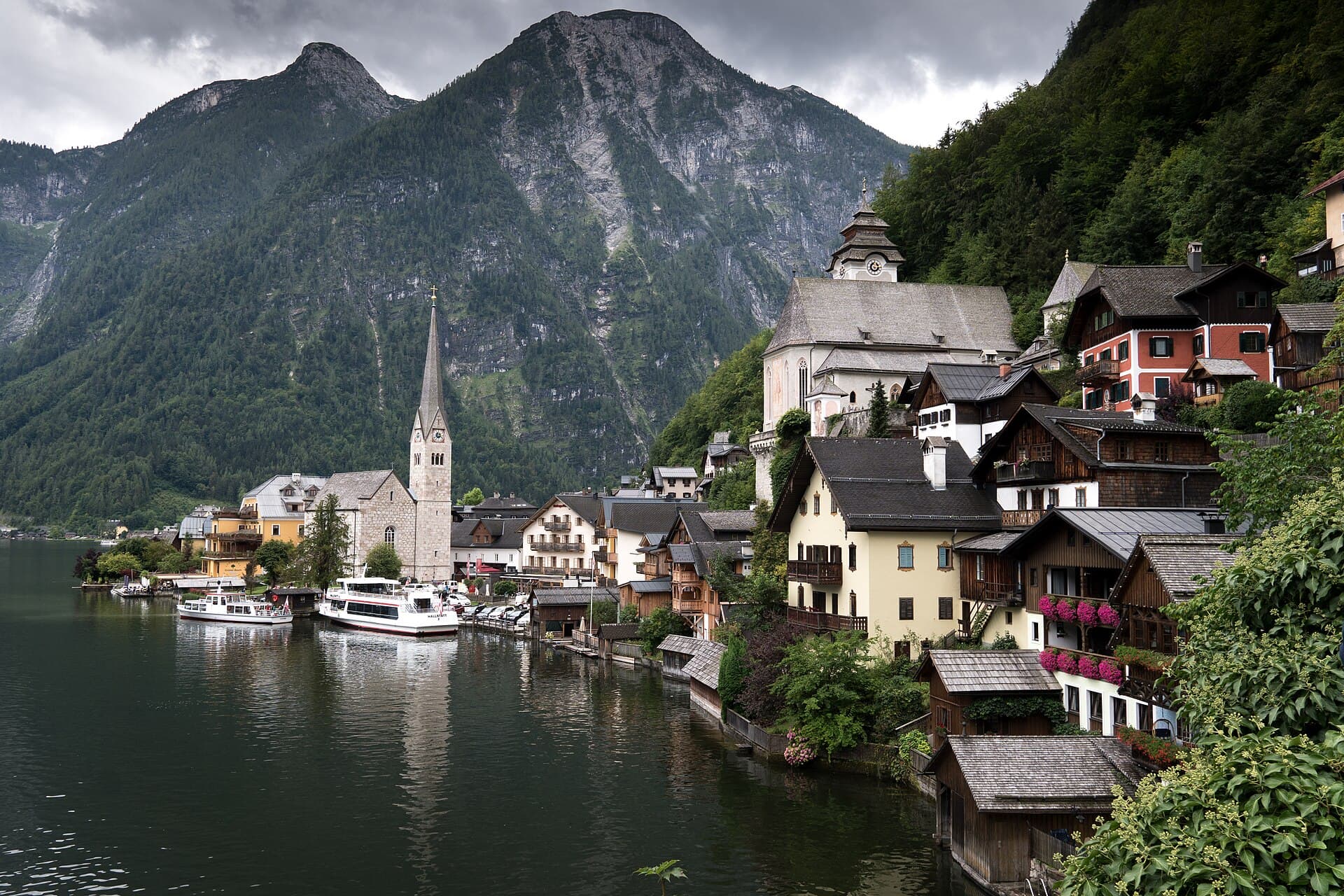
The story here is buildings, landscapes and engineering craft — not a parade of rulers. Salt at Hallstatt is older than today’s towns, and the archaeological culture that took the town’s name is dated roughly 800 to 450 BCE. Then a fortress above Salzburg in the eleventh century. Then a gilded roof in Innsbruck in 1500. Then the Semmering Railway between 1848 and 1854, still in service across the mountain. After that the World Heritage List recognised what already stood: Schönbrunn and Salzburg in 1996, the Hallstatt landscape in 1997, the Wachau in 2000, and Vienna’s centre in 2001. Read the line as stone and rail arriving in the landscape, then as paperwork catching up. The dates on the line are for building and listing, not for narrating states and eras.
About 800–450 BCE
The Hallstatt archaeological culture, named after the salt town on the lake.
11th century
Hohensalzburg Fortress above the city, still a mark on the skyline.
1500
The Golden Roof in Innsbruck was completed, its gilded copper tiles above the square.
1848–1854
The Semmering Railway was built across 41 kilometres of mountain and remains in service.
1996
Schönbrunn and its gardens, and Salzburg’s historic centre, entered the World Heritage List.
1997
The Hallstatt–Dachstein / Salzkammergut landscape on the list.
2000
The Wachau cultural landscape: valley architecture and vine cultivation.
2001
Vienna’s historic centre on the list, with its fabric of palaces and streets.