05The story
A craft
Mudéjar and tile
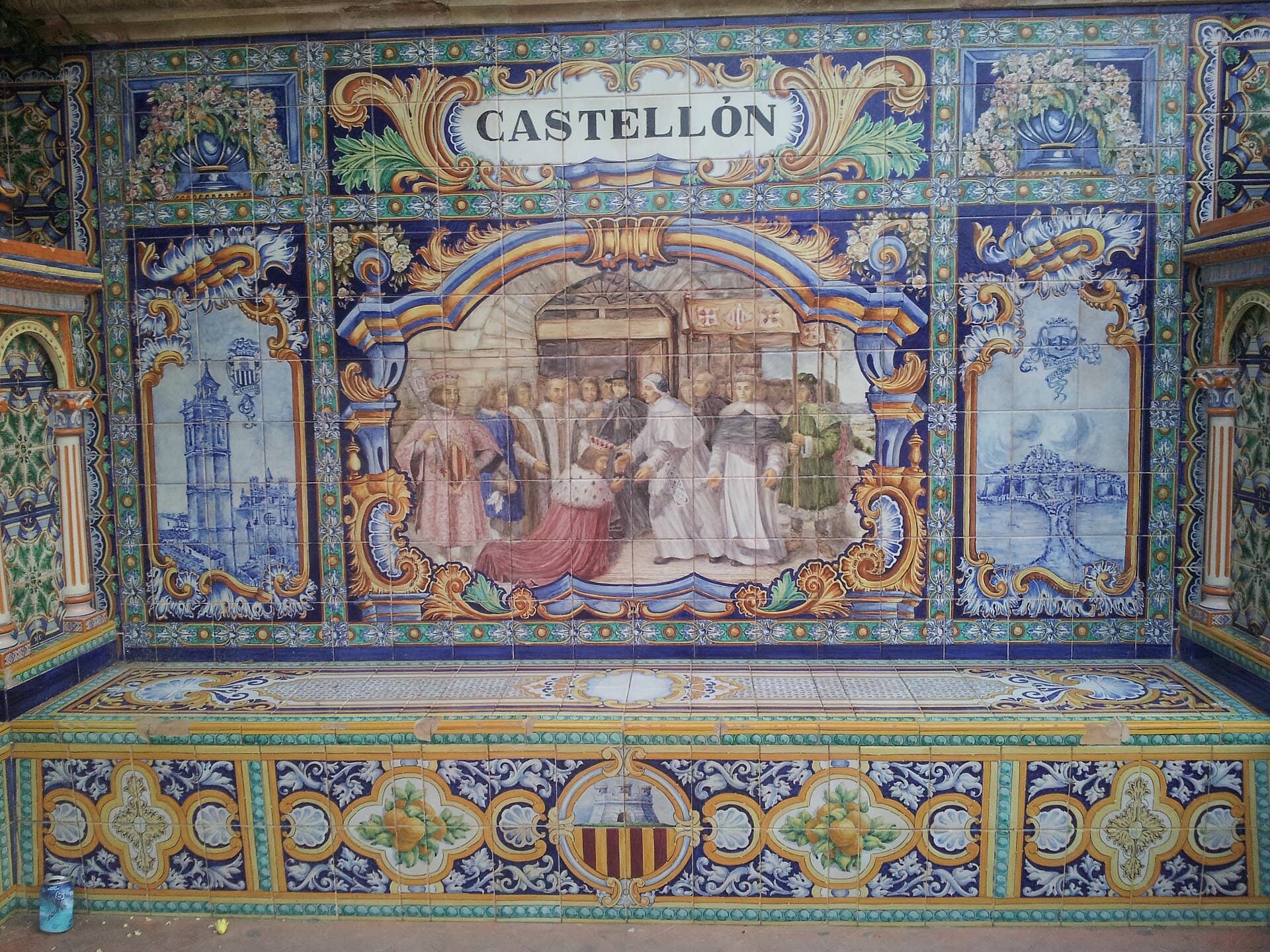
Mudéjar is a way of building and ornament from the thirteenth to the sixteenth century. It joined Andalusi decoration to Romanesque, Gothic and Renaissance buildings in the Christian kingdoms. It shows in wood, plaster and tile, not in a single house. In Seville’s palace the wing decorated in the 1360s is the clearest example a visitor can walk: courts, water and muqarnas. Azulejo is painted glazed ceramic tile. It decorates and it insulates houses against heat, and it is still on facades. In Plaza de España, finished in 1928, the benches of the provinces are covered in this tile, each bench with a panel and a name. The photograph is the Castellón bench: a blue and yellow frame and a painted scene above the seat. María Luisa Park, which holds the square, was laid out by Jean-Claude Nicolas Forestier for the 1929 exposition. An hour between the palace and the square is enough to see both: a fourteenth-century wing, then twentieth-century tile that puts the ornament back on benches people sit on. A workshop is not required. If you want a small piece, the markets near the cathedral sell tile, and the price is on the piece.