03Cities & regions
Central Java
Yogyakarta & Borobudur
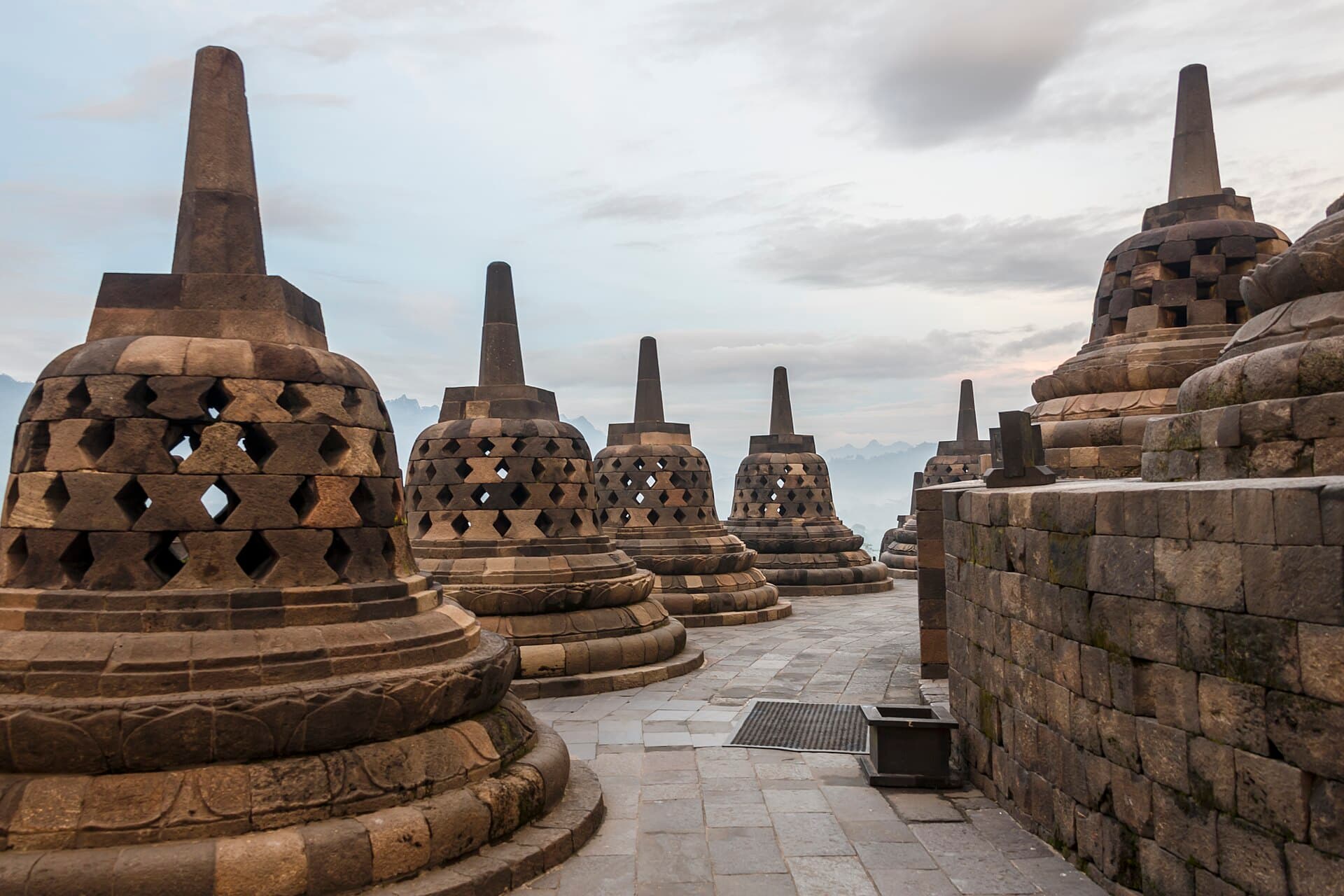
If you want to know the spirit of Java, begin in Yogyakarta. The city is a center of classical Javanese arts: batik, dance, music, poetry, silverwork, and wayang puppet theatre. At its core stands the Kraton palace, built between 1755 and 1756, with wooden houses and sloping roofs; today it is a museum where gamelan music and dance are still performed. From the palace runs Malioboro Street, the city’s best-known stretch for shopping and eating. What draws most visitors, though, lies outside town: Borobudur, the world’s largest Buddhist temple, raised in the ninth century with stone tiers and perforated stupas that climbers ascend for sunrise over forest and volcanoes. About 17 kilometers northeast of the city rise the Prambanan temples, their pointed stone towers forming Indonesia’s largest Hindu temple complex. Set aside at least two days—one for the temples, one for the city and its markets. Locals call it a student city for its many universities, including Gadjah Mada University, the country’s largest higher-education institution.
- 9th century
- Borobudur built
- About 17 km
- City to Prambanan
- 1991
- On the World Heritage List since
Highlights
- Malioboro StreetThe city’s best-known street for shopping, eating, and evening strolls.