05The story
Writing
Hieroglyphs and the Rosetta Stone
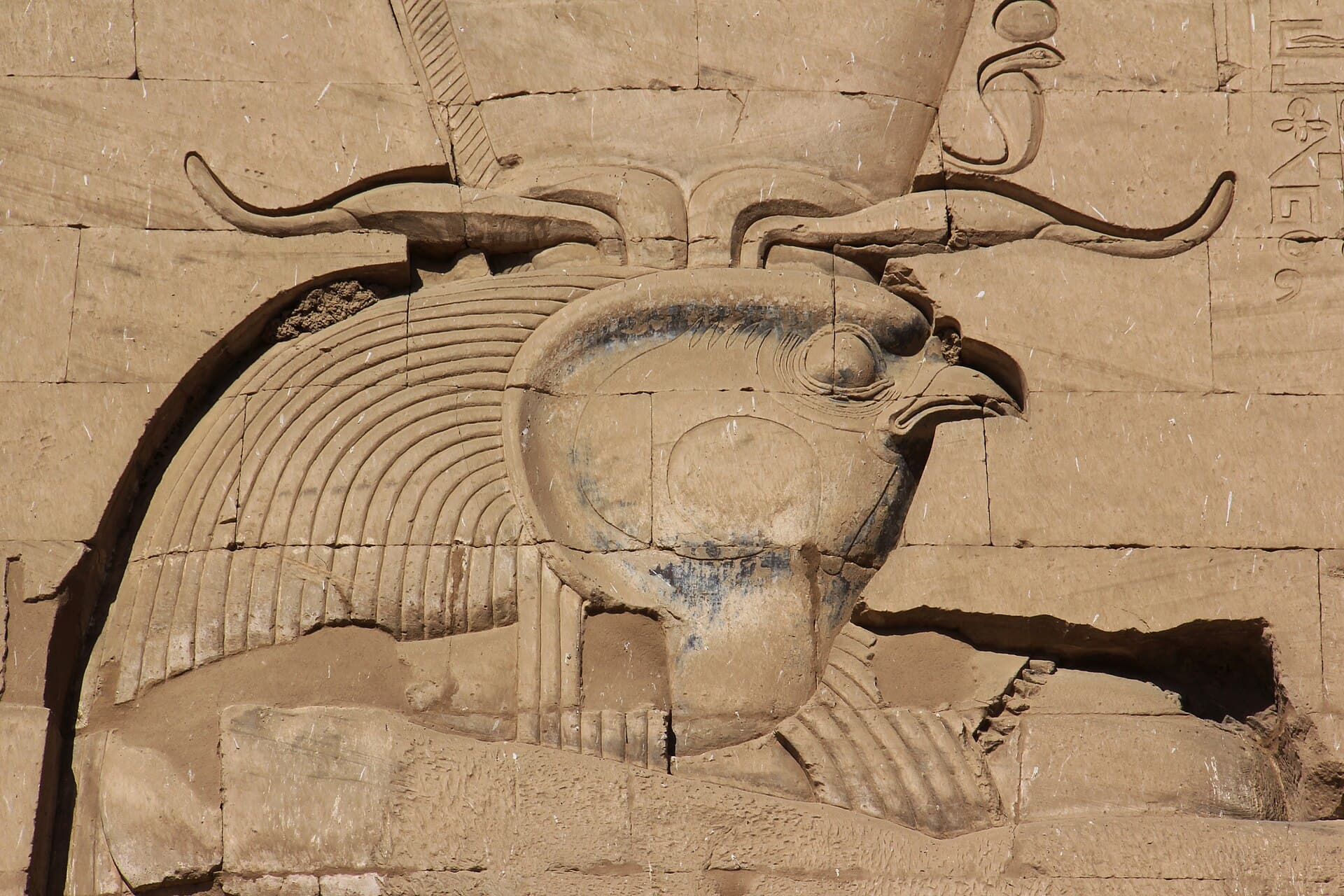
On temple walls, hieroglyphs cover every surface: birds, eyes, hands and tools carved with precision. They are not just pictures but a writing system that mixes signs for words with signs for sounds, using more than a thousand different characters. They emerged around the 33rd century BC; the oldest readable sentence dates from the 28th century BC, and the last known inscription, at Philae, from AD 394. Hieratic and Demotic grew out of them, and so did a line of scripts leading to the Phoenician alphabet, the ancestor of many of the letters used today. For centuries they could not be read, until in 1799 a granodiorite slab was found near the town of Rosetta in the Delta, carrying a decree from 196 BC in three scripts: hieroglyphic, Demotic and ancient Greek. Because the text is almost identical in all three, the stone became the key, and in 1822 Champollion announced that he had deciphered the Egyptian scripts. The stone is now in the British Museum, while the original inscriptions still cover the walls of Edfu, Kom Ombo and Karnak.
- over 1,000
- Hieroglyphic signs
- 0 BC
- Date of the Rosetta decree
- 1799
- Rosetta Stone found
- 1822
- Egyptian scripts deciphered
Highlights
- The last hieroglyphic inscriptionAt the temple of Philae in Aswan, dated AD 394.