03Cities, Parks & Islands
The crater
Ngorongoro, a volcanic basin inside a conservation area
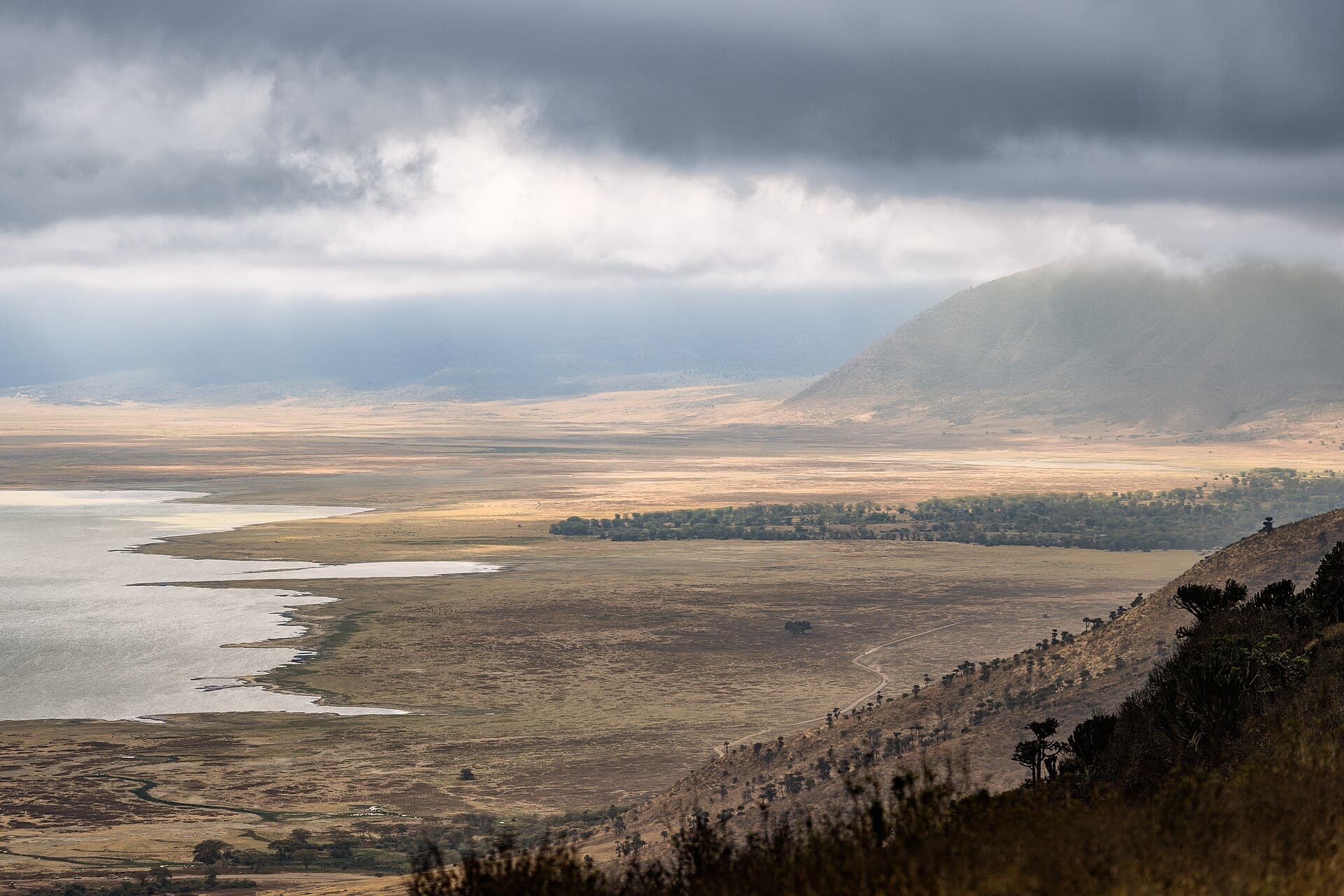
Ngorongoro Conservation Area covers about 8,292 km², was established in 1959, and joined the World Heritage List in 1979. The visit’s heart is Ngorongoro Crater: an inactive, unfilled caldera counted as the largest of its kind, about 610 m deep with a floor of about 260 km², the floor itself around 1,800 m above sea level. From the rim you see the whole basin—seasonal lake, floor forests, wildlife movement inside a circular wall. Visits concentrate on the crater even though the area is wider and includes volcanic highlands; access usually comes from the Arusha side of the northern circuit with Serengeti. Do not name it “Serengeti National Park”: it is a separate conservation unit with a different founding date and a crater scene, not an open plain. A full crater day is common; two days allow the rim and surrounding views without rushing the descent and climb. Landmarks here are rim, floor and highlands—terrain and natural architecture.
- 0
- Area size
- 0
- Crater depth
- 0
- Floor area
- 1979
- UNESCO inscription