05The story
Architecture
Forts and aflaj
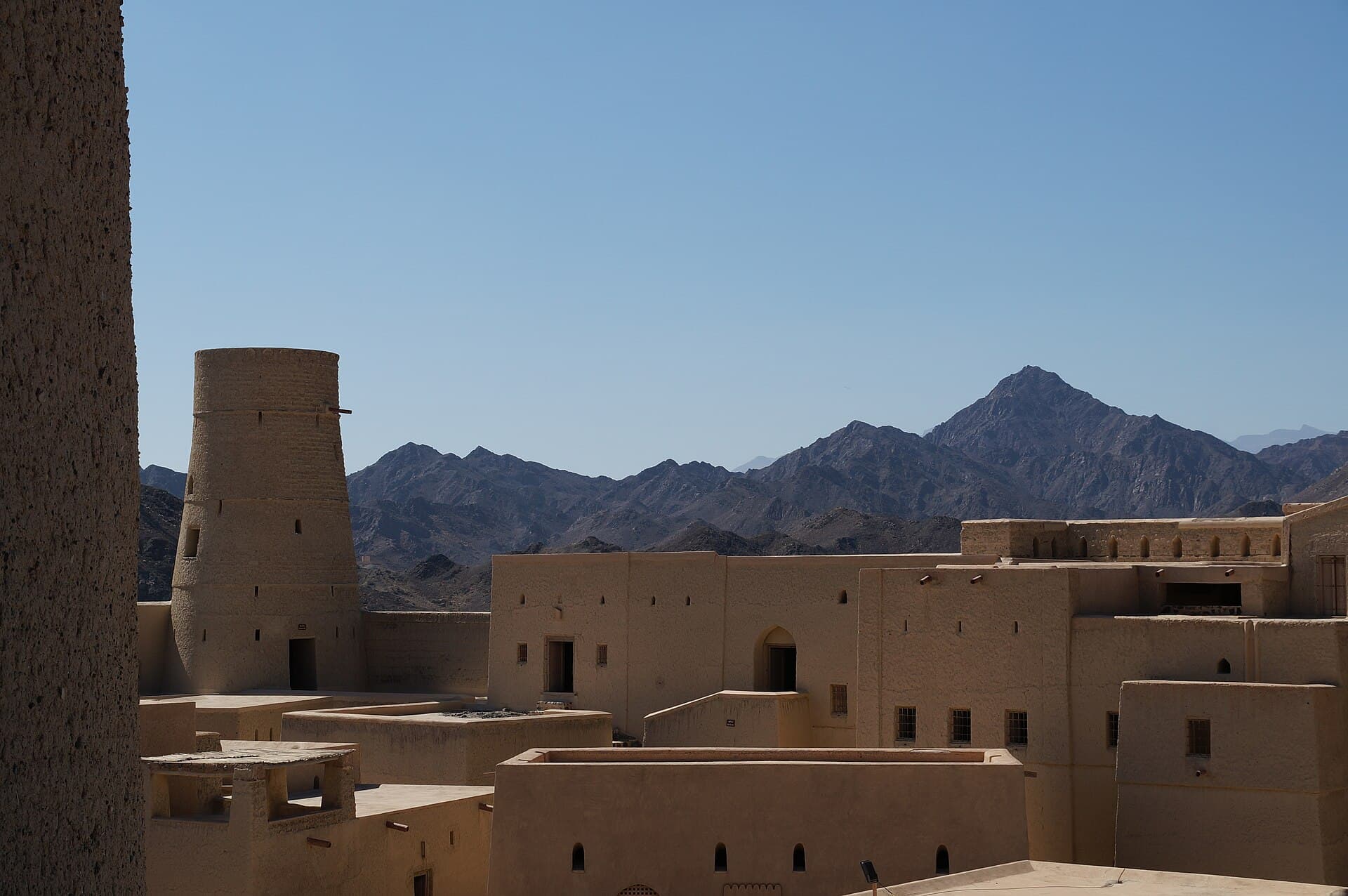
In a country with so little rain, the fort and the falaj went together: one protected the oasis, the other kept it alive. Bahla Fort, built between the 12th and 15th centuries, is made of mud and straw bricks, so it slowly eroded until it was restored and reopened in 2012. It has three parts: the old Al-Qasabah, Bait al-Hadith and the 18th-century Bait al-Jabal. Nizwa Fort was built over an underground stream so it would never run dry under siege, and the top of its tower is ringed by a wall for 120 guards and 480 gun ports. A falaj is a channel that carries water by gravity from a spring or an aquifer to houses and fields, its flow shared out among the villagers. Daudi aflaj run underground for up to 12 kilometres, ghaili aflaj flow with the seasons, and aini aflaj tap mountain springs. Around 3,000 aflaj still work, and five have been on the World Heritage List since 2006. Look at the materials: mud and straw at Bahla, stone and sarooj in the mountain villages.
- about 3,000
- Aflaj still in use
- 5
- Aflaj on the World Heritage List
- 0
- Gun ports at Nizwa Fort