04Experiences
Experience
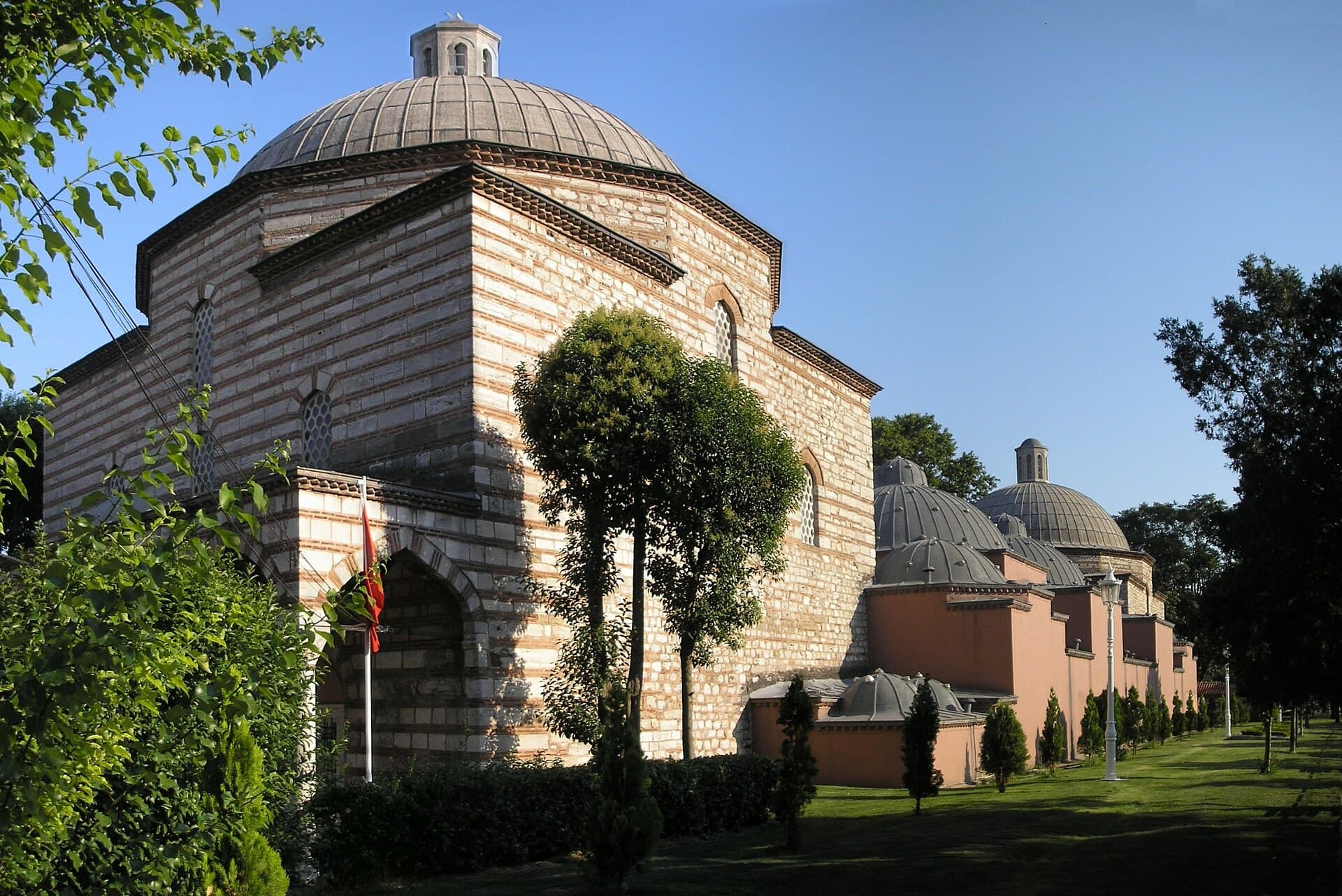
A sixteenth-century bathhouse
The traditional hammam, which Europeans came to call the 'Turkish bath', is a public steam bath where bathers move through a fixed sequence of rooms: a changing room, a cold room, a warm room and finally the hot room, called sıcaklık in Turkish. The Ottomans inherited this layout from Roman and Greek bathhouses and built so many that they spread the hammam across eastern and central Europe. In Istanbul, with its large population and plentiful water, bathhouses grew bigger and more ambitious. Among the most famous are those designed by the architect Sinan in the sixteenth century, such as the Çemberlitaş Hamamı, the Süleymaniye Hamam within the mosque complex and the Haseki Hürrem Sultan Hamam. Look up at the domes over the hot rooms: small holes and skylights let daylight in and excess steam out, while furnaces behind the walls heat the water and air. Choose a historic hammam open to visitors, ask about sections and opening hours before you go, and drink plenty of water after the hot room.
- 1644
- First recorded use of 'Turkish bath' in English