03Cities and regions
The southern coast
Nazca Lines and Paracas
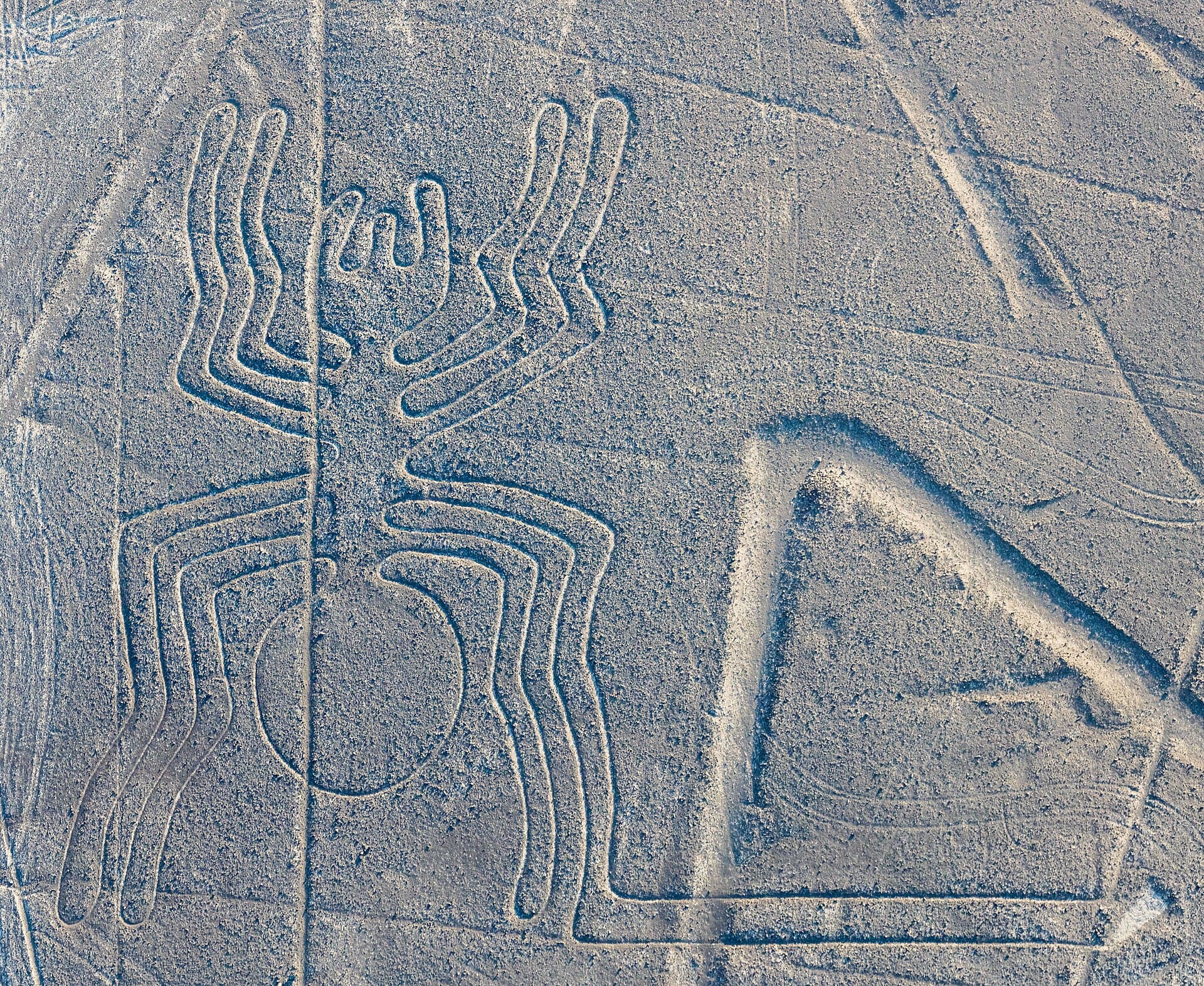
Some 400 kilometres south of Lima, on a desert plateau between the towns of Nazca and Palpa, giant designs are etched into the ground. People made them between 500 BC and AD 500 by clearing away the reddish-brown pebbles on the surface to expose the paler soil beneath. The lines run for more than 1,300 kilometres in total across about 50 square kilometres, and over 70 of them are animal figures, among them a hummingbird, a spider, a monkey and a condor; the largest stretch about 370 metres. The dry, windless climate of the plateau has preserved them, and they became a World Heritage Site in 1994. They are best seen from a small plane, though some are visible from the surrounding hills. Farther north, 250 kilometres from Lima, the Paracas National Reserve covers 335,000 hectares, nearly two thirds of it sea, and shelters around 216 bird species. Boats leave Paracas harbour on two-hour trips to the Ballestas Islands with their penguins and sea lions, and near the city of Ica lies the Huacachina oasis among the dunes.
- About 50 km²
- Area of the lines
- Over 70
- Animal figures
- 1994
- World Heritage
- 0 hectares
- Paracas reserve