05The story
Architecture
Veranda and stone
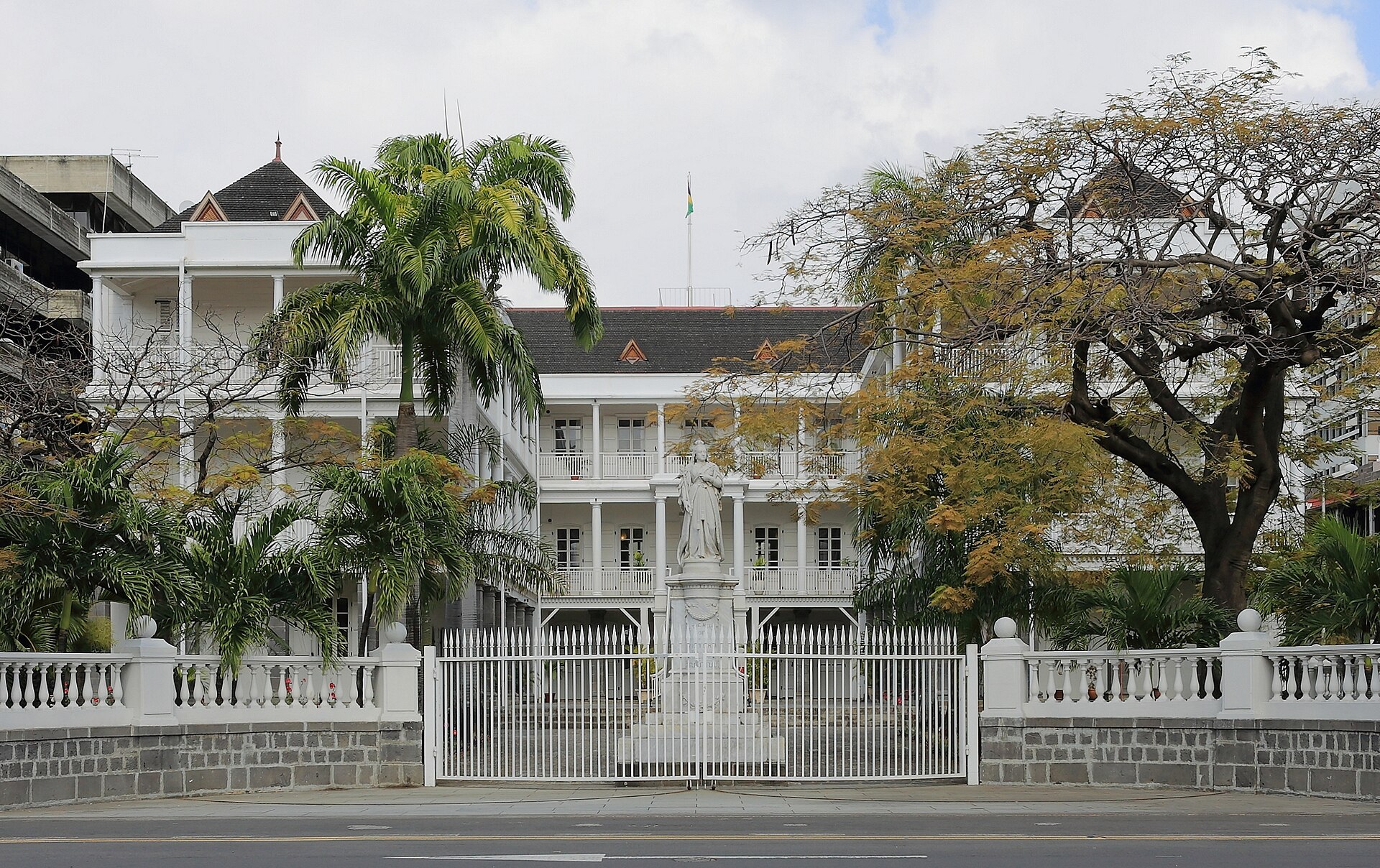
The island’s buildings arrived in layers with the harbour: veranda buildings from the French administration, the stone of the depot that received migrants, and the Creole house that ordinary people lived in. Under Governor Mahé de La Bourdonnais several buildings went up that still stand: part of Government House in Port Louis, the Château de Mon Plaisir at Pamplemousses, and the Line Barracks, headquarters of the police. Place d’Armes is a row of palms aimed at the mountain, and the racecourse behind the houses is a loop from 1812. At Aapravasi Ghat only about 15 percent of the 1849 depot remains: the ruins of three buildings from the 1860s, and 14 steps that were the first thing a new arrival saw from the quay. The walls are dressed stone, and the roof was French tile. The estimate of people who passed between 1849 and 1923 is about 450,000. The name Aapravasi Ghat has been in use since 1987, a Hindi rendering of Immigration Depot. The site became a national monument that year and World Heritage in 2006. Many of the old plateau houses, called campagnes, disappeared between 1960 and 1980, and more buildings have been demolished in recent years. What shows in the capital today is layer on layer: the veranda, then the harbour, then the Bank of Mauritius tower at 124 metres, the tallest building in the country.
- 0 stone steps still in place.
- The steps
- About 450,000 between 1849 and 1923.
- Who passed
Highlights
- The Creole houseThe house that ordinary people on the island historically lived in.