04Experiences
Tbilisi
The sulphur baths
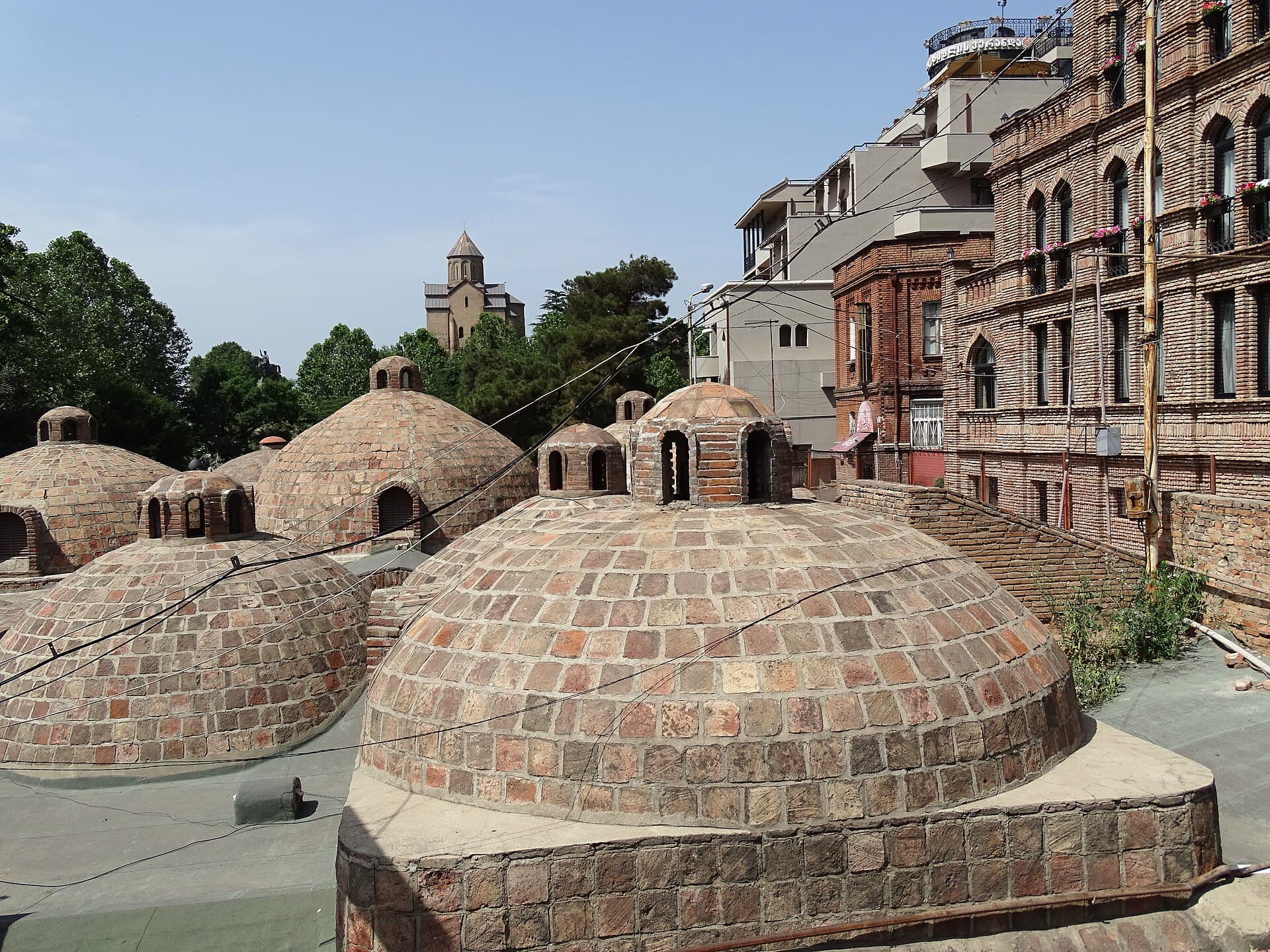
Tbilisi grew up around hot sulphur springs, and its name, meaning 'the warm place', comes from them. Legend says King Vakhtang Gorgasali's falcon fell into a hot spring during a hunt, and the king was so taken with the springs that he cleared the forest and built his city there. Today the bathhouses cluster in Abanotubani, literally the 'bath district', on the east bank of the Kura at the foot of Narikala fortress. From the street you see low brick domes rising just above the ground, with halls fed by hot water beneath them, surrounded by old-town houses with wooden balconies. By the end of the 13th century, 65 baths were recorded in the city. The district is now part of old Tbilisi, on the walking route between the river and the fortress, and the cable car to Narikala leaves from the opposite bank. Come after a day exploring the old town or the climb to Narikala, once the evening cools, then finish by the river near the Bridge of Peace.
- 0
- Baths recorded in the late 13th century